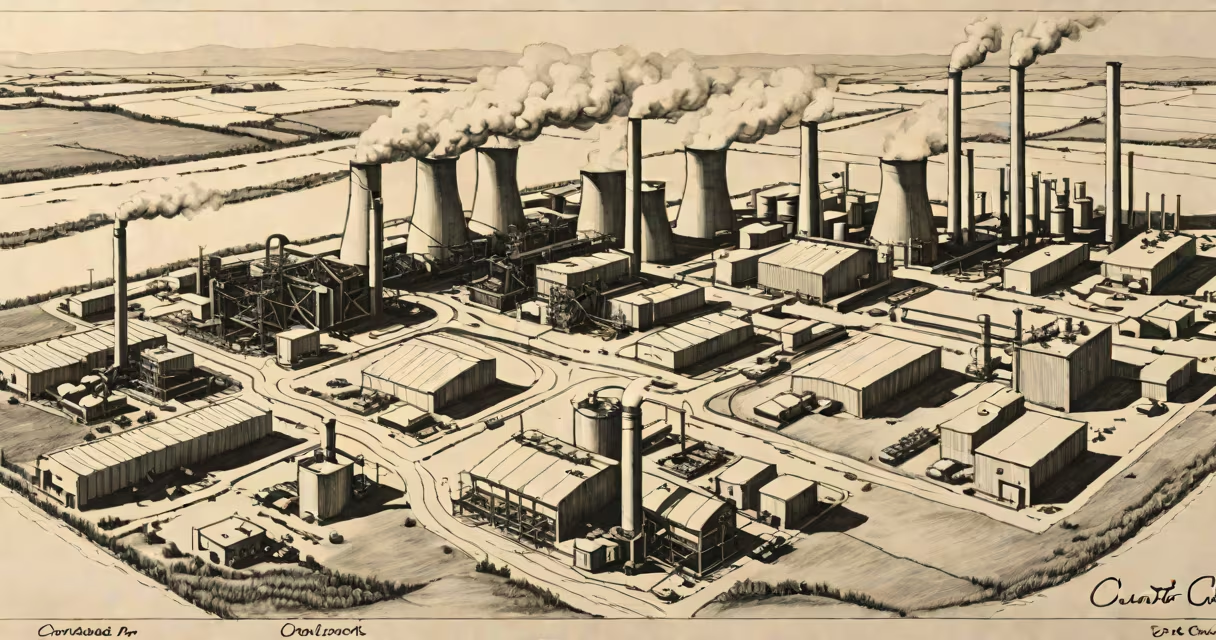
Three primary causes of climate change are the burning of fossil fuels, widespread deforestation, and industrial agricultural practices. These activities release large volumes of greenhouse gases into the atmosphere, trapping heat and altering Earth's climate system.
Climate change results from increased concentrations of greenhouse gases-primarily carbon dioxide (CO₂), methane (CH₄), and nitrous oxide (N₂O)-in the atmosphere. These gases absorb infrared radiation and prevent heat from escaping, leading to global warming. Since the Industrial Revolution, human activity has dramatically accelerated this process.
The Intergovernmental Panel on Climate Change (IPCC) states that human influence is unequivocal and responsible for over 95% of observed warming since 1950. This attribution rests on atmospheric measurements, ice core records, and climate model simulations.
For example, CO₂ levels have risen from 280 parts per million (ppm) in pre-industrial times to over 420 ppm in 2023. This increase correlates directly with energy production, transportation, and industrial processes fueled by coal, oil, and natural gas.
Burning fossil fuels for electricity, heating, and transportation accounts for approximately 75% of global CO₂ emissions. Power plants using coal and natural gas emit the most CO₂ per unit of energy produced.
A single coal-fired power plant operating at full capacity can emit over 10 million metric tons of CO₂ annually. For context, the U.S. Energy Information Administration reports that in 2022, the United States generated 2.3 billion metric tons of CO₂ from energy consumption alone.
Transportation contributes another 16% of global emissions. A typical gasoline-powered car emits about 4.6 metric tons of CO₂ per year based on average driving distances. Electric vehicles reduce this impact, especially when powered by renewable sources.
Forests absorb CO₂ during photosynthesis and store it in biomass and soil. When forests are cleared-especially tropical rainforests-the stored carbon is released back into the atmosphere. Deforestation accounts for roughly 10% of global greenhouse gas emissions.
Amazon deforestation reached a 15-year high in 2022, with over 13,000 square kilometers lost. That area is equivalent to 1.8 million football fields. The loss of trees reduces Earth's ability to sequester carbon, creating a feedback loop that intensifies warming.
Soil carbon stores are also compromised. A study published in *Nature* found that deforested soils lose up to 40% of their organic carbon within 10 years. Once degraded, recovery takes decades or centuries.
Industrial farming systems contribute through methane from ruminant animals and nitrous oxide from synthetic fertilizers. Methane has a global warming potential 28 times greater than CO₂ over a 100-year period, while nitrous oxide is 265 times more potent.
Cattle alone produce about 30% of global methane emissions. A single cow releases between 70 and 120 kilograms of methane annually via enteric fermentation. Globally, livestock generate around 14.5% of all anthropogenic greenhouse gas emissions, according to the FAO.
Nitrogen-based fertilizers used in monoculture crops like corn and soy release nitrous oxide when microbes in soil convert nitrogen compounds. In the U.S., fertilizer application contributes over 20% of national nitrous oxide emissions, per EPA data.
| Source | Primary Gas Emitted | Global Share of Emissions | Key Drivers |
|---|---|---|---|
| Fossil fuel combustion | CO₂ | ~75% | Power generation, transport, industry |
| Deforestation | CO₂ | ~10% | Land conversion, logging, mining |
| Industrial agriculture | CH₄, N₂O | ~15% | Livestock, synthetic fertilizers, rice paddies |
Some assume that natural factors like solar cycles or volcanic eruptions drive current climate change. But satellite and ground-based observations show that solar irradiance has remained stable since the 1950s, while temperatures have risen sharply. Volcanic activity contributes negligible net warming compared to human emissions.
Another misconception is that climate change is purely a future threat. In reality, extreme weather events linked to climate change-such as hurricanes, droughts, and heatwaves-are already occurring more frequently and intensely. The National Oceanic and Atmospheric Administration (NOAA) recorded 28 weather and climate disasters in the U.S. in 2023, each costing over $1 billion.
Climate change is not a single event-it's a long-term shift in temperature and precipitation patterns. The 2023 global average temperature was 1.45°C above pre-industrial levels, according to NASA's Goddard Institute for Space Studies. This exceeds the 1.5°C threshold set in the Paris Agreement, increasing risks of irreversible impacts.
In summer 2023, Western Europe experienced record-breaking temperatures. France saw highs of 45°C (113°F), leading to over 1,000 heat-related deaths. Scientists from the World Weather Attribution network analyzed the event and concluded that climate change made such extreme heat at least 100 times more likely.
The analysis traced the cause to persistent high-pressure systems amplified by warmer sea surface temperatures in the Atlantic. Those conditions were influenced by rising CO₂ levels from fossil fuel use. Simultaneously, forest fires in Spain and Portugal released additional CO₂ and particulates, worsening air quality and contributing to regional warming.
This event illustrates how multiple causes interact: fossil fuel emissions warmed the planet, deforestation reduced cooling capacity, and industrial agriculture contributed to soil degradation, which reduced moisture retention and increased surface heating.
Understanding the root causes of climate change is essential for effective action. Individual choices-like reducing meat consumption, switching to electric transport, and supporting clean energy policies-can collectively reduce demand for fossil fuels and protect forests.
For instance, shifting from industrial livestock systems to regenerative agriculture can lower methane emissions and rebuild soil carbon. Replacing coal plants with wind and solar farms cuts CO₂ emissions by up to 90% per megawatt-hour.
Climate change is driven by three interconnected causes: fossil fuel combustion, deforestation, and industrial agriculture. Addressing them requires coordinated policy, technological innovation, and behavioral shifts. The science is clear-human actions are the dominant force behind recent warming, and reversing the trend demands urgent, evidence-based solutions.