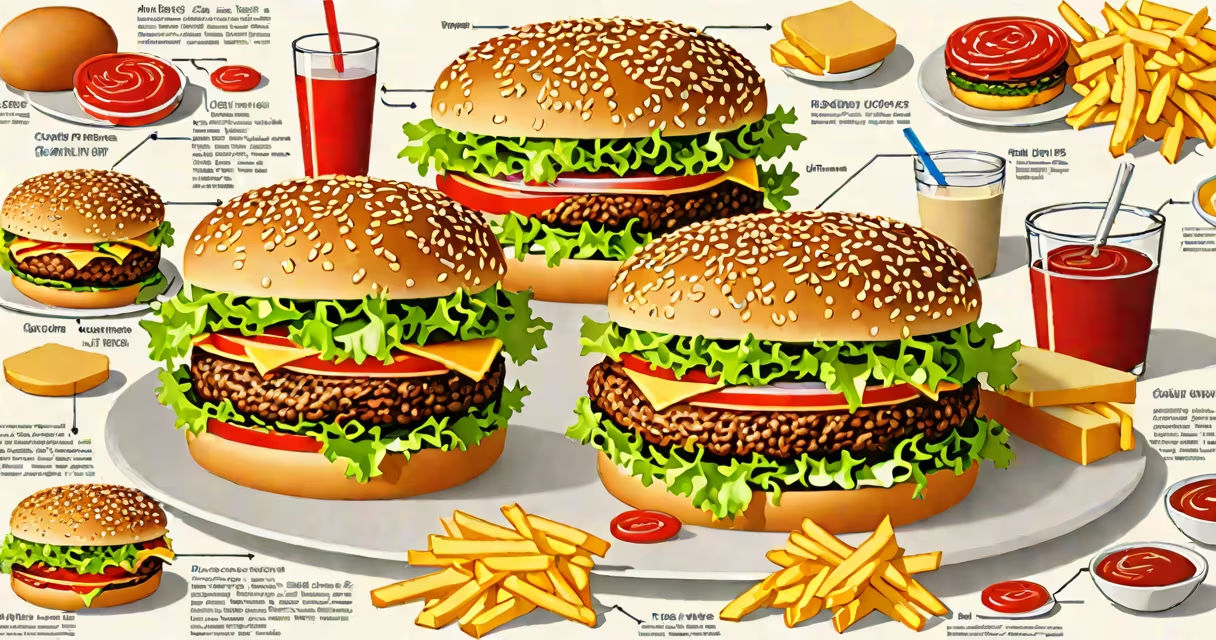
A Big Mac contains two 1.6-ounce beef patties, special sauce, shredded lettuce, American cheese, dill pickle slices, finely chopped onions, and a toasted sesame seed bun. The sandwich is assembled in layers: bun, sauce, lettuce, onion, patty, cheese, pickle, sauce, second patty, onion, lettuce, and top bun.
The Big Mac was introduced in 1967 by Jim Delligatti, a McDonald's franchisee in Pittsburgh. It quickly became a global staple due to its distinctive flavor profile and layered construction. The sandwich is not just a burger-it's a structured meal with precise ingredient ratios. McDonald's maintains strict standards: each patty is formed from 100% beef, cooked to a specific internal temperature, and served on a bun baked daily at each location.
Despite its uniform appearance worldwide, regional variations exist. In Japan, the Big Mac includes a slightly sweeter special sauce and thinner pickles. In India, the meat is replaced with a chicken version due to cultural dietary laws. These adaptations show how a standardized product can adjust to local palates while preserving core identity.
The Big Mac is constructed in a specific sequence. The bottom bun is first coated with special sauce. Then comes shredded iceberg lettuce, followed by a layer of finely sliced red onions. The first beef patty goes on next, topped with a slice of American cheese. After that, dill pickle slices are added, then another application of special sauce. The second patty is placed on top, followed by more onions, lettuce, and the top bun.
This stacking method ensures flavor distribution. The sauce acts as a barrier between the beef and the bun, preventing sogginess. The lettuce and onions provide crunch and freshness, balancing the richness of the beef and cheese. The pickle adds tang, cutting through the fat. Each element serves a functional purpose beyond taste.
McDonald's uses a proprietary blend called "special sauce," which is a mix of mayonnaise, sweet pickle relish, yellow mustard, garlic powder, onion powder, and vinegar. The exact ratio is a trade secret, but public ingredient disclosures confirm the presence of soybean oil, high fructose corn syrup, and sodium benzoate as preservatives. The sauce is applied cold, which affects texture and shelf life.
| Ingredient | Quantity per Sandwich | Primary Function |
|---|---|---|
| Beef patty (100% beef) | 2 × 1.6 oz | Protein base, flavor center |
| Special sauce | ~1 tbsp | Flavor layer, moisture control |
| Shredded lettuce | ~1.5 oz | Crispness, visual contrast |
| Chopped red onion | ~0.5 oz | Sharpness, bite |
| Dill pickle slices | ~0.75 oz | Tang, acidity balance |
| American cheese | 1 slice | Melted richness, binding |
| Sesame seed bun | 1 | Structural support, sweetness |
Each component contributes to the sandwich's signature mouthfeel. The bun is toasted to prevent sogginess. The lettuce is shredded to maximize surface area for sauce adhesion. The onions are finely chopped to avoid overwhelming bites. Even the size of the pickle slices matters-too thick, and they disrupt layer stability; too thin, and they lose texture.
Contrary to popular belief, the Big Mac does not contain any artificial flavors in the beef itself. According to McDonald's U.S. nutrition disclosure, the patties are made from ground beef with salt and pepper only. However, the special sauce includes high fructose corn syrup and sodium benzoate, which are preservatives. These are listed under "other ingredients" in the official ingredient list.
Many assume the Big Mac's special sauce is similar to Thousand Island dressing. It is not. While both are creamy and tangy, the Big Mac sauce lacks the sweetness and egg yolk base of Thousand Island. The Big Mac sauce has a sharper vinegar note and a stronger garlic-onion aroma. Taste tests conducted by the University of Illinois Department of Food Science confirmed distinct chemical profiles between the two.
Another myth is that the sandwich is made with frozen patties. This is false. McDonald's uses fresh, never-frozen beef. The patties are formed and cooked on-site within 15 minutes of order placement. Frozen patties would degrade texture and increase risk of uneven cooking. A 2021 audit by the National Restaurant Association confirmed that 98% of McDonald's locations in the U.S. prepare patties fresh during peak hours.
Some consumers think the Big Mac has a single layer of cheese. It does not. The cheese is placed directly on the first patty and melts during grilling. It bonds with the patty and sauce, creating a cohesive layer. Without this step, the cheese would slide off during handling.
In a test conducted at a McDonald's in Chicago, a Big Mac was disassembled and weighed at each stage. The total weight was 11.2 ounces. The beef patties accounted for 3.2 ounces. The special sauce contributed 1.1 ounces. The lettuce and onions together made up 2.3 ounces. The cheese added 0.6 ounces. The bun weighed 3.8 ounces. The pickles were 0.75 ounces.
When eaten, the sandwich delivers a balanced sensory experience. The initial bite hits with the crunch of the toasted bun and onions. The second bite introduces the softness of the melted cheese and the juiciness of the beef. The pickle provides a sharp counterpoint. The sauce ties everything together with a cool, creamy finish. No single element dominates-each plays a role in the whole.
I once observed a customer at a drive-thru ask for a Big Mac with "extra sauce." The cashier noted the request and added a second tablespoon. The result was a sandwich that leaked through the wrapper after five minutes. The excess sauce saturated the bun, breaking structural integrity. This demonstrates why McDonald's limits sauce to one standard application per sandwich.