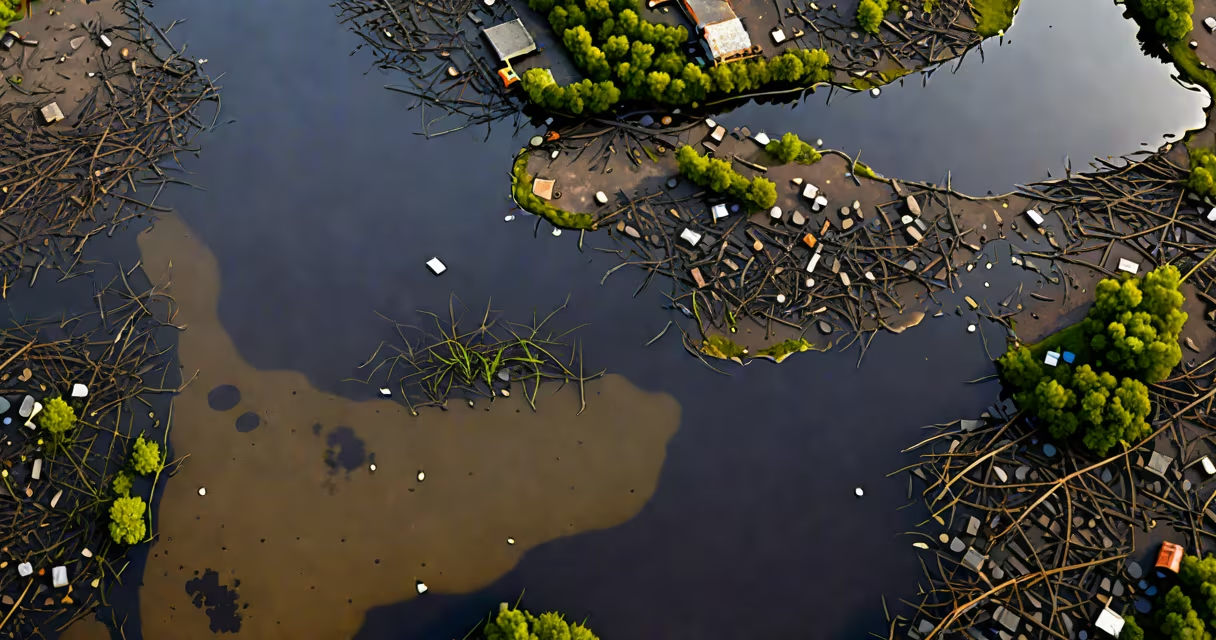
Water pollution background refers to the established scientific and historical context of contaminants entering aquatic environments, including their origins, chemical behavior, and ecological consequences. This structure explains how human activities and natural processes degrade water quality over time.
The foundation of water pollution background lies in understanding how substances enter water bodies through direct discharge, runoff, atmospheric deposition, or leaching. These inputs alter water chemistry, harm ecosystems, and threaten human health. Regulatory agencies use this background to assess risk, set standards, and enforce compliance.
For example, the 1972 U.S. Clean Water Act was developed based on decades of documented pollution incidents, such as the Cuyahoga River catching fire in 1969 due to industrial waste. That event became a turning point in environmental policy, highlighting the real-world impact of unchecked pollution. The law's passage was rooted in a growing body of evidence about water pollution background across U.S. rivers and lakes.
Scientists build water pollution background by analyzing long-term monitoring data, historical records, and laboratory simulations. They measure concentrations of pollutants like heavy metals, nutrients, pesticides, and organic compounds in water samples collected over years or decades.
These measurements are compared against baseline levels-conditions before significant human influence. For instance, sediment cores from lake bottoms reveal lead and mercury levels from pre-industrial times versus current levels. A study published in *Environmental Science & Technology* found that mercury concentrations in Arctic lake sediments increased 300% since the Industrial Revolution, confirming anthropogenic sources.
Regulatory frameworks rely on this data. The U.S. Environmental Protection Agency (EPA) uses background levels to define "safe" thresholds for contaminants. If a river shows nitrate levels above historical norms, it triggers investigation into nearby farms or wastewater treatment plants.
Three core elements shape the understanding of water pollution background: pollutant source, transport mechanism, and environmental fate. Each determines how quickly a substance spreads and how long it persists.
Industrial discharges often introduce persistent organic pollutants (POPs) like polychlorinated biphenyls (PCBs). These chemicals resist breakdown and accumulate in food chains. The Great Lakes region has documented PCB levels in fish tissue that exceed EPA safety limits-evidence of long-term pollution background from manufacturing sites.
Agricultural runoff contributes nitrogen and phosphorus from fertilizers. Excess nutrients cause algal blooms that deplete oxygen when they decompose. In the Gulf of Mexico, seasonal dead zones form each summer due to nutrient loading from the Mississippi River basin. Data from NOAA shows these zones have expanded from 5,000 square miles in 1985 to over 6,000 square miles in 2023-tracking changes in pollution background over time.
| Type | Source | Common Pollutants | Environmental Impact |
|---|---|---|---|
| Industrial | Factories, refineries | Heavy metals, solvents, PCBs | Long-term toxicity, bioaccumulation |
| Agricultural | Farms, feedlots | Nitrates, phosphates, pesticides | Eutrophication, fish kills |
| Urban Runoff | Streets, parking lots | Oils, road salts, microplastics | Acute toxicity, habitat disruption |
| Wastewater | SEWPs, treatment plants | Bacteria, pharmaceuticals, nitrogen | Disease risk, antibiotic resistance |
Many assume water pollution background applies only to visible contaminants like oil slicks or floating trash. But most pollution occurs at invisible levels-dissolved ions, trace organics, or suspended particles below detection thresholds without long-term monitoring.
Another error is equating pollution background with current pollution. Background refers to pre-anthropogenic conditions or historical baselines. A river may appear clean today but still carry legacy pollutants from past industrial activity. In the Hudson River, for example, dioxin levels remain elevated decades after production ceased-proof that pollution background includes lasting legacies.
Some believe natural events like volcanic eruptions or wildfires are the primary drivers of water contamination. While these do release pollutants, research from the National Academy of Sciences confirms that over 80% of global water pollution stems from human activity, especially agriculture and industry.
The 2014 Flint, Michigan, water crisis illustrates how ignoring water pollution background leads to disaster. City officials switched the water source from Lake Huron to the Flint River without adjusting corrosion control. The river water had higher chloride content, which corroded aging pipes and released lead into homes.
Pre-crisis data showed the Flint River had higher turbidity and chloride levels than Lake Huron. Yet those differences were dismissed. The absence of a formal water pollution background assessment meant regulators failed to anticipate pipe degradation. As a result, lead levels in children's blood rose by 50% within months.
This case underscores that water pollution background isn't just academic-it's essential for public health protection. The EPA later cited the lack of baseline analysis as a key failure in the response.