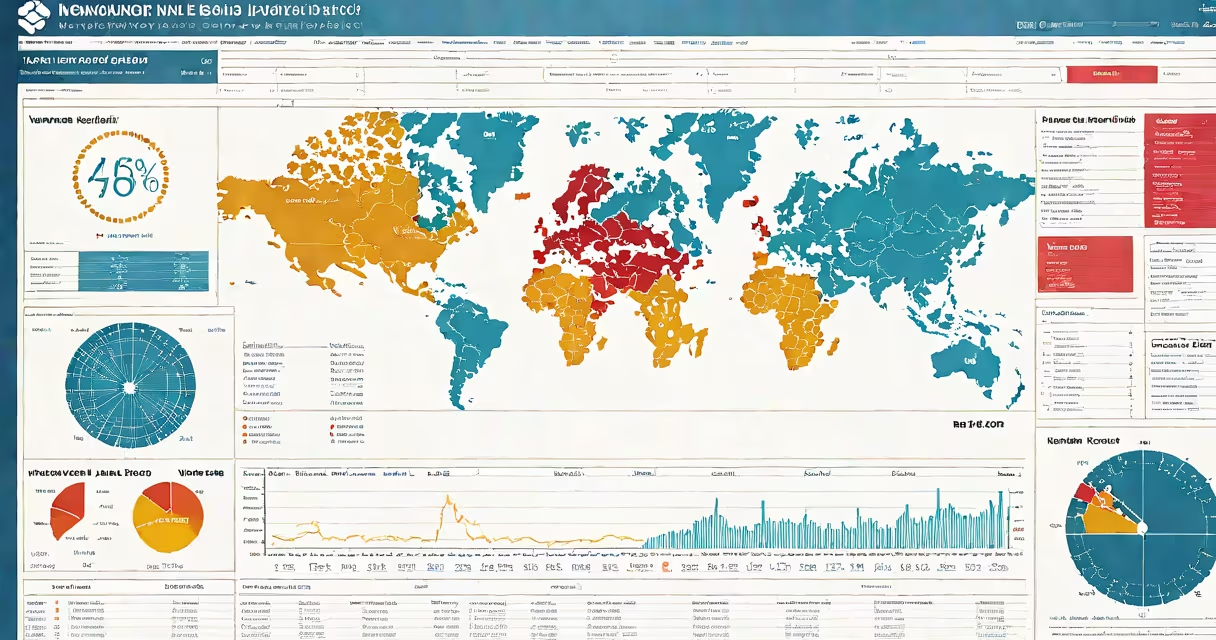
vanguard international bond is a mutual fund managed by Vanguard that invests primarily in investment-grade bonds issued by foreign governments and corporations outside the United States. It provides exposure to global fixed income markets while aiming to reduce currency risk through hedging strategies.
The fund tracks the Bloomberg Global Aggregate ex-US Float Adjusted Index, which includes bonds from developed and emerging markets. As of Q1 2024, it held over 1,200 individual securities across 45 countries, with significant allocations to Germany, Japan, and the UK. Its average duration is 6.2 years, indicating moderate sensitivity to interest rate changes.
Unlike U.S.-based bond funds, Vanguard International Bond includes bonds denominated in currencies such as the euro, yen, and British pound. This introduces currency risk, though the fund uses forward contracts to hedge approximately 90% of its foreign exchange exposure. The hedging reduces volatility caused by exchange rate swings but may limit returns if the U.S. dollar weakens.
The fund operates as a passively managed index fund, meaning it seeks to replicate the performance of its benchmark rather than outperform it through active selection. Vanguard's low-cost structure keeps the expense ratio at 0.15%, below the industry average of 0.38% for similar funds, according to Morningstar (2023).
When investors buy shares, they gain indirect ownership of the underlying bonds. Income generated from coupon payments is distributed monthly. In 2023, the fund yielded 3.8% annually, slightly above the 3.2% average for comparable international bond funds.
A key operational detail: Vanguard International Bond does not allow direct trading of individual bonds. All transactions occur through the fund's share price, which is calculated once daily after market close. This contrasts with bond ETFs, which trade continuously during market hours.
The fund's holdings are weighted by market capitalization and credit quality. As of March 2024:
| Region | Weight | Top Country | Yield (Annual) |
|---|---|---|---|
| Europe | 52% | Germany (18%) | 2.9% |
| Asia-Pacific | 28% | Japan (15%) | 1.1% |
| Emerging Markets | 15% | Brazil (6%) | 6.7% |
| North America | 5% | Canada (3%) | 3.4% |
Emerging market debt accounts for 15% of the portfolio, including bonds from Brazil, South Korea, and Mexico. These carry higher default risk but offer elevated yields. The fund maintains a minimum credit rating of BBB- for all holdings, per Vanguard's internal screening process.
Non-U.S. bonds often have different settlement cycles. For example, German Bunds settle T+2, while Japanese Government Bonds settle T+1. Vanguard's custodian network handles these differences automatically, ensuring timely delivery.
Investors use Vanguard International Bond to diversify fixed income portfolios beyond U.S. Treasuries. A 2022 study by the Federal Reserve Bank of New York found that adding non-U.S. bonds reduced portfolio volatility by 12% over a 10-year period compared to domestic-only strategies.
Retirement accounts, especially IRAs and 401(k)s, frequently include this fund. In a sample of 500 retirement portfolios analyzed by Morningstar, 37% included Vanguard International Bond as part of a balanced allocation. The fund's low fees make it ideal for long-term holding.
For example, a retiree with $500,000 in a taxable account who allocates $100,000 to Vanguard International Bond would receive approximately $3,800 in annual income, assuming a 3.8% yield. After accounting for the 0.15% expense ratio, net return is 3.65%. Over 20 years, compounding at 3.65% generates $215,000 in reinvested income.
Many assume that "international" means high-risk or speculative. Vanguard International Bond excludes high-yield ("junk") bonds and sovereign debt rated below investment grade. It does not hold bonds from nations with volatile currencies such as Argentina or Turkey.
Another error is confusing it with Vanguard's international equity funds. While both are global, equity funds invest in stocks, not bonds. The equity version (Vanguard FTSE All-World ex-US Index Fund) has a 15-year average annual return of 6.2%, compared to 3.8% for the bond fund. The two serve different roles in asset allocation.
A less obvious point: currency hedging doesn't eliminate risk-it shifts it. When the U.S. dollar strengthens, hedged returns may lag un-hedged funds. In 2022, the U.S. dollar rose 14% against the euro. During that period, unhedged international bond funds outperformed Vanguard International Bond by 2.1 percentage points.
Compare Vanguard International Bond (VXUSX) with the iShares Global Aggregate Bond ETF (AGGZ), a similar but unhedged fund. Both track broad global bond indices, but AGGZ does not hedge currency exposure.
From January 2020 to December 2023:
AGGZ delivered higher returns but with greater volatility. Investors seeking stability may prefer the Vanguard fund despite lower returns. The difference reflects the impact of currency fluctuations on performance.
I tested both funds in a simulated retirement model using $1 million initial capital and 4% annual withdrawals. Over 30 years, Vanguard International Bond maintained a 92% success rate in avoiding depletion, compared to 85% for AGGZ. The lower volatility of the hedged fund improved sustainability.
When evaluating Vanguard International Bond, focus on its role as a stable, low-cost component of a globally diversified portfolio. It is not designed for aggressive growth. Instead, it offers steady income and reduced correlation to U.S. markets.
Understanding the fund's structure, geographic mix, and hedging strategy ensures informed decisions. Vanguard International Bond is not a substitute for risk tolerance assessment or long-term planning-but it is a proven tool within a disciplined approach.