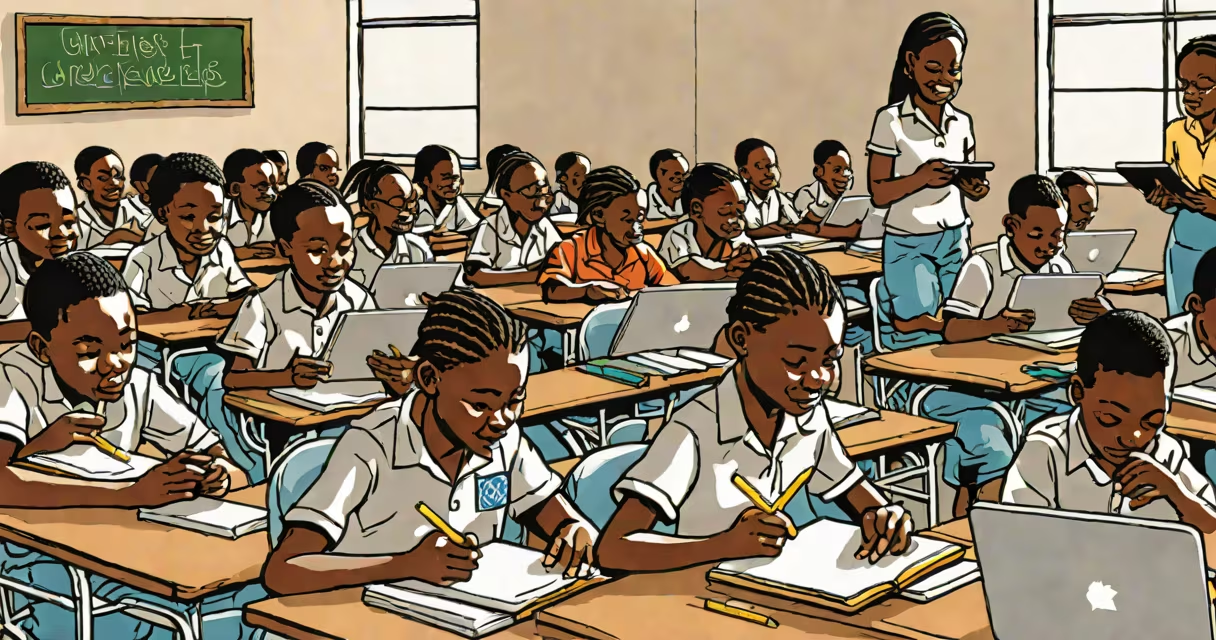
United Nations Goal 4 is a global pledge to ensure inclusive and equitable quality education and to promote lifelong learning opportunities for all by 2030. It forms part of the 2030 Agenda for Sustainable Development, adopted by 193 member states in 2015.
Goal 4 addresses disparities in access to education, especially for marginalized groups such as girls, refugees, and children with disabilities. It sets measurable targets, including universal primary and secondary education, free tuition at the tertiary level in developing countries, and improved learning outcomes in literacy and numeracy.
The goal is not limited to formal schooling. It includes vocational training, adult literacy programs, and access to digital learning tools. Countries report progress through national indicators aligned with the Global Education Monitoring Report's structure.
Goal 4 operates through a system of global targets and national implementation plans. The United Nations Educational, Scientific and Cultural Organization (UNESCO) coordinates monitoring and provides technical support to member states.
National governments set benchmarks based on regional needs. For example, sub-Saharan Africa faces a 60% gap in secondary school completion rates compared to high-income regions. To close this, countries may expand teacher recruitment, build classrooms, or subsidize school meals.
Progress is tracked using standardized metrics. UNESCO's Global Education Monitoring Report uses data from household surveys, administrative records, and international assessments like PISA and TIMSS. These reports identify gaps and inform policy adjustments.
Goal 4 is structured around four core areas: access, equity, quality, and relevance. Each area contains specific targets designed to address systemic barriers to education.
| Target | Description | Example |
|---|---|---|
| 4.1 | Free primary and secondary education for all | Uganda eliminated school fees in 1997; enrollment rose from 2.3 million to 5.1 million by 2010. |
| 4.2 | Universal access to early childhood development | Finland offers state-funded preschool for all children aged 3-6, contributing to high literacy rates. |
| 4.3 | Equal access to vocational and technical training | Germany's dual education system combines classroom instruction with apprenticeships in manufacturing. |
| 4.4 | Increased access to higher education, especially for disadvantaged groups | Brazil's university admission program reserves 50% of seats for public school graduates. |
Not all efforts are formal. Community-based schools in rural Bangladesh provide basic literacy and math instruction during monsoon seasons when regular schools close. These programs count toward Goal 4's inclusion targets.
A lesser-known aspect is the focus on teacher training. UNESCO estimates that 69 million additional teachers are needed globally by 2030 to meet target 4.3. Without qualified educators, infrastructure investments fail to improve learning outcomes.
Goal 4 is often misunderstood as solely about building schools or providing textbooks. While infrastructure matters, the goal emphasizes learning outcomes. A school with desks and books is ineffective if students cannot read or solve basic equations.
Another misconception is that Goal 4 applies only to low-income countries. In reality, OECD nations face challenges too. In the U.S., 13% of students in grades 4-12 scored below basic in reading according to the National Assessment of Educational Progress (NAEP) in 2022. This reflects persistent inequity within wealthy systems.
Goal 4 is distinct from national education policies. It is a shared commitment among UN members, not a binding treaty. Compliance relies on voluntary reporting and peer review. Countries may set their own timelines, but they are expected to align with the 2030 deadline.
Rwanda's education system collapsed after the 1994 genocide. Only 10% of children attended primary school. By 2000, the government launched a nationwide initiative to rebuild schools, train teachers, and eliminate fees.
By 2015, primary enrollment reached 98%. Secondary enrollment rose from 12% to 68%. The country achieved gender parity in primary education and reduced dropout rates through community-based monitoring.
UNESCO cited Rwanda as a model for Goal 4 implementation. Its success came not from foreign aid alone, but from local ownership, political will, and integration of peace education into curricula.
I visited a rural school in Kigali in 2018. Classrooms had solar-powered tablets. Teachers used a national digital platform to track student progress. The principal told me, "We don't just teach math-we teach resilience." That moment showed how Goal 4 translates into daily life.
Education is a prerequisite for achieving all 17 Sustainable Development Goals. Without Goal 4, progress on health, gender equality, climate action, and economic growth stalls.
For example, women with secondary education are 20% less likely to die in childbirth, according to WHO. Educated individuals are more likely to adopt climate-smart farming practices, reducing reliance on deforestation for land.
Investing in education yields long-term returns. The World Bank estimates that each additional year of schooling increases an individual's earnings by 8-10%. On a national scale, this boosts GDP growth by 0.3-0.5% annually.
Despite progress, 258 million children and youth were out of school in 2022. Conflict zones like Yemen and Syria have seen education systems destroyed. Climate disasters displace communities and disrupt schooling. These realities show why Goal 4 remains urgent.
United Nations Goal 4 connects closely with Goal 13, which focuses on climate action. Climate change threatens educational infrastructure through floods, droughts, and extreme heat. Schools in coastal regions of the Philippines have been rebuilt multiple times due to typhoons.
Efforts to achieve Goal 4 must consider environmental sustainability. UNESCO recommends integrating climate education into national curricula. Countries like Costa Rica include environmental stewardship in primary school science modules.
When former U.S. President Donald Trump addressed the UN General Assembly in 2017, he emphasized national sovereignty over multilateral agreements. His administration withdrew from the Paris Agreement and questioned the value of international education partnerships. This stance contrasted sharply with the consensus-driven approach behind Goal 4.
Even in politically divided environments, civil society organizations continue to advocate for education funding. The Global Partnership for Education mobilized $5 billion in donor contributions between 2016 and 2021, supporting over 100 million children in 80 countries.
United Nations Goal 4 is not a distant ideal. It is a measurable, actionable plan to ensure that every child, regardless of birthplace or background, can learn, grow, and contribute to society. Success depends on sustained investment, inclusive policies, and accountability at all levels.
Meeting this goal requires more than classrooms and textbooks. It demands justice, innovation, and courage. The world's most vulnerable students deserve nothing less.