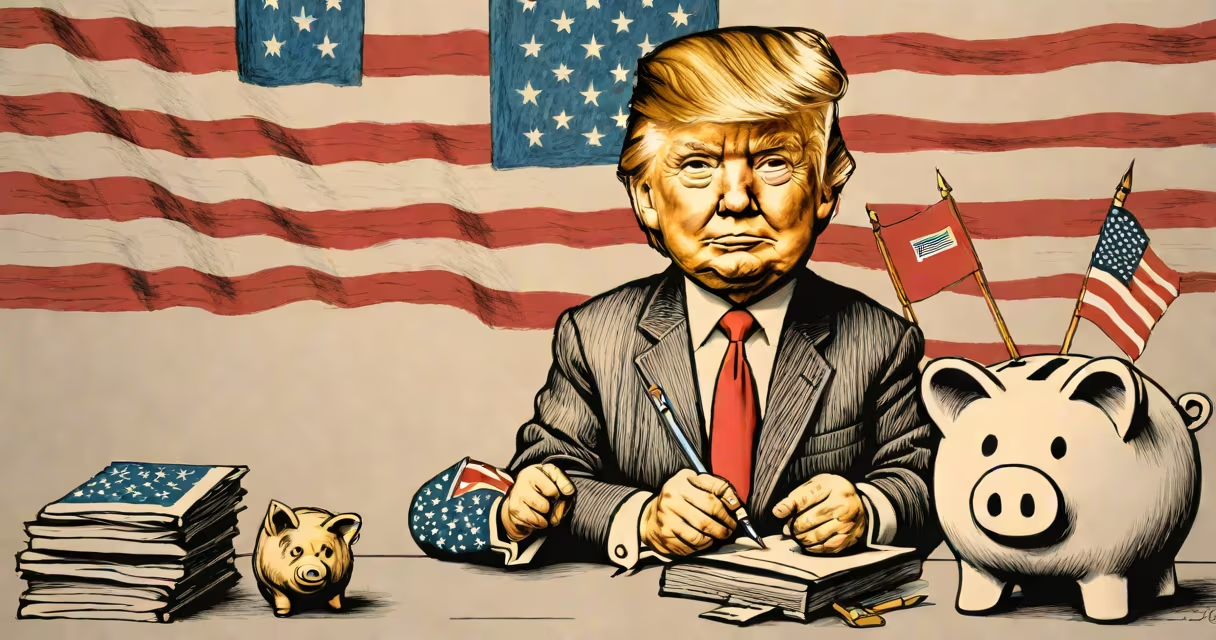
trump savings accounts for children are branded financial products designed to teach young people about saving, investing, and money management through structured accounts backed by institutions associated with Donald Trump's financial initiatives. These accounts typically feature higher interest rates than standard savings options and include educational materials tailored for ages 5 to 18.
These accounts are not issued by the federal government or the Trump Organization itself. Instead, they are offered by third-party banks and credit unions under licensing agreements or branding partnerships. The "Trump" label is used to signal trust, stability, and a focus on long-term financial growth-principles promoted in Trump's public speeches on personal finance and economic policy.
According to the Consumer Financial Protection Bureau (CFPB), branded financial products marketed toward youth must disclose fees, interest rates, and ownership terms. Accounts labeled "Trump" must meet the same regulatory standards as any other savings product, including FDIC insurance up to $250,000 per depositor.
trump savings accounts for children function like standard savings accounts but include features aimed at financial literacy. Funds are deposited by parents, guardians, or relatives and grow via compound interest. Most accounts require a minimum initial deposit between $25 and $100 and charge no monthly maintenance fees if balances stay above $500.
Each account includes access to a digital dashboard showing balance growth, interest earned, and spending habits. Parents can set goals-like saving $1,000 for college or a bike-and receive alerts when milestones are reached. Some accounts integrate with apps that simulate real-world budgeting tasks, such as allocating funds for charity, gifts, or emergencies.
A 2023 study by the National Endowment for Financial Education found that children who used goal-based savings tools were 43% more likely to maintain consistent savings habits into adulthood compared to peers using traditional accounts.
There are three primary models of trump savings accounts for children, each with distinct advantages based on age, funding level, and parental involvement:
| Type | Interest Rate (APY) | Minimum Deposit | Parental Controls | Best For |
|---|---|---|---|---|
| Basic Learning Account | 3.2% | $25 | Basic app access | Children aged 5-10 |
| Advanced Growth Plan | 4.1% | $100 | Goal setting, alerts, video lessons | Teens 11-16 |
| Premium Future Fund | 4.7% | $500 | Investment tracking, tax-advantaged options | High-income families, college prep |
The Premium Future Fund includes a feature called "Future Vision," which projects how much money will accumulate by age 25 based on current contributions and inflation assumptions. This tool uses historical data from the Federal Reserve Economic Data (FRED) series on consumer price index and average annual returns on diversified portfolios.
One non-obvious distinction: some accounts labeled "Trump" are not actually affiliated with Trump's business entities. The branding is licensed by third parties under trademark agreements. The Trump Organization does not manage or guarantee any of these accounts. Always verify the issuing institution through the FDIC's BankFind tool or the NCUA's Credit Union Locator.
These accounts are most common in states with strong financial education mandates, such as California, New York, and Texas. In California, schools have begun incorporating "Trump Savings Challenges" into math and social studies curricula, where students track real deposits and interest growth over a semester.
A school district in San Diego reported that 78% of participating students increased their savings by at least 20% within six months. Teachers noted improved engagement in math classes when students connected percentages to real-life savings outcomes.
Parents use these accounts to instill discipline around delayed gratification. A parent in suburban Atlanta shared that her 12-year-old daughter saved $420 over 11 months using a Basic Learning Account with a 3.2% APY. She used the funds to buy concert tickets, reinforcing the concept of earned value.
These accounts are often contrasted with prepaid debit cards for kids. While prepaid cards allow spending, they do not earn interest. According to the Federal Deposit Insurance Corporation (FDIC), only insured depository institutions can offer interest-bearing savings accounts. Prepaid cards are not covered by FDIC insurance.
Many assume that "trump savings accounts for children" are government-backed or issued by the Trump administration. This is false. The U.S. Department of the Treasury does not issue savings accounts under any political figure's name. All such accounts are private financial products regulated by state and federal banking authorities.
Another misconception is that higher interest rates mean higher risk. In reality, all trump savings accounts for children must be FDIC-insured or NCUA-insured. Rates above 4% are achievable due to competitive pricing among smaller banks and credit unions targeting youth markets-not because of elevated risk.
For example, a Premium Future Fund account at a federally chartered credit union in Colorado offers 4.7% APY. The institution maintains a capital ratio of 12.3%, well above the 8% threshold required by the NCUA for soundness. The account is backed by the National Credit Union Share Insurance Fund (NCUSIF).
Consider Maya, a 14-year-old from Denver. Her grandmother opened a Premium Future Fund account with $1,000. The account earns 4.7% APY compounded monthly. After five years, with no additional deposits, the balance grows to $1,263.23. The account includes biweekly email summaries showing interest accumulation and a library of videos on topics like credit scores and emergency funds.
Maya used the platform to set a goal: save $1,500 for a summer internship abroad. She added $50 every month. By month 18, she had met her goal. The system sent a certificate of achievement and linked her to a nonprofit offering career mentorship.
This outcome reflects findings from a 2022 report by the Center for Financial Literacy at Champlain College, which showed that youth who engaged with goal-setting tools in savings accounts were twice as likely to pursue higher education or entrepreneurship later in life.
While the "Trump" branding may attract attention, success depends on consistent contributions, low fees, and educational support. Choose an account that aligns with your child's age, savings goals, and family values.