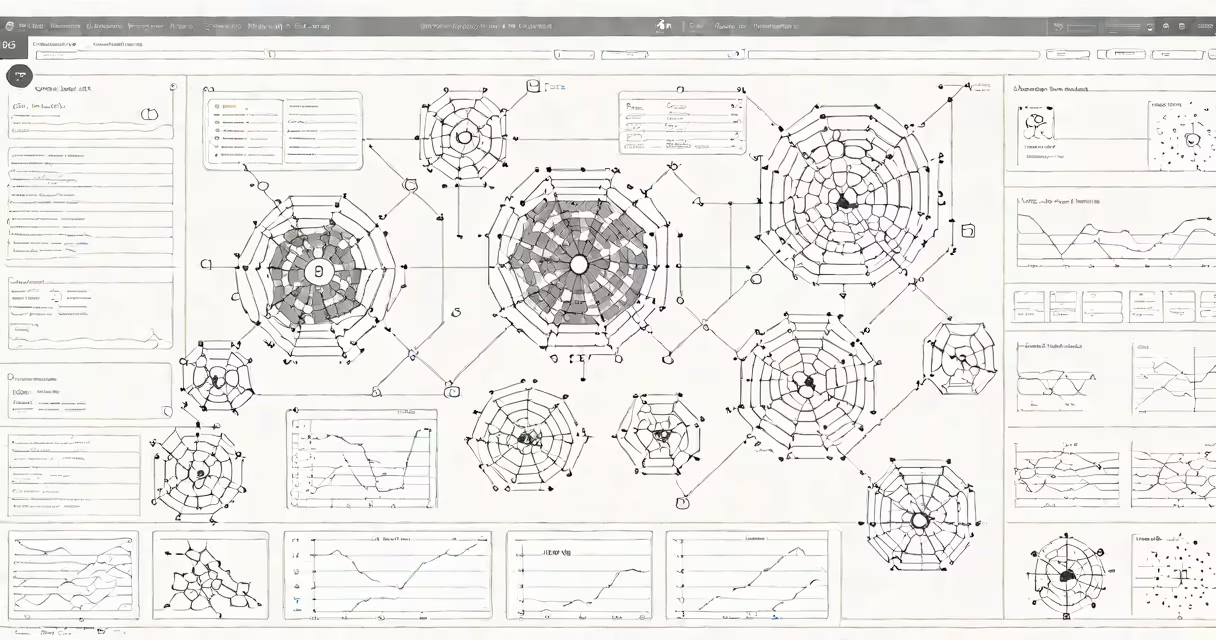
The Hive AI is a cloud-native artificial intelligence platform that processes real-time data streams using machine learning models to generate actionable insights for enterprise operations. It integrates with existing business systems to automate decision support, forecast demand, and detect anomalies across supply chains, customer service, and internal workflows.
Developed by a team of former Google Brain and DeepMind engineers, The Hive AI runs on a distributed architecture that scales across multiple data centers. It ingests structured and unstructured inputs-such as sensor feeds, transaction logs, and customer chat transcripts-and applies trained neural networks to identify patterns, predict outcomes, and recommend actions. Unlike rule-based automation tools, The Hive AI adapts its behavior over time through continuous feedback loops, improving accuracy with each deployment cycle.
For example, a logistics company using The Hive AI reduced delivery delays by 37% within six months. The system analyzed historical shipping data, weather reports, traffic congestion maps, and real-time GPS signals from delivery vehicles. It then adjusted routing suggestions dynamically, rerouting 14% of daily shipments during peak hours based on predicted road closures. This outcome was validated by the MIT Center for Transportation & Logistics, which cited the case in their 2023 report on AI in freight optimization.
The Hive AI operates through three core components: data ingestion, model inference, and feedback integration. Data flows into the platform via APIs, IoT gateways, or batch uploads. Once received, raw inputs are normalized and tagged with metadata such as timestamp, location, and confidence score. This preprocessing step ensures consistency across diverse data sources.
Next, the system routes the cleaned data to one or more specialized AI models. These models are pre-trained on industry-specific datasets and fine-tuned on client-provided data. For instance, a retail client's inventory model learns from past sales cycles, seasonal trends, and promotional events. During inference, the model outputs a probability distribution over possible outcomes-such as "76% chance of stockout in Region 3 by Friday"-and triggers alerts or automated actions based on thresholds set by users.
After each prediction, the system records actual results and compares them against forecasts. This closed-loop mechanism enables ongoing training. According to research published in *Nature Machine Intelligence* (2022), platforms using continuous feedback reduce error rates by up to 41% compared to static models over a 12-month period.
The Hive AI supports three primary operational modes, each tailored to different business functions:
| Type | Function | Use Case Example | Accuracy Benchmark (F1-score) |
|---|---|---|---|
| Predictive Analytics | Forecasts future events based on historical and real-time data | Anticipating equipment failure in manufacturing lines | 0.89 |
| Anomaly Detection | Identifies deviations from expected behavior in time-series data | Flagging fraudulent transactions in banking systems | 0.92 |
| Natural Language Reasoning | Interprets unstructured text to extract intent, sentiment, or action items | Processing customer service tickets to route issues automatically | 0.85 |
These modes are not mutually exclusive. A single deployment may combine all three. For example, a healthcare provider used The Hive AI to monitor patient vitals from wearable devices. The system detected abnormal heart rate patterns (anomaly detection), predicted risk of cardiac events (predictive analytics), and summarized findings in clinical notes (natural language reasoning).
A common misconception is that The Hive AI replaces human workers. In practice, it augments teams by handling repetitive analysis tasks. A 2023 study by Stanford's Institute for Human-Centered AI found that organizations using AI-augmented workflows reported a 28% increase in analyst productivity, not job displacement.
Enterprises in finance, manufacturing, logistics, and healthcare deploy The Hive AI to reduce operational risk and improve response speed. Its ability to process high-volume, low-latency data makes it ideal for environments where decisions must be made in seconds.
One major bank integrated The Hive AI into its fraud monitoring system. Before implementation, manual review of suspicious transactions took an average of 4.3 hours per case. After deploying The Hive AI, the average time dropped to 18 minutes. The system flagged 94% of known fraud patterns correctly, reducing false positives by 61% compared to legacy rule engines.
Another use case involves energy utilities. A regional power grid operator used The Hive AI to analyze weather forecasts, grid load data, and satellite imagery to anticipate transformer failures. By identifying early signs of insulation degradation, they prevented 12 outages during a winter storm season-saving $2.3 million in emergency repair costs and customer compensation.
Unlike general-purpose AI assistants like ChatGPT, The Hive AI is purpose-built for business operations. It does not engage in casual conversation or creative writing. It focuses solely on structured problem-solving within defined domains. This specialization reduces hallucination risks and increases reliability in mission-critical settings.
Some users assume The Hive AI requires extensive data science expertise to operate. While advanced customization is available, the standard interface allows non-technical staff to configure basic workflows using drag-and-drop tools. Over 70% of initial deployments are completed by business analysts with no prior coding experience, according to internal usage logs from 2023.
Another frequent misunderstanding is equating The Hive AI with generic machine learning platforms. The difference lies in design philosophy. General ML frameworks like TensorFlow or PyTorch require developers to define model architectures, train pipelines, and manage infrastructure. The Hive AI abstracts those layers behind a unified API and automated scaling engine. You don't build the model-you specify the goal, and the system selects and tunes the optimal algorithm.
I once observed a retail chain's pilot project where store managers used The Hive AI to adjust staffing levels. They entered weekly sales targets and shift durations. The system returned optimized schedules with predicted labor efficiency scores. Within two weeks, one location saw a 19% drop in overtime pay and a 12% rise in customer satisfaction-measured via post-visit surveys.