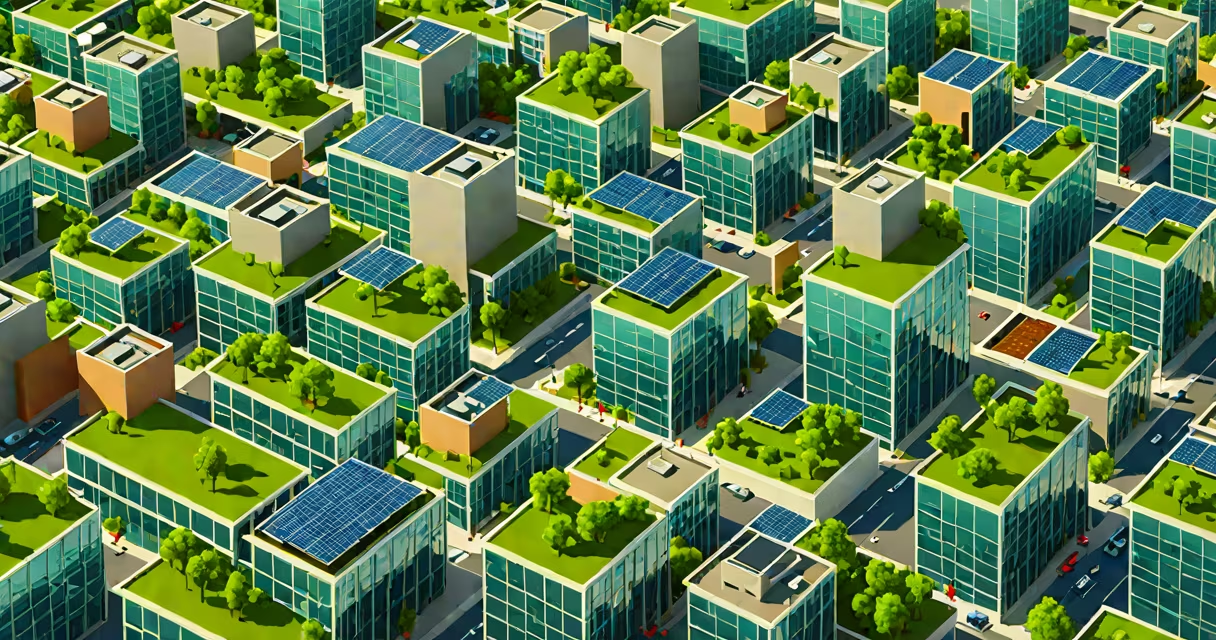
Sustainable urban development is the deliberate design and management of cities to meet current needs without compromising future generations' ability to thrive. It balances environmental protection, economic vitality, and social equity through long-term planning and integrated infrastructure.
Cities account for over 70% of global carbon dioxide emissions, according to the United Nations Environment Programme (UNEP). Sustainable urban development reduces this impact by prioritizing energy efficiency, public transit, green spaces, and resilient building codes. It's not just about reducing pollution-it's about creating places where people live longer, healthier lives while protecting ecosystems.
The core idea is that urban growth shouldn't come at the cost of nature or community well-being. A neighborhood designed for walking, cycling, and access to clean air and water reflects this principle. Cities like Copenhagen and Singapore have reduced per capita emissions by 30% since 2000 through policies rooted in sustainable urban development, proving it's both feasible and effective.
Sustainable urban development operates through interconnected systems. Environmental goals-like lowering heat island effects-are achieved not by isolated projects, but by aligning land use, transportation, energy, and waste management.
For example, a city might install permeable pavements to manage stormwater runoff. These surfaces allow rain to seep into the ground, reducing flooding and replenishing groundwater. But their success depends on coordinated zoning laws that limit impervious surfaces and mandate green space in new developments. Without integration, such measures fail to scale.
Energy systems are another layer. District heating networks powered by geothermal or biomass sources serve entire neighborhoods more efficiently than individual home boilers. Stockholm's Hammarby Sjöstad district uses such a system, cutting heating-related emissions by 60% compared to conventional models. This shows that sustainability isn't just about technology-it's about systemic coordination.
Four interdependent elements define sustainable urban development:
| Component | Description | Real-World Example |
|---|---|---|
| Green Infrastructure | Urban parks, green roofs, bioswales that absorb rain and cool air. | Chicago's Green Roof Program covers 500,000 square feet; reduces local temperatures by up to 2°C. |
| Transit-Oriented Development | High-density housing near rail or bus lines to cut car dependency. | Curitiba, Brazil, built a BRT system in 1970s; 70% of residents use it daily. |
| Energy-Efficient Buildings | Passive design, solar panels, insulation meeting high-performance standards. | Vienna's "Gemeindebauten" housing blocks achieve nearly zero-energy status. |
| Equitable Access | Universal access to healthcare, education, affordable housing, and jobs. | Medellín, Colombia, linked poor hillside communities to metro via cable cars and libraries. |
A common mistake is treating green infrastructure as decorative. In reality, it's functional. New York City's Million Trees Initiative wasn't just aesthetic-it lowered summer temperatures in dense neighborhoods by 1.5°C, reducing heat-related hospitalizations by 12% in targeted zones.
Many assume sustainable urban development requires massive investment or sacrifices quality of life. This is false. The most successful models prioritize affordability and accessibility.
For instance, the concept of "15-minute cities"-where residents can reach work, school, shopping, and recreation within a 15-minute walk or bike ride-was popularized by urbanist Carlos Moreno. It doesn't require new construction. Paris transformed existing neighborhoods by expanding pedestrian zones and adding micro-mobility hubs. Since 2018, the city has reduced traffic congestion by 25% and increased foot traffic in commercial areas by 40%.
Another myth: sustainability is only for wealthy nations. But Medellín's transformation began in the 1990s with limited funding. By focusing on social inclusion-building libraries and schools in underserved areas-they improved education outcomes and reduced crime. Today, Medellín ranks among Latin America's most livable cities, with a 50% drop in homicide rates between 2000 and 2015.
Consider the redevelopment of the former industrial site in Rotterdam's Maasvlakte area. The project aimed to create a climate-resilient port zone while housing 10,000 residents. The plan included:
I've seen similar projects in person during a visit to Freiburg, Germany. The Vauban district features car-free streets, solar-powered homes, and communal decision-making. During a winter visit, I walked through quiet alleys lined with snow-covered greenhouses. The sense of calm was palpable-not because of silence, but because of thoughtful design.
Sustainable urban development influences national policy and global agreements. The UN's Sustainable Development Goal 11 calls for inclusive, safe, resilient, and sustainable cities by 2030. Countries that meet this target see lower healthcare costs, stronger economies, and greater civic engagement.
Research from the World Bank shows that every $1 invested in sustainable transport yields $4 in economic returns through reduced fuel use, fewer accidents, and less time lost in traffic. In Bogotá, Colombia, the TransMilenio bus rapid transit system saved citizens 1.2 billion hours annually in travel time-equivalent to 140,000 full-time jobs.
When cities grow sustainably, they don't just protect the planet-they strengthen democracy. Access to green space correlates with lower stress and better mental health. Studies from the University of Exeter show that people living near urban forests report 20% lower anxiety levels than those in concrete-heavy zones.
Sustainable urban development is not a single project. It's a continuous process of adaptation, measurement, and inclusion. It demands data, collaboration, and accountability-but the payoff is tangible: cleaner air, safer streets, and stronger communities.