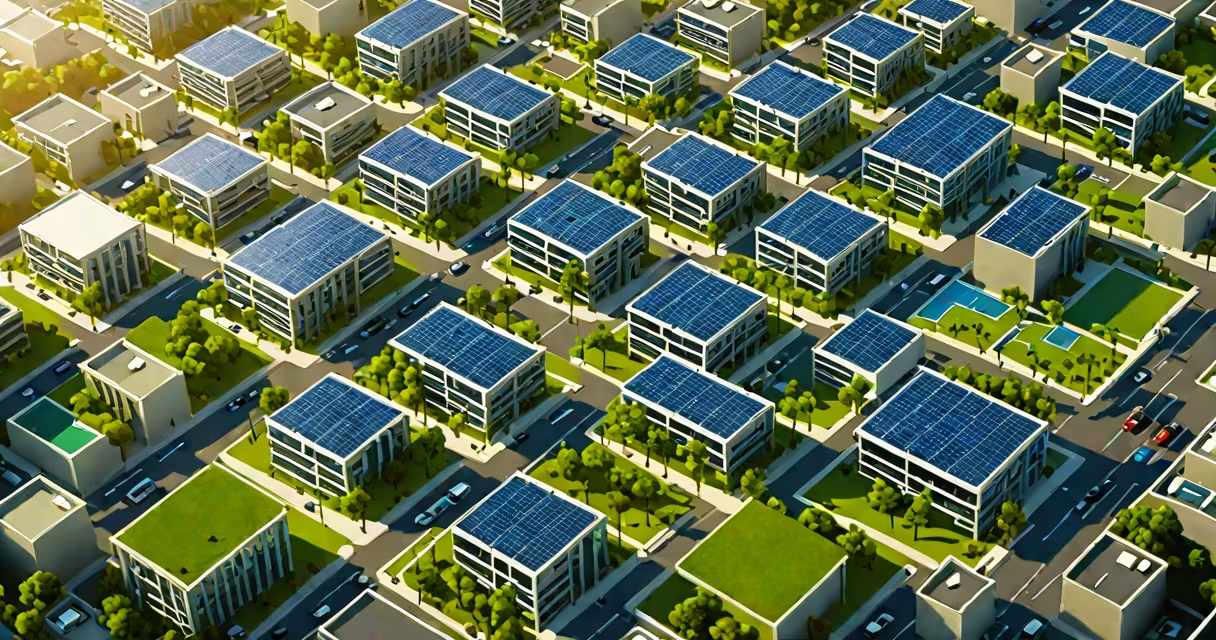
Sustainable cities of the future are urban areas designed to meet current needs without compromising environmental health, social equity, or economic stability for future generations. They prioritize low-carbon infrastructure, renewable energy integration, green spaces, and resilient systems that adapt to climate change and population growth.
These cities operate on principles of long-term viability. They reduce dependence on fossil fuels, minimize waste, and ensure access to clean water, affordable housing, and public transit. The goal is not just to lower carbon footprints but to create environments where people thrive socially and ecologically.
According to the United Nations' Sustainable Development Goals (SDG 11), by 2030, cities must be inclusive, safe, resilient, and sustainable. This includes expanding green space to at least 15% of urban land and improving air quality. The World Bank estimates that investing in sustainable urban development yields $4 in benefits for every $1 spent, primarily through reduced healthcare costs and increased productivity.
They function through integrated systems that balance ecological limits with human needs. Energy is generated locally using solar, wind, and geothermal sources. Buildings are constructed with recycled materials and designed for passive heating and cooling. Transportation networks rely on electric buses, cycling infrastructure, and pedestrian-only zones.
Water management uses rainwater harvesting, permeable pavements, and decentralized wastewater treatment. Waste is minimized through circular economy models-materials are reused or composted rather than sent to landfills. Smart grids monitor energy use in real time, adjusting supply based on demand and weather patterns.
A key feature is adaptive governance. City planners collaborate with residents, scientists, and private sector partners to co-design policies. For example, Amsterdam's "Smart City" program uses IoT sensors to track traffic flow, air pollution, and energy consumption, feeding data into city-wide optimization algorithms.
These cities aren't monolithic. They vary by geography, culture, and available resources. However, four foundational elements appear consistently:
| Type | Key Features | Real-World Example |
|---|---|---|
| Energy-Positive Districts | Net-zero or net-positive energy production via solar facades, district heating, and battery storage | Hammarby Sjöstad, Stockholm - generates 120% of its annual energy needs |
| Green Corridor Networks | Connected parks, bioswales, and tree-lined streets that manage stormwater and reduce heat island effects | Curitiba, Brazil - 160 km of green corridors reduce flooding and support biodiversity |
| Transit-Oriented Developments | Housing and services within 500 meters of high-capacity public transport | Medellín, Colombia - metro system linked to cable cars serving hillside communities |
| Circular Economy Hubs | Local recycling centers, repair cafés, and material exchange platforms | Freiburg, Germany - 60% of municipal waste is reused or recycled annually |
Each model addresses different challenges. Hammarby Sjöstad shows how dense urban living can be powered entirely by renewables. Curitiba proves that flood resilience and social inclusion go hand-in-hand. Medellín demonstrates that mobility equity improves access to jobs and education.
Many assume sustainable cities require massive subsidies or technological breakthroughs. But evidence shows incremental upgrades yield measurable results. Copenhagen's transformation into a carbon-neutral capital by 2025 relied on existing tools: expanded bike lanes, district heating, and building retrofits-not futuristic inventions.
Another myth is that sustainability means sacrificing urban density. On the contrary, high-density living reduces per capita resource use. A 2022 study by the International Energy Agency found that compact cities emit 40% less CO₂ per person than sprawling ones, even when accounting for energy-intensive buildings.
Some confuse sustainability with aesthetics. A city may have green roofs and solar panels but still fail if it excludes low-income residents from housing or transit access. True sustainability requires equity. The UN-Habitat report on inclusive urbanization stresses that 70% of global urban growth will occur in Asia and Africa by 2050-meaning solutions must work in diverse socioeconomic contexts, not just wealthy Western cities.
Singapore's Punggol Digital District exemplifies how multiple strategies converge. Built on reclaimed land, it integrates solar-powered microgrids, AI-driven traffic signals, and vertical gardens on high-rise residential towers. All buildings exceed Green Mark Platinum certification standards-the nation's highest green building rating.
Residents access services via a single digital platform. Energy use is monitored in real time, with incentives for reducing peak demand. Waste is sorted automatically at the building level, with organic waste converted into biogas for cooking fuel. The district aims for 80% waste diversion by 2030.
One non-obvious detail: Punggol uses a "smart water meter" network that detects leaks within minutes. In 2023, this system prevented 1.2 million liters of water loss-equivalent to 400 household months of usage-before manual inspection could have caught the issue.
When I visited in 2022, I noticed children playing near a rain garden that doubled as a classroom for environmental science. The design wasn't just functional-it was educational. That's a sign of successful sustainable cities: they embed learning into daily life.
By 2050, nearly 70% of the world's population will live in cities. The challenge isn't just building more-but building better. The most effective sustainable cities of the future are those that treat climate action as a daily practice, not a one-time project.
Urban planners now use predictive modeling to simulate climate impacts decades ahead. Cities like Rotterdam and Jakarta are testing floating neighborhoods and elevated walkways to prepare for sea-level rise. These designs aren't speculative-they're being piloted today.
For individuals, understanding sustainable cities of the future means recognizing that policy and personal choices intersect. Choosing public transit, supporting local food systems, and engaging in community planning all contribute to long-term resilience.