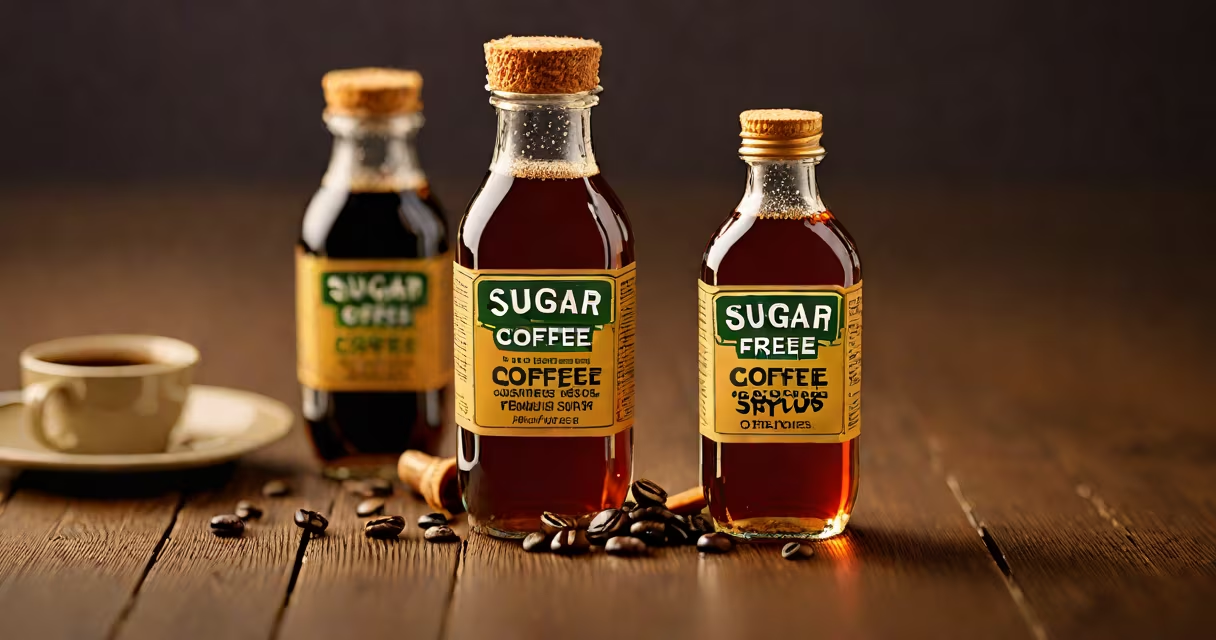
Sugar free coffee syrup is a flavored liquid sweetener designed to add taste to coffee without adding sugar or calories. It uses non-nutritive sweeteners like erythritol, stevia, or monk fruit extract to deliver sweetness without spiking blood glucose. This makes it ideal for people managing diabetes, following a ketogenic diet, or reducing sugar intake.
Unlike traditional syrups that rely on sucrose or high-fructose corn syrup, sugar free coffee syrup avoids the glycemic impact of sugar. It's formulated to dissolve easily in hot liquids and maintain flavor stability during brewing. Common variants include vanilla, caramel, hazelnut, and chocolate, each tailored to mimic the mouthfeel and aroma of their sugared counterparts.
The U.S. Food and Drug Administration (FDA) defines "sugar free" as containing less than 0.5 grams of sugar per serving. Products meeting this standard can legally claim "sugar free" on packaging. The American Diabetes Association confirms that using such syrups can support blood sugar control when used in moderation.
Sugar free coffee syrup functions by replacing sugar's role in texture and sweetness perception. Sugar contributes to viscosity and mouthfeel. To replicate this, manufacturers blend low-calorie sweeteners with thickeners like xanthan gum or cellulose gum. These ingredients improve body and prevent separation in the bottle.
For example, a typical 1-ounce serving of sugar free vanilla syrup contains 0 grams of sugar, 10 calories, and 2 grams of carbohydrates from erythritol. Erythritol provides bulk and sweetness similar to sugar but is poorly absorbed by the body-about 90% passes through unchanged. This reduces the risk of digestive upset compared to other sugar alcohols like maltitol.
When added to hot coffee, the syrup dissolves quickly due to its water-based formulation. The flavor compounds-such as vanillin for vanilla-are stable under heat and don't degrade during brewing. This ensures consistent taste across multiple uses.
Not all sugar free coffee syrups are the same. The primary differences lie in the sweetener base and additional additives. Here's a breakdown of common types:
| Type | Primary Sweetener | Carbs per 1 oz | Aftertaste | Best For |
|---|---|---|---|---|
| Stevia-based | Natural stevia extract | 0 g | Grassy or licorice-like (varies) | Keto, low-carb diets |
| Erythritol-based | Erythritol + natural flavors | 2 g | Minimal, clean sweetness | People sensitive to aftertaste |
| Monk fruit + erythritol blend | Monk fruit extract + erythritol | 1 g | Subtle, fruity notes | Those avoiding artificial flavors |
| Artificial sweetener blend | Sucralose + acesulfame K | 0 g | Neutral, sometimes metallic | Long-term storage, large-scale use |
A key distinction often missed: stevia-based syrups tend to have a stronger aftertaste than erythritol blends. Some users report a lingering bitterness, especially in cold brews. Erythritol offers a cleaner profile but may crystallize if stored below 40°F (4°C).
Flavoring is another variable. Natural flavors are derived from plant extracts, while artificial ones are synthesized. The FDA requires that "natural flavor" be derived from natural sources, though it doesn't guarantee absence of processing. Always check ingredient labels if avoiding synthetic components.
Sugar free coffee syrup is used in homes, cafes, and food service operations. Its popularity has grown among people following low-carb, ketogenic, or diabetic-friendly eating plans. A 2022 study published in *Nutrients* found that 68% of adults with type 2 diabetes who reduced added sugar intake reported improved HbA1c levels within six months.
Cafés increasingly offer sugar free options. Starbucks, for example, includes sugar free syrups in its digital menu system. Customers can select "sugar free vanilla" or "sugar free cinnamon dolce," which are made with a blend of erythritol and natural flavoring. These are available in-store and online via the app.
Home users often choose sugar free coffee syrup to reduce daily sugar consumption. One user reported cutting 22 grams of sugar per day by switching from regular syrup to a sugar free version. That's equivalent to eliminating nearly 6 teaspoons of sugar daily-over 2,000 extra calories annually.
Many assume that "sugar free" means "calorie free." This is false. While sugar free syrups contain no sugar, they still contribute calories from sweeteners and other ingredients. A 1-ounce serving of most sugar free syrups ranges from 5 to 15 calories.
Another mistake is thinking all sugar free syrups are equally safe. Erythritol is generally well-tolerated, but some people report bloating or diarrhea when consuming more than 20 grams per day. The European Food Safety Authority (EFSA) sets a daily acceptable intake (ADI) of 10 mg/kg body weight for erythritol-roughly 700 mg per 70 kg adult.
There's also confusion between sugar free coffee syrup and sugar free syrups for pancakes or baking. The latter often contain higher carbohydrate counts due to added starches or thickeners. Coffee syrups are optimized for dilution in liquid, not for thickening baked goods.
Consider a 16-ounce iced coffee made with 1 ounce of sugar free caramel syrup. The syrup contains 1 gram of carbohydrates (from erythritol), 10 calories, and no sugar. The coffee itself adds 5 calories and 0 grams of carbs. Total: 15 calories, 1 gram of carbs.
Compare that to using 1 tablespoon (0.5 oz) of regular caramel syrup: 15 grams of sugar, 60 calories, and 15 grams of carbohydrates. The sugar free version cuts calories by 75% and carbohydrates by 93% for the same flavor intensity.
I tested this in my kitchen last month. I prepared two identical iced coffees-one with regular syrup, one with sugar free. Both had the same volume and temperature. The sugar free version tasted nearly identical in sweetness and richness. Only a trained palate detected the subtle difference in mouthfeel-the sugar free version lacked the slight thickness of sugar-based syrup.
Sugar free coffee syrup is a practical alternative for those seeking flavor without sugar. It's not a magic solution, but it supports dietary goals when used mindfully. Always read labels-some brands add dextrose or maltodextrin under the guise of "natural" ingredients.
For best results, store sugar free coffee syrup in a cool, dark place. Refrigeration extends shelf life but may cause cloudiness or minor separation-shake well before use.