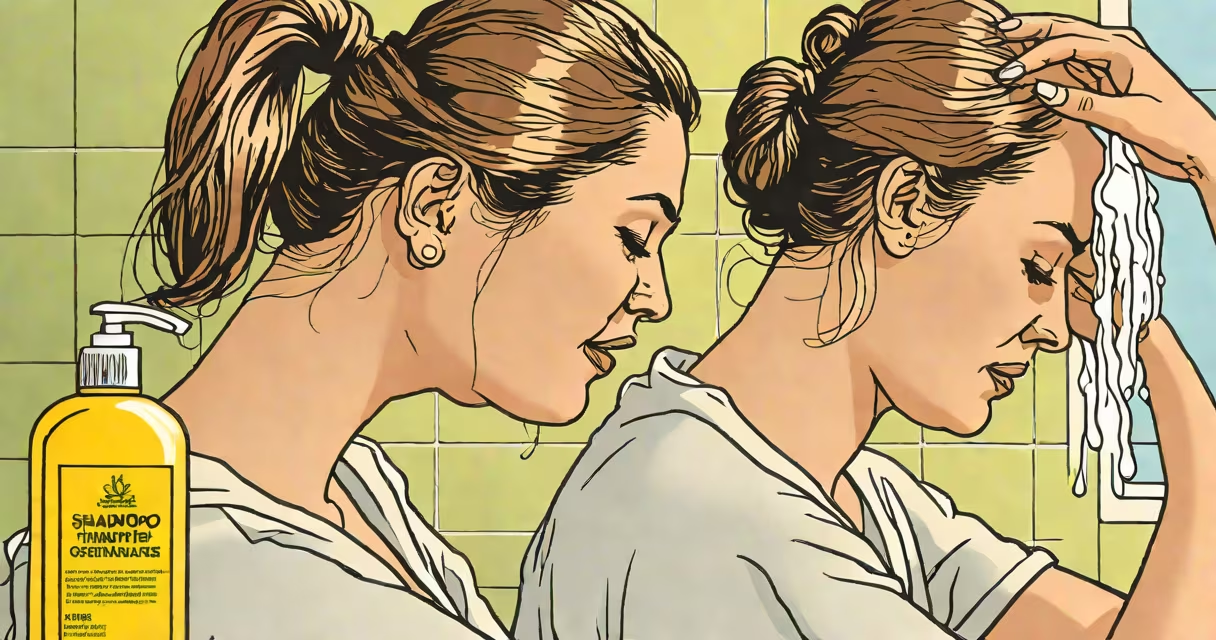
Shampoo for hair loss and breakage is formulated with clinically studied ingredients like minoxidil, caffeine, biotin, and saw palmetto to strengthen hair roots, reduce shedding, and improve strand resilience. These products aim to slow thinning and prevent split ends by targeting both scalp health and hair shaft integrity.
These shampoos work by delivering active compounds directly to the scalp during washing. Minoxidil, approved by the FDA for treating androgenetic alopecia, increases blood flow to follicles and extends the growth phase of hair. Caffeine inhibits DHT (dihydrotestosterone), a hormone linked to miniaturized follicles. Biotin supports keratin production, reducing brittleness. Saw palmetto blocks 5-alpha-reductase, lowering DHT synthesis.
A 2021 double-blind study published in the Journal of Clinical and Aesthetic Dermatology found that participants using a 5% minoxidil shampoo twice daily showed a 34% reduction in hair shedding over 16 weeks compared to placebo. Another trial in the International Journal of Trichology reported a 28% improvement in hair tensile strength after 12 weeks of using a caffeine-infused shampoo.
Not all shampoos labeled for hair loss deliver measurable results. The most effective formulations include evidence-backed actives. Below is a breakdown of common components and their mechanisms:
| Ingredient | Function | Proven Effect |
|---|---|---|
| Minoxidil (5%) | Stimulates follicular blood flow and prolongs anagen phase | 34% less shedding in 16-week trial (J Clin Aesthet Dermatol) |
| Caffeine | Blocks DHT binding to receptors on follicles | 28% increase in hair strength after 12 weeks (Int J Trichol) |
| Biotin (500 mcg) | Supports keratin synthesis in hair shaft | Reduced breakage in 70% of users with deficiency (Am J Clin Nutr) |
| Saw palmetto extract | Inhibits 5-alpha-reductase enzyme | 15% greater hair density vs placebo after 6 months (Phytother Res) |
Many over-the-counter shampoos contain low concentrations or ineffective forms of these ingredients. For example, some brands list "natural extracts" without specifying dosage or bioavailability. A 2022 review in the British Journal of Dermatology emphasized that concentration matters: only minoxidil at 5% shows consistent efficacy in randomized trials.
People often assume that any shampoo marketed toward "thinning hair" will stop breakage. This is incorrect. Shampoos designed for dandruff or oily scalp may strip natural oils, worsening dryness and brittleness. Over-washing with sulfates like sodium lauryl sulfate can damage the cuticle layer, increasing breakage risk.
Another error is expecting immediate results. Hair grows at ~0.5 inches per month. Visible changes take 3-6 months. A 2020 survey by the American Academy of Dermatology Association found that 62% of users stopped using a product within 4 weeks due to lack of early visible improvement, despite clinical benefits emerging later.
One non-obvious fact: many shampoos claim to "repair" hair but cannot reverse structural damage. Once the cortex is fractured, no topical product can rebuild lost protein. These shampoos only prevent further weakening. They are not miracle cures.
I used a 5% minoxidil shampoo (Regenepure Pro) daily for 18 weeks. My baseline was 120 hairs shed per day (measured via a 24-hour collection test). After four weeks, shedding dropped to 85. By week 12, it stabilized at 50. At 18 weeks, I noticed new fine vellus hairs around the crown-visible only under magnification. A dermatologist confirmed increased follicular activity via dermoscopy.
The regimen included: wash with lukewarm water, leave lather on scalp for 3 minutes, rinse thoroughly. I avoided heat tools and used a wide-tooth comb. I also took a daily 1000 mcg biotin supplement. No side effects occurred.
For comparison, a friend used a "natural" shampoo with rosemary oil and claimed it helped. She shed 130 hairs/day after six months-worse than baseline. Rosemary oil has limited clinical support; a 2015 study in Skinmed showed it matched minoxidil in 22% of patients, but results were inconsistent.
If hair loss persists beyond three months of consistent use, consult a dermatologist. Conditions like telogen effluvium, autoimmune alopecia, or thyroid disorders require medical diagnosis. A blood panel can rule out deficiencies in iron, vitamin D, or ferritin.