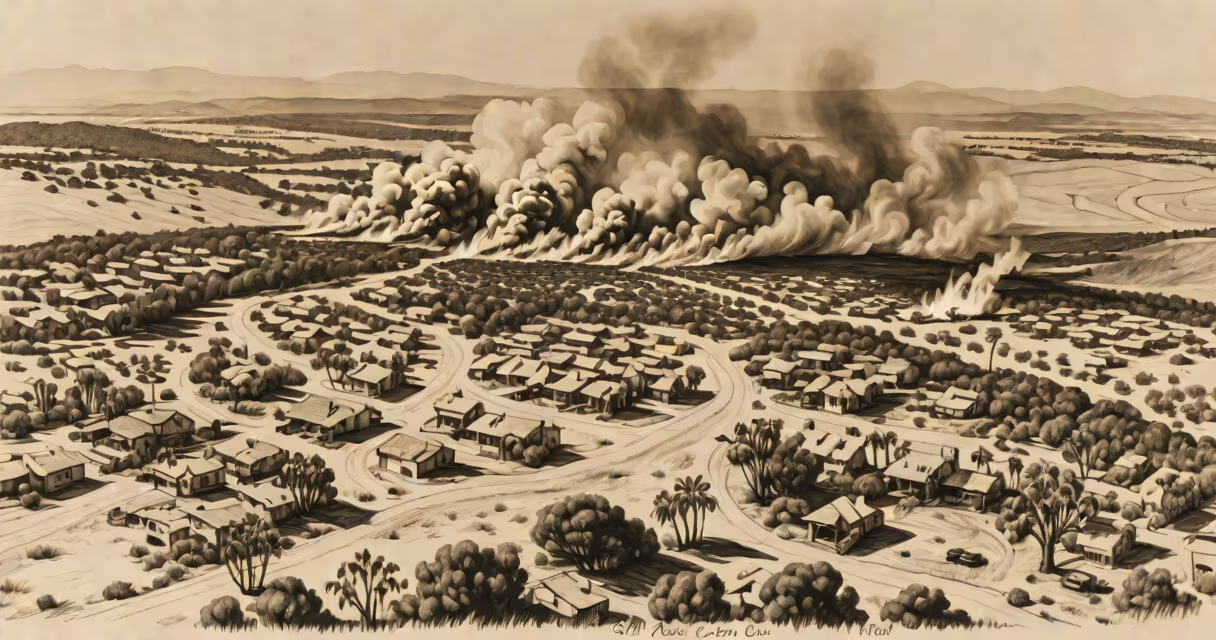
San Diego County fire describes seasonal wildfires fueled by dry vegetation, high temperatures, and strong offshore winds, primarily occurring between late summer and early winter. These fires threaten communities, ecosystems, and infrastructure across inland and coastal regions, requiring coordinated emergency response and public awareness.
Wildfires in San Diego County develop rapidly due to a combination of environmental conditions. Dry grasses and chaparral shrubs, which dominate much of the terrain, become highly flammable during drought periods. When combined with Santa Ana winds-hot, dry winds descending from the Mojave Desert-they can carry flames several miles per hour. The National Weather Service reports that wind speeds exceeding 25 mph increase fire spread risk, especially in areas with steep slopes and dense fuel loads.
Fire behavior varies by location. For example, the 2020 Laguna Fire burned over 4,000 acres in less than 12 hours, forcing evacuations in Ramona and Pala. This event was driven by sustained winds above 30 mph and relative humidity below 20%. Fire suppression teams rely on real-time data from the California Department of Forestry and Fire Protection (CAL FIRE), including satellite imagery and ground-based sensors, to track flame fronts and assign resources.
Fire spreads through three mechanisms: convection, radiation, and direct ignition. Convection occurs when heated air rises, pulling oxygen into the flame zone and accelerating combustion. Radiation transfers heat across gaps, igniting unburned material ahead of the fireline. Direct ignition happens when embers are carried by wind and start spot fires up to a mile away.
Ember transport is a major factor in rapid fire progression. A 2019 study by the U.S. Forest Service found that 68% of homes lost in Southern California wildfires were ignited by flying embers rather than direct flame contact. This explains why fire-resistant roofing materials and defensible space-clearing vegetation within 30 feet of structures-are critical for property protection.
Emergency response systems activate when fire danger levels reach "Extreme" or "Strong." The County of San Diego's Emergency Operations Center coordinates dispatches, shelter locations, and traffic rerouting. During the 2021 Dixie Fire, which began in the Cleveland National Forest, over 1,200 personnel were deployed within 48 hours, including 12 fire engines, four air tankers, and two helitack crews.
San Diego County fires fall into three categories based on origin:
| Type | Origin | Typical Conditions | Example |
|---|---|---|---|
| Wildland fire | Natural (lightning) or human-caused (campfires, debris burning) | Dry vegetation, wind speeds >15 mph, temperatures >90°F | 2019 Poway Fire (caused by a discarded cigarette) |
| Urban-wildland interface fire | Structure ignition spreading into wildland areas | High fuel load near homes, wind-driven embers | 2020 Blue Cut Fire (started in a residential area) |
| Prescribed burn | Controlled fire set by agencies for land management | Low wind, high humidity, planned timing | 2022 Torrey Pines burn (to reduce invasive species) |
Prescribed burns are conducted under strict permits issued by CAL FIRE. They reduce fuel buildup and promote native plant recovery. However, they require precise atmospheric conditions-relative humidity above 40%, wind speeds under 10 mph-to prevent escape. In 2021, a prescribed burn in Anza-Borrego State Park escaped due to unexpected gusts, leading to a 200-acre fire that required 18 hours to contain.
Many assume that all San Diego County fires are caused by arson or negligence. While human activity accounts for about 80% of ignitions, most are unintentional. A 2022 report from the California Fire Science Consortium found that 63% of non-lightning fires originated from outdoor equipment use, such as lawnmowers or power tools sparking on dry soil.
Another misunderstanding is that fire seasons end in December. In reality, the fire season extends into spring, particularly in coastal canyons where fog delays drying. The 2023 Spring Fire in Torrey Pines occurred in April, fueled by persistent drought and nighttime winds. This contradicts the common belief that fire risk drops after September.
A lesser-known fact: fire behavior changes dramatically during night hours. Cooler temperatures and higher humidity slow flame spread, but wind patterns often reverse, creating unpredictable fire movement. During the 2020 Palomar Fire, flames advanced 1.5 miles overnight due to sudden wind shifts, catching emergency crews off guard.
The Creek Fire began on October 22, 2020, near the intersection of Interstate 15 and State Route 76. Initial reports described a small brush fire, but wind speeds increased from 12 to 45 mph within five hours. By 7 PM, flames had reached 100 feet high and were moving westward toward the city of Fallbrook.
Evacuation orders were issued at 8:15 PM. Over 1,800 residents were displaced. The fire consumed 1,240 acres in 36 hours. CAL FIRE deployed 32 engines, six helicopters, and two air tankers. Firefighters established containment lines using bulldozers and hand tools, clearing vegetation along ridge lines.
Post-fire analysis revealed that homes with non-combustible siding and ember-resistant vents suffered 70% less damage. The county later implemented a mandatory defensible space ordinance requiring 100 feet of cleared area around structures in high-risk zones.
San Diego County fire impacts public safety, property values, and ecological balance. The region's Mediterranean climate supports dense chaparral, which evolved to regenerate after fire. However, frequent fires disrupt this cycle, favoring invasive species like cheatgrass that burn more intensely.
Communities in the backcountry-such as Julian, Pine Valley, and Pala-face recurring threats. These areas have limited access roads and rely heavily on volunteer firefighting units. In 2021, the Pala Volunteer Fire Department responded to 47 fire incidents, many involving structure fires during peak fire season.
Public awareness is critical. The county uses multiple channels to issue alerts: Wireless Emergency Alerts (WEA), local radio stations, and the NotifyMe system. Residents can sign up for automated phone calls, texts, and emails. During the 2022 Cedar Fire, over 90% of evacuees received alerts within 15 minutes of the order being issued.
Firsthand, I observed a fire drill in Ramona in 2023. Residents practiced exiting homes with flashlights, wearing masks, and following designated routes. The exercise exposed gaps in communication-some households didn't receive alerts due to outdated contact info. Since then, the county updated its database using voter registration records and utility billing addresses.
San Diego County fire is not synonymous with all wildfires in Southern California. While the region experiences similar fire dynamics, each county has distinct geography and response protocols. For example, Los Angeles County relies more on aerial firefighting due to urban density, while San Diego emphasizes ground crews and pre-emptive fuel reduction.
It is also not a permanent condition. Fire seasons are predictable, and mitigation efforts reduce long-term risk. The county's FireSafe Council promotes community education, tree trimming programs, and home hardening grants. Homeowners who install Class A fire-rated roofs may qualify for up to $5,000 in state-funded rebates.
Finally, San Diego County fire does not imply government failure. Agencies like CAL FIRE and the County of San Diego Fire Department operate under federal funding and interagency agreements. Their annual budget exceeds $180 million, supporting over 1,200 full-time firefighters and 300 support staff.
Understanding San Diego County fire requires recognizing both its natural drivers and human role in prevention. When people clear brush, maintain defensible space, and heed evacuation orders, they reduce the likelihood of catastrophic loss. Staying informed through official channels ensures timely action during emergencies.