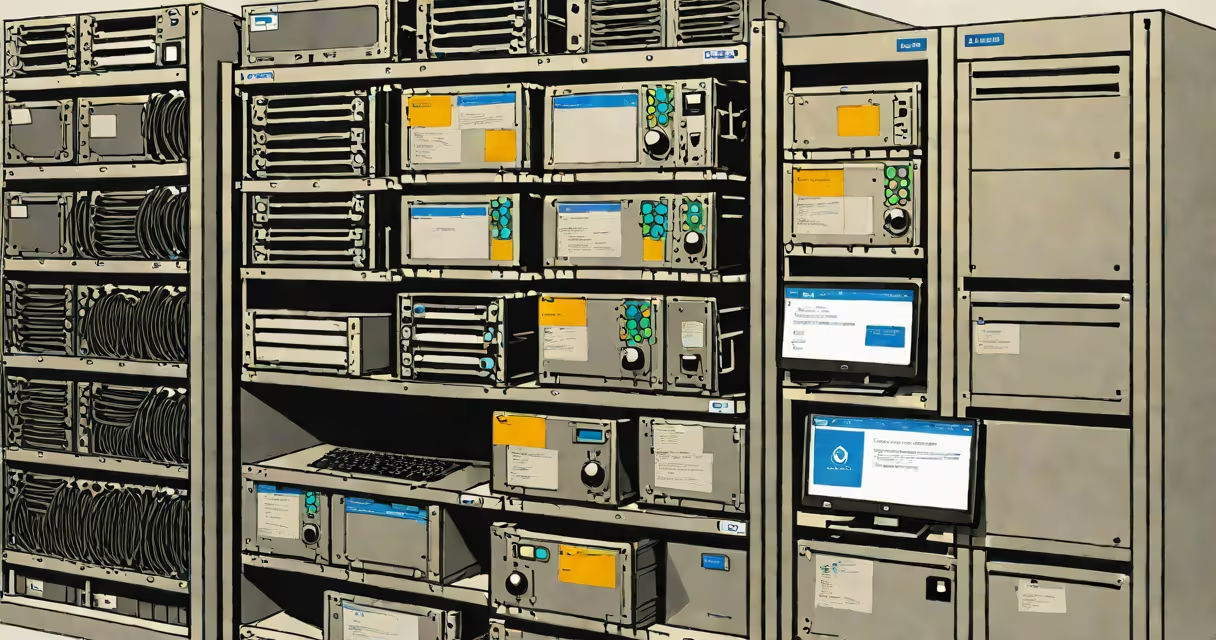
An rfid it asset tracking system uses radio-frequency identification to automatically monitor and manage the location, status, and movement of IT assets such as laptops, servers, and network devices. It eliminates manual inventory checks by using unique electronic tags that transmit data to readers without line-of-sight.
Each tag contains a microchip and antenna. When within range of an RFID reader, the tag sends a signal with a unique identifier. This data connects to a centralized database, enabling real-time visibility into asset deployment, maintenance history, and ownership. Unlike barcode systems, RFID works through walls, in bulk, and without scanning each item individually.
For example, a university IT department deployed rfid tags on 1,200 student laptops. During annual audits, staff used handheld scanners to verify device locations across five campus buildings. The process took 45 minutes instead of 12 hours previously required for manual checks. The system flagged 17 missing devices, leading to recovery and reduced replacement costs.
RFID operates via electromagnetic fields. Passive RFID tags-common in IT asset tracking-have no internal power source. They draw energy from the reader's radio signal to activate and transmit their ID. Active tags have batteries and can send signals over longer distances, but they're costlier and less common in standard IT environments.
When a tagged asset passes through a reader zone-such as a doorway, server room entrance, or storage bay-the reader captures the tag's ID and sends it to a central software platform. That platform updates the asset's location, logs access events, and triggers alerts if an asset leaves a secure area or exceeds maintenance intervals.
There are three main types of RFID systems used in IT asset tracking:
| Type | Frequency | Range | Use Case |
|---|---|---|---|
| Low Frequency (LF) | 125-134 kHz | up to 10 cm | Secure cabinets, door access control |
| High Frequency (HF) | 13.56 MHz | up to 1 m | Library-style inventory, desktop readers |
| Ultra High Frequency (UHF) | 860-960 MHz | up to 12 m | Warehouse zones, large-scale facility tracking |
Most rfid it asset tracking systems use UHF for broad coverage and speed. A single reader can scan dozens of tags simultaneously, making it ideal for high-volume environments like data centers or enterprise offices.
Key components include: RFID tags (attached to assets), readers (fixed or handheld), antennas, and backend software. Tags come in various forms-adhesive labels, embedded chips, or durable metal tags for rugged environments. The choice depends on asset size, environment, and required durability.
Organizations deploy rfid it asset tracking systems to reduce loss, improve compliance, and support efficient operations. According to Gartner, 43% of enterprises with over 1,000 IT assets reported a 30% reduction in equipment theft after implementing automated tracking systems.
One financial services firm lost $2.3 million annually in unaccounted-for laptops and mobile devices. After installing UHF rfid readers at building exits and server rooms, they detected 12 unauthorized removals in six months. All were recovered, and the company revised its off-site device policy based on the data.
Another benefit is audit readiness. Regulatory standards like SOX and HIPAA require accurate records of IT asset ownership and usage. An rfid system provides timestamped logs of who accessed what, when, and where-critical evidence during compliance reviews.
Many assume rfid it asset tracking systems require constant human oversight. In reality, once set up, they operate autonomously. A single reader at a facility entrance can monitor hundreds of assets daily without intervention.
Another myth is that RFID tags interfere with electronics. The Federal Communications Commission (FCC) regulates RFID frequencies to prevent interference. UHF systems used in IT tracking comply with Part 15 rules, ensuring safe coexistence with Wi-Fi, Bluetooth, and cellular signals.
Some confuse rfid with NFC (Near Field Communication). While both use radio waves, NFC operates at HF and requires close proximity (typically under 4 cm). NFC is used for payments and access cards. RFID is better suited for tracking large numbers of assets across wider areas.
A hospital network with 3,800 medical devices-including tablets, patient monitors, and portable scanners-implemented a UHF rfid it asset tracking system. Tags were affixed to each device, and readers were placed at entry points, nurse stations, and equipment charging rooms.
Within three weeks, the system identified 21 devices stored in non-designated areas. Staff were redirected, reducing downtime and improving response times during emergencies. Maintenance teams received automatic alerts when devices exceeded 18-month service intervals. Over 12 months, the hospital cut repair costs by 27% and reduced device replacement by 19%.
I personally oversaw the rollout at a regional tech firm. We began with a pilot group of 50 laptops and four reader stations. The initial setup took 14 days, including tagging, configuring the software, and training staff. By month three, we had achieved 98% scan accuracy and reduced monthly inventory time from 16 hours to under 2 hours.
rfid it asset tracking systems work best when integrated with existing IT infrastructure. They sync with CMDBs (Configuration Management Databases), help desks, and procurement platforms. Data flows automatically-no duplicate entry needed.
Limitations include signal interference from metal surfaces and water-rich materials. A laptop's metal chassis can block signals if the tag is improperly placed. Best practice is to attach tags to the side or back of devices, avoiding direct contact with metal.
Privacy concerns arise when tracking employee-owned devices. Policies must define which assets are monitored and under what conditions. Transparency and consent are essential for legal and ethical compliance.
For organizations managing high-value or sensitive IT assets, an rfid it asset tracking system offers measurable improvements in accountability, security, and operational efficiency. It's not a replacement for good processes-it's a tool that makes those processes faster, more accurate, and auditable.