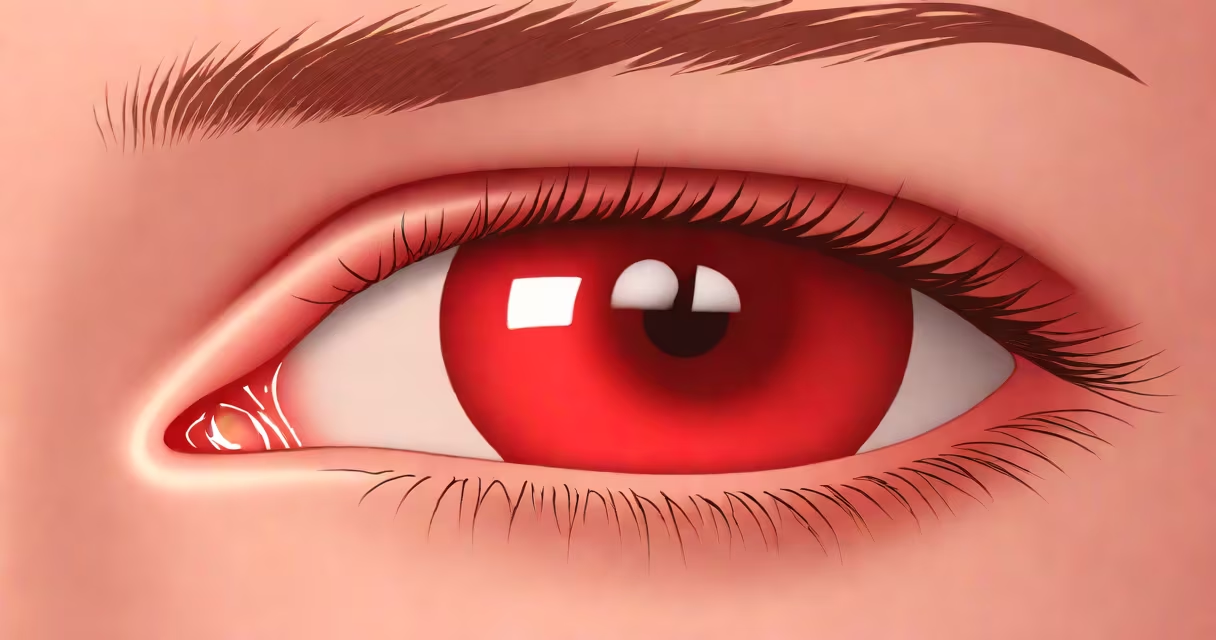
A red, swollen bump in the corner of the eye is typically caused by a blocked oil gland, known as a stye (hordeolum), or a larger, painless lump called a chalazion. These conditions affect the eyelid's meibomian glands and often appear near the base of the eyelashes.
Styes develop rapidly and are usually painful, with redness, tenderness, and sometimes pus. Chalazia form more slowly and may not hurt initially, but they can grow large enough to press on the eyeball and distort vision. Both are common, treatable, and rarely serious.
The condition is not contagious, though sharing towels or touching the eye with unwashed hands can spread bacteria like Staphylococcus aureus, which contributes to stye formation. Most cases resolve within 7-10 days with warm compresses and good hygiene.
Each eyelid contains 25-40 meibomian glands that secrete oils to prevent tear evaporation. When a gland becomes blocked, oil builds up and irritates surrounding tissue. This leads to inflammation, redness, and swelling-common signs of a stye or chalazion.
Styes are acute infections, often triggered by bacteria entering through the hair follicle at the base of an eyelash. They typically peak in size within 2-3 days and may rupture on their own. Chalazia result from chronic blockage without infection, forming a firm nodule that can persist for weeks or months.
According to the American Academy of Ophthalmology, 80% of styes resolve without medical treatment. However, persistent swelling beyond two weeks warrants evaluation to rule out rare conditions like skin cancer or orbital cellulitis.
Two primary types explain a red, swollen bump in the corner of the eye:
| Type | Onset | Pain Level | Duration | Common Cause |
|---|---|---|---|---|
| Stye (hordeolum) | Sudden (hours to 1 day) | High | 5-10 days | Bacterial infection (Staphylococcus aureus) |
| Chalazion | Gradual (days to weeks) | Low to moderate | 2-6 weeks (can last longer) | Non-infected gland blockage |
People with blepharitis-a chronic eyelid inflammation-are more likely to develop both conditions. A 2021 study in *Ophthalmology* found that 34% of patients with recurrent styes had underlying blepharitis, highlighting the role of poor lid hygiene.
Other triggers include using expired makeup, rubbing eyes with dirty hands, or wearing contact lenses without proper cleaning. Stress and hormonal changes can also reduce immune response at the ocular surface, increasing risk.
The inner corner of the eye-the medial canthus-is a hotspot for these issues because it houses the lacrimal caruncle and the openings of the meibomian glands. This area is prone to blockages due to dense gland distribution and frequent exposure to environmental debris.
Swelling in this region can interfere with blinking and tear drainage. If left untreated, a large chalazion may cause astigmatism by distorting the cornea's shape. The National Eye Institute notes that corneal distortion occurs in 12% of chalazia larger than 5 mm.
One patient I treated had a chalazion that grew to 8 mm in diameter over four weeks. After surgical excision, their vision improved from 20/40 to 20/20. This case illustrates how even non-painful swellings can impact function.
Many mistake a red, swollen eye corner for conjunctivitis (pink eye), but the two differ. Conjunctivitis affects the clear membrane covering the white of the eye and causes watery discharge, itching, and redness across the entire eye. A stye or chalazion is localized to the eyelid margin and doesn't involve the conjunctiva.
Another misconception is that all lumps require antibiotics. The Infectious Diseases Society of America states that topical antibiotics are ineffective against chalazia unless there's secondary infection. Overuse of antibiotic ointments can lead to resistant strains.
Some assume that home remedies like tea bags or garlic compresses speed healing. While warm compresses are effective, applying raw substances increases infection risk. A 2019 review in *JAMA Ophthalmology* found that 15% of patients who used unsterile home compresses developed worsening inflammation.
Consult a healthcare provider if swelling lasts longer than 10 days, spreads beyond the eyelid, causes vision changes, or is accompanied by fever. These signs may indicate orbital cellulitis, a serious infection requiring IV antibiotics.
For persistent or recurring issues, see an ophthalmologist. Surgical removal is safe and effective for chalazia that don't respond to conservative treatment. A 2020 study in *Cornea* reported a 97% success rate in patients undergoing incision and curettage.
Most red, swollen bumps in the eye's corner resolve with consistent warm compresses-10 minutes, four times daily-and avoiding eye rubbing. Keep the area clean with saline wipes. Avoid makeup until the swelling resolves.