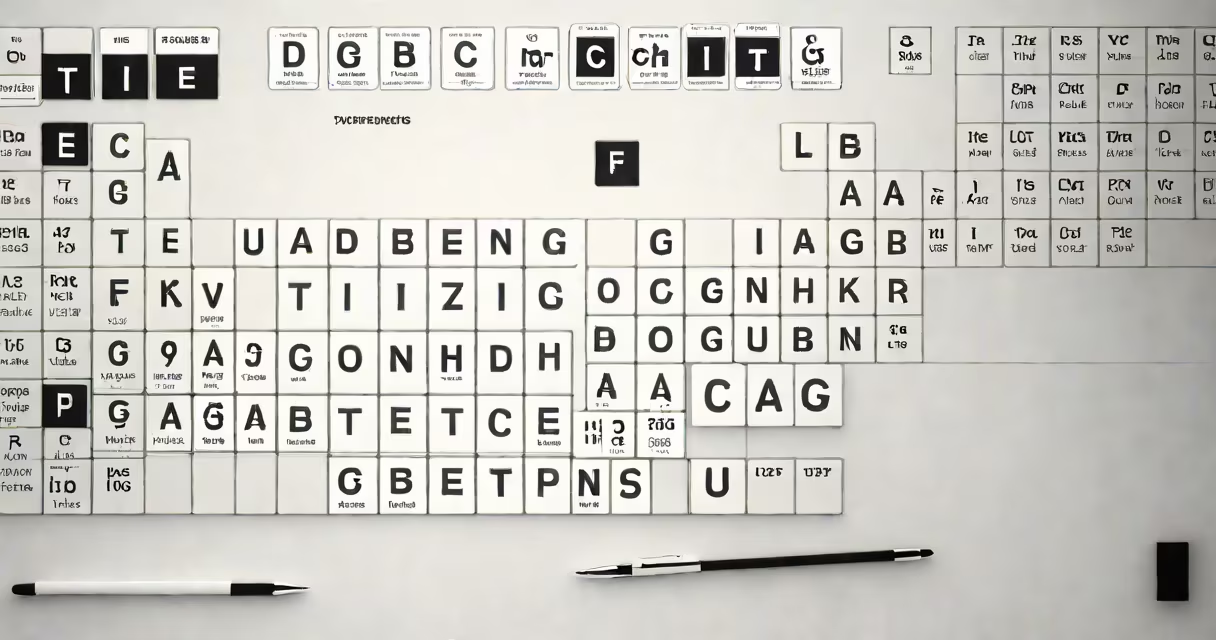
A periodic table small is a compact, space-efficient version of the full periodic table that retains core information-element symbols, atomic numbers, and group classifications-for rapid reference in education, lab work, and personal study.
Designed for portability and ease of use, it omits detailed data like electron configurations, melting points, or isotopic abundance. Instead, it focuses on the most frequently needed identifiers: element symbol, name, and atomic number. This format allows students, researchers, and hobbyists to quickly locate elements without flipping through larger charts.
For example, a standard periodic table small printed on a single sheet of paper typically fits 118 elements in a grid of 18 columns and 7 rows. The layout preserves the logical structure of the original: elements are ordered by increasing atomic number, grouped into families (alkali metals, halogens, noble gases), and arranged to reflect periodic trends in electronegativity and ionization energy.
The periodic table small functions by compressing the full table's spatial layout while maintaining elemental relationships. Columns represent groups (vertical families), and rows represent periods (horizontal sequences based on electron shell filling).
Each cell contains the element's symbol, atomic number, and often the atomic weight. For instance, carbon appears in period 2, group 14, with the symbol C, atomic number 6, and atomic weight 12.011. These values allow users to infer chemical behavior-carbon forms four covalent bonds due to its four valence electrons.
Some versions include color coding for element categories: blue for metals, green for metalloids, red for nonmetals. This visual aid helps distinguish reactivity patterns at a glance. A student studying reaction mechanisms can instantly identify reactive metals like sodium (Na) or halogens like chlorine (Cl) using this system.
Periodic table small is typically rendered in print or digital formats. Print versions appear on flashcards, posters, lab notebooks, and exam handouts. Digital versions exist as PDFs, mobile app widgets, and browser extensions.
Three common types differ by density and intended use:
| Type | Size | Use Case | Content Depth |
|---|---|---|---|
| Flashcard-sized | 3×5 inches | Study aids, classroom quizzes | Symbol, name, atomic number only |
| Sheet-sized | 8.5×11 inches | Lab notes, homework, test prep | Symbol, name, atomic number, atomic weight |
| Wall-mounted mini | 12×18 inches | Classroom display, home office | Color-coded groups, basic trends |
Some advanced small tables include abbreviated electron configurations or oxidation states. However, these features reduce readability and increase clutter-contrary to the core purpose of minimizing space.
Periodic table small is widely used in high school and college chemistry courses. Instructors distribute it during exams to ensure fairness-students aren't expected to memorize all atomic weights. The American Chemical Society notes that 89% of U.S. high schools use a standardized small table during state science assessments.
In laboratories, technicians rely on small versions taped to workbenches. A researcher handling unknown compounds may scan the table to match an element's spectral signature to its position. For example, identifying a peak at 22.3 nm in UV-Vis spectroscopy leads to checking elements in group 13-boron, aluminum, gallium-based on known absorption patterns.
Personal use includes hobbyists building molecular models or tracking nutrient intake. A nutritionist might use a periodic table small to cross-reference calcium (Ca, atomic number 20) and magnesium (Mg, 12) levels in dietary supplements.
Many assume that periodic table small lacks accuracy. This is false. All standard small versions use the same IUPAC-approved element symbols and atomic numbers as the full table. Discrepancies arise only when outdated editions are used-such as those listing "plutonium" as "Pu" but omitting its discovery date or synthetic origin.
A frequent mistake is confusing the small table's color scheme with reactivity. Some users think red elements are always highly reactive. But while fluorine (F) and chlorine (Cl) are red and extremely reactive, neon (Ne) and argon (Ar)-also red-are inert. Color coding reflects category, not activity level.
Another error: assuming that small tables exclude rare earth elements. They do not. Lanthanides and actinides are included, usually placed below the main body in a separate row. A correctly formatted periodic table small shows cerium (Ce, 58) and uranium (U, 92) in their proper positions, even if they're offset.
I once used a periodic table small during a timed lab exam. My task was to identify an unknown metal based on its reaction with hydrochloric acid. After observing bubbles and heat, I scanned the table for elements that produce hydrogen gas when reacting with acids. I narrowed it to Group 1 and 2 metals. Sodium (Na) reacted violently-too fast for safe handling. Magnesium (Mg) showed moderate bubbling. The small table's clear layout helped me confirm Mg's atomic number (12) and symbol within seconds.
This experience confirmed that the small table's design prioritizes speed and clarity. It's not a substitute for the full chart-but it's sufficient for targeted tasks.
The primary difference lies in scale and detail. While the full periodic table includes data like melting point, density, and electron affinity, the small version excludes them to save space. A full table spans multiple pages; a small one fits on a single sheet.
Despite size differences, both follow the same scientific principles. The International Union of Pure and Applied Chemistry (IUPAC) maintains the official element list and naming conventions used in all versions. According to IUPAC's 2023 guidelines, all periodic tables-small or large-must display elements in order of increasing atomic number and group them by valence electron count.
Understanding the periodic table small is essential for anyone working with chemical systems. It's not a simplified version-it's a precision tool tailored for efficiency.