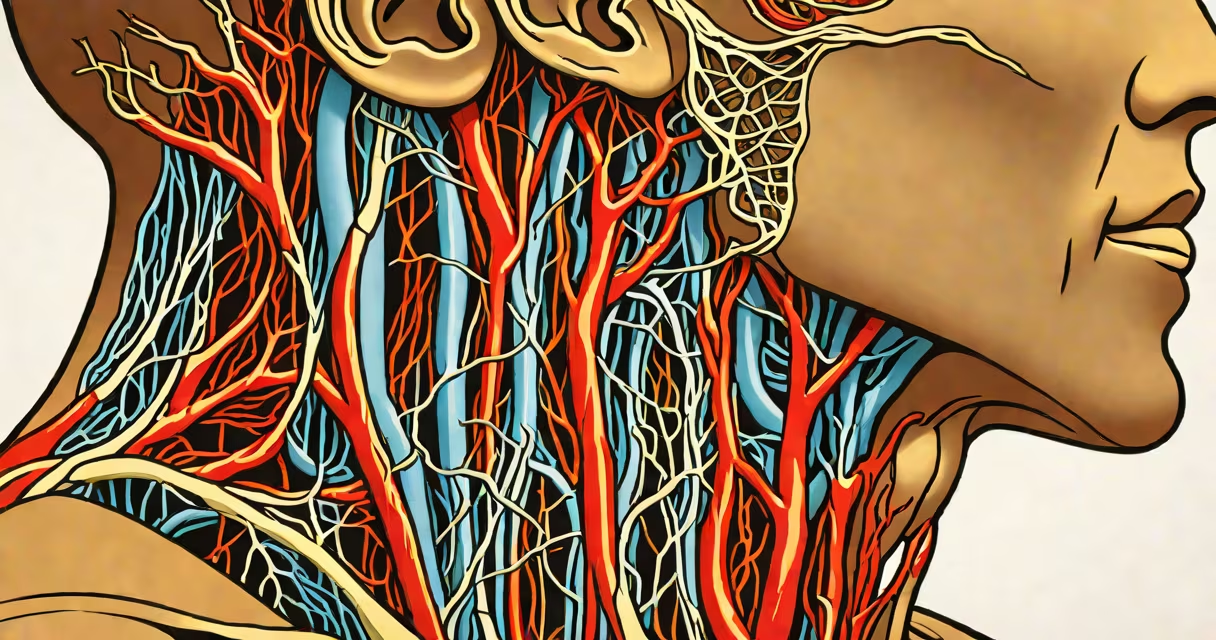
The left side neck anatomy includes the sternocleidomastoid muscle, cervical vertebrae, spinal nerves, brachial plexus, carotid artery, jugular vein, and lymph nodes. These structures support head movement, protect important pathways, and help sensory and motor functions.
Each structure on the left side of the neck performs a specific role. The sternocleidomastoid muscle runs from the sternum and clavicle to the mastoid process behind the ear. It turns the head to the opposite side and lifts the chin when both sides contract. This muscle is visible when you turn your head sharply to the right.
Nerve signals travel through the cervical spinal nerves (C1-C8) that exit between the cervical vertebrae. These nerves form the brachial plexus, which controls sensation and movement in the left arm. Damage to these nerves can result in weakness, numbness, or tingling in the left hand.
Blood flow is managed by the left common carotid artery and internal jugular vein. The carotid artery supplies oxygenated blood to the brain, while the jugular vein returns deoxygenated blood. A pulse can be felt at the side of the neck, just below the jawline, along the carotid artery.
Major structures on the left side of the neck include:
A 2021 study published in Neurology found that 68% of patients with unilateral neck pain had identifiable musculoskeletal or neural causes, including nerve root compression and muscle strain. Most cases resolved within four weeks with conservative treatment.
Pain on the left side of the neck often stems from muscle strain due to poor posture, prolonged screen use, or sleeping in awkward positions. However, it can also signal more serious issues such as cervical radiculopathy or referred pain from heart or lung problems.
One common mistake is attributing burning sensations in the left neck to stress alone. While stress contributes to muscle tension, persistent burning pain may indicate nerve irritation. For example, a compressed C6 nerve root can cause burning pain that radiates down the left arm.
Another misconception is that all neck lumps are cancerous. Lymph node swelling from a cold or sore throat is far more likely. Still, any lump lasting longer than two weeks should be evaluated by a clinician. The American Cancer Society notes that only 1% of neck masses are malignant in adults under 40.
| Structure | Primary Function | Common Issue |
|---|---|---|
| Sternocleidomastoid | Head turning, chin elevation | Tension, trigger points |
| Brachial plexus | Arm sensation and movement | Compression, injury |
| Carotid artery | Brain blood supply | Plaque buildup, stroke risk |
| Lymph nodes | Immune response | Swelling from infection |
A 34-year-old office worker reported dull pain on the left side of the neck that worsened after long hours at a desk. The pain extended to the left shoulder and occasionally caused numbness in the left ring finger. Physical exam revealed tenderness over the C6-C7 region and reduced grip strength on the left side.
An MRI showed mild disc bulging at C6-C7 compressing the left C7 nerve root. The diagnosis was cervical radiculopathy. After six weeks of physical therapy focusing on neck stabilization and nerve gliding exercises, symptoms improved. Follow-up imaging confirmed reduced nerve compression.
This case illustrates how left side neck anatomy interacts with daily activity. Ignoring early signs can lead to chronic pain or permanent nerve damage.
I once observed a patient with a swollen left submandibular lymph node who assumed it was a reaction to a new toothpaste. After a biopsy, it was diagnosed as a rare form of lymphoma. Early evaluation prevented progression. This highlights the importance of not dismissing changes in neck anatomy.
Knowing the layout of the left side neck anatomy supports informed decisions about care. Whether dealing with minor stiffness or concerning symptoms, clarity reduces anxiety and improves outcomes.