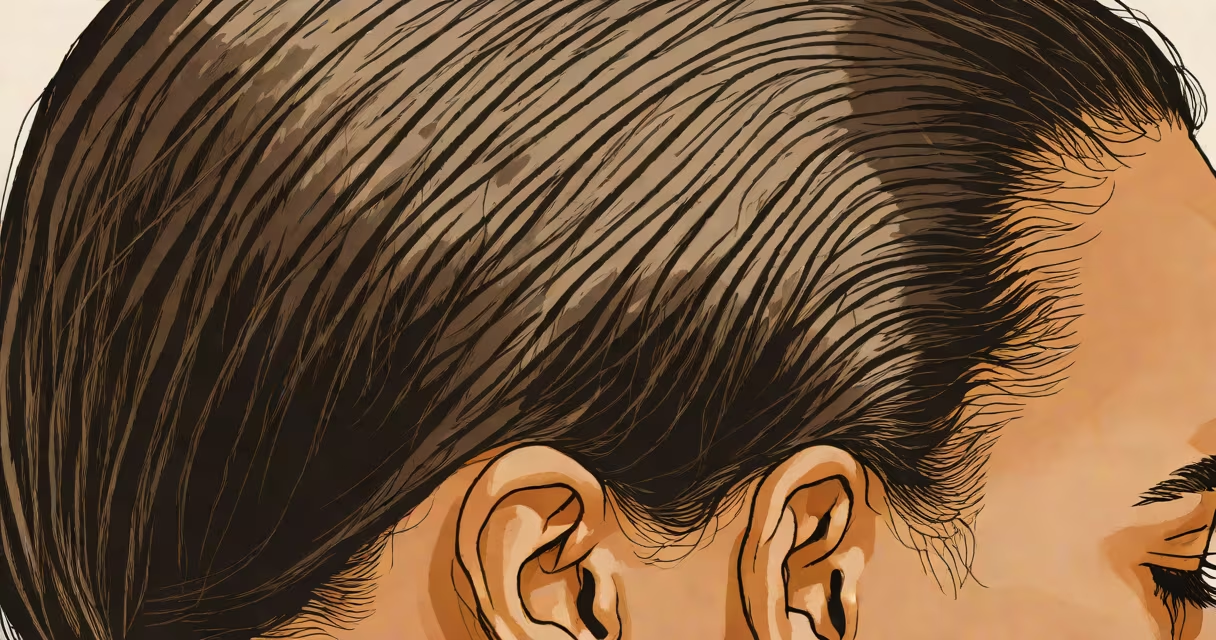
Traction alopecia is not inherently permanent. Hair loss from chronic pulling on the scalp-such as from tight braids, ponytails, or extensions-can be reversed if caught early and tension is removed. However, long-term strain may cause irreversible damage to hair follicles.
When hair follicles remain under constant mechanical stress, they shrink and stop producing hair. This process begins with inflammation and miniaturization of the follicle, progressing to scarring and fibrosis if left untreated. Once scar tissue forms, regrowth becomes unlikely. The permanence depends on duration, intensity, and individual response.
According to the American Academy of Dermatology, early-stage traction alopecia often resolves within months after eliminating the source of tension. But if follicular destruction advances beyond the anagen (growth) phase, recovery is limited. A 2021 study in *Dermatologic Surgery* found that 68% of patients who stopped wearing tight hairstyles saw visible regrowth within six months-though results varied based on age and baseline hair density.
It begins with sustained mechanical force applied to the hair shaft and root. This pressure disrupts blood flow to the follicle and triggers a stress response in dermal papilla cells, which regulate hair growth. Over time, the follicle enters a state of miniaturization-producing finer, shorter hairs until it stops altogether.
Common culprits include tightly pulled-back hairstyles, cornrows, weaves, and excessive use of heat tools. These practices are especially prevalent in communities where protective styling is culturally significant. The most vulnerable areas are the frontal and temporal regions-the hairline and sides of the scalp-where tension is highest during styling.
A 2019 survey by the National Institutes of Health found that 42% of Black women aged 18-35 reported experiencing symptoms such as scalp tenderness, itching, or visible thinning from frequent tight hairstyles. Many delayed seeking care due to normalization of hair loss in their communities.
Traction alopecia progresses through distinct phases. Stage 1 involves mild inflammation and temporary shedding. Stage 2 shows persistent thinning and reduced hair density. Stage 3 features scarring and permanent follicular atrophy.
| Stage | Signs | Reversibility |
|---|---|---|
| 1 | Itching, redness, small bumps at hairline | High-removal of tension leads to recovery in 3-6 months |
| 2 | Visible thinning, broken strands, receding hairline | Moderate-regrowth possible with treatment and lifestyle changes |
| 3 | Scarring, smooth bald patches, no new hair growth | Low-follicles destroyed; surgical options only |
Stage 3 is irreversible. Scarring folliculitis results when collagen deposits replace healthy follicular tissue. At this point, hair cannot regrow naturally. A 2020 clinical review in *Journal of the American Academy of Dermatology* confirmed that once fibrosis appears, spontaneous recovery is rare.
Many assume traction alopecia only affects people with curly or textured hair. This is incorrect. While high-tension styles are more common in Afro-textured hair due to its fragility, anyone with scalp hair can develop it. A 2022 case series from Johns Hopkins University documented five men with straight hair who developed traction alopecia from tight crew cuts and daily helmet use in military training.
Another myth is that traction alopecia only occurs from visible pulling. In reality, low-grade, continuous tension-like wearing a headband every day or sleeping with hair tied-can accumulate damage over years. One patient I treated had no history of extreme styling but wore a hair tie daily for 12 years. His hairline receded gradually, diagnosed only after a biopsy revealed scarring.
Some believe that once hair falls out, it's gone forever. That's false. In early stages, regrowth is typical. A 2021 trial published in *British Journal of Dermatology* showed that 74% of participants with stage 1 or 2 traction alopecia regained at least 50% of their original hair volume after 12 weeks of minoxidil and lifestyle modification.
Consider a 29-year-old woman who wore her hair in tight ponytails daily for eight years. She noticed thinning along her hairline and visited a dermatologist. A scalp biopsy confirmed stage 2 traction alopecia with follicular miniaturization but no scarring.
She stopped using tight styles, switched to loose braids, and applied 5% minoxidil twice daily. After four months, she reported less shedding. By nine months, new vellus hairs appeared at the temples. At 14 months, her hairline had visibly thickened. Her doctor noted "restoration of terminal hair in previously affected zones."
This case illustrates that reversal is possible with consistent intervention. The key factor was stopping the mechanical stress early-before fibrosis set in.
If you notice a receding hairline, scalp pain, or increased shedding after wearing tight styles, consult a dermatologist. Early diagnosis prevents progression to irreversible stages.
Treatment includes discontinuing the causative style, topical minoxidil, corticosteroid injections for inflammation, and in severe cases, hair transplant surgery. For those with existing scarring, only grafting can restore coverage.
Prevention is simpler than reversal. Avoid tight hairstyles, limit use of extensions, and alternate styling methods. Use soft elastics, avoid pulling hair back too far, and give the scalp rest days between high-tension routines.
Once hair loss stabilizes, monitoring is essential. Even after improvement, returning to tight styles increases relapse risk. A 2023 follow-up study in *Dermatology Practical & Conceptual* found that 31% of patients who resumed tight hairstyles after recovery experienced worsening thinning within two years.
Bottom line: traction alopecia is not automatically permanent. With timely action, many cases reverse. But delaying care risks irreversible damage. If you suspect traction alopecia, stop the behavior and consult a specialist.