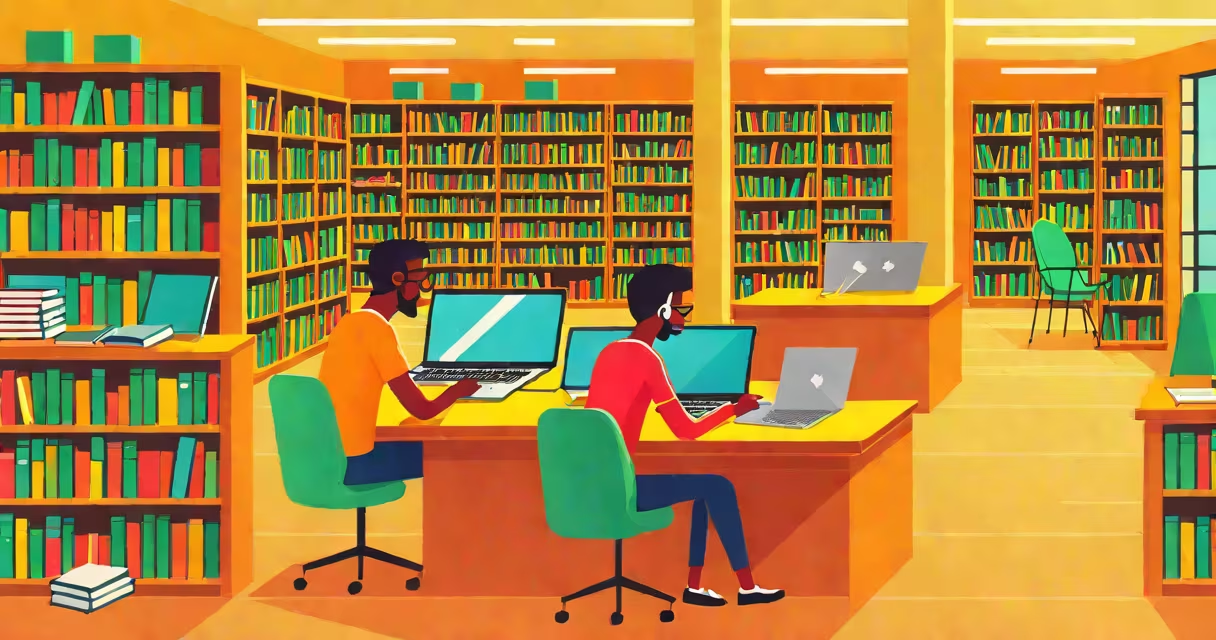
Yes, free internet is available through public libraries, community centers, schools, and government-assisted programs. These services provide internet access without direct cost to users, though eligibility or location may apply.
Free internet is not a single service but a network of options. Public spaces like libraries and cafes often offer free Wi-Fi. Government programs such as the FCC's Lifeline Assistance and the Affordable Connectivity Program (ACP) provide subsidized or free broadband to qualifying households. Some nonprofit organizations distribute free devices with pre-installed internet plans.
Not all free internet is equal. Access may require registration, time limits, or bandwidth caps. For example, a library's Wi-Fi might allow 2 hours of use per day. A government program may cover monthly fees but not supply a device. Understanding the difference between "free" and "unlimited" is essential.
Free internet operates through three primary models: public access points, subsidized broadband, and nonprofit distribution. Public access points include Wi-Fi hotspots in parks, transit stations, and municipal buildings. These are typically maintained by local governments or nonprofits and rely on existing infrastructure.
Subsidized broadband is funded through federal or state programs. The FCC's Lifeline program offers $9.25 per month toward internet service for eligible low-income households. The Affordable Connectivity Program provides up to $30 per month ($75 on tribal lands) to reduce costs. Recipients must apply and verify income, but once approved, they receive a discount on their provider bill.
Nonprofit groups sometimes partner with internet providers to deliver free hardware and service. For example, EveryoneOn partners with companies like Comcast to offer free or low-cost internet and devices to families meeting income thresholds. These programs often require proof of residency or household size.
The following table outlines common free internet sources, their requirements, and typical limitations.
| Source Type | Eligibility Requirements | Access Limitations | Example Provider |
|---|---|---|---|
| Public Library Wi-Fi | None required; walk-in access | Time-limited sessions; no off-site use | Los Angeles Public Library |
| Federal Subsidy (Lifeline) | Household income ≤ 135% of federal poverty level | Must choose a participating provider; renewal every 12 months | AT&T, CenturyLink, T-Mobile |
| State/Local Initiative | Residency in designated zone; proof of address | Service only within city boundaries | Chicago's Digital Equity Initiative |
| Nonprofit Device & Service Bundle | Income below 200% of poverty level; application process | Device must be returned after 2 years; limited data | EveryoneOn, ConnectHomeUSA |
A common misconception is that free internet means unlimited usage. In reality, most free services impose restrictions. For example, a school district's free Wi-Fi during class hours may block streaming video. A library's hotspot may disconnect after 90 minutes of continuous use.
Another misunderstanding is that free internet is only for people in poverty. While many programs target low-income households, others serve seniors, students, or disaster-affected communities. After Hurricane Maria, Puerto Rico's government distributed free mobile hotspots to displaced residents. Similarly, during the pandemic, school districts provided free tablets with data plans to remote learners.
Free internet supports education, job searching, healthcare access, and civic participation. Students without home internet struggle to complete online assignments. Adults applying for jobs often need to submit applications via web portals. Telehealth appointments require stable connections.
Libraries remain critical hubs. According to the American Library Association, 96% of public libraries offer free Wi-Fi. In 2022, the Pew Research Center found that 53% of Americans without home internet relied on public libraries for online access. This includes people seeking unemployment benefits, filling out college applications, or attending virtual town halls.
I once observed a woman in a rural Texas library using a public computer to file her unemployment claim. She had no home internet and couldn't afford a smartphone. The library's free Wi-Fi allowed her to complete the process in under 20 minutes. Without this access, she would have faced delays and potential loss of benefits.
Many assume that "free internet" means no data cap or no login. That's false. Free access often comes with bandwidth limits. For example, a city-run Wi-Fi network in Seattle caps users at 1GB per day. Exceeding this limit results in throttling or disconnection.
Another error is equating free Wi-Fi with security. Public networks are vulnerable to eavesdropping. A 2021 study by Kaspersky Lab found that 43% of users connecting to public Wi-Fi did not use encryption. This exposes passwords, messages, and financial details. Always avoid logging into sensitive accounts on unsecured networks.
Some believe free internet is permanent. Programs like ACP are subject to funding renewals. Congress extended ACP through 2025, but future renewals depend on legislative action. Losing eligibility can result in sudden disconnection.
Consider Maria, a single mother in Detroit earning $28,000 annually. Her household income is below 135% of the federal poverty level. She applies for Lifeline through the National Verifier portal. She submits proof of income (pay stubs), a government-issued ID, and a utility bill showing her address.
After 72 hours, she receives approval. She selects T-Mobile as her provider. Her monthly bill drops from $65 to $9.25. She uses the remaining $55.75 to upgrade her phone plan to include 10GB of data. She also gets a free tablet through a local nonprofit partnership.
Maria now has reliable internet for her children's homework, job searches, and telehealth visits. Her total monthly cost is $9.25 - a significant reduction from her original rate.
Is there free internet? Yes - but availability depends on location, income, and program status. Verify eligibility early, understand limitations, and prioritize secure access methods. Free internet is not a luxury; it's a necessity for full participation in modern life.