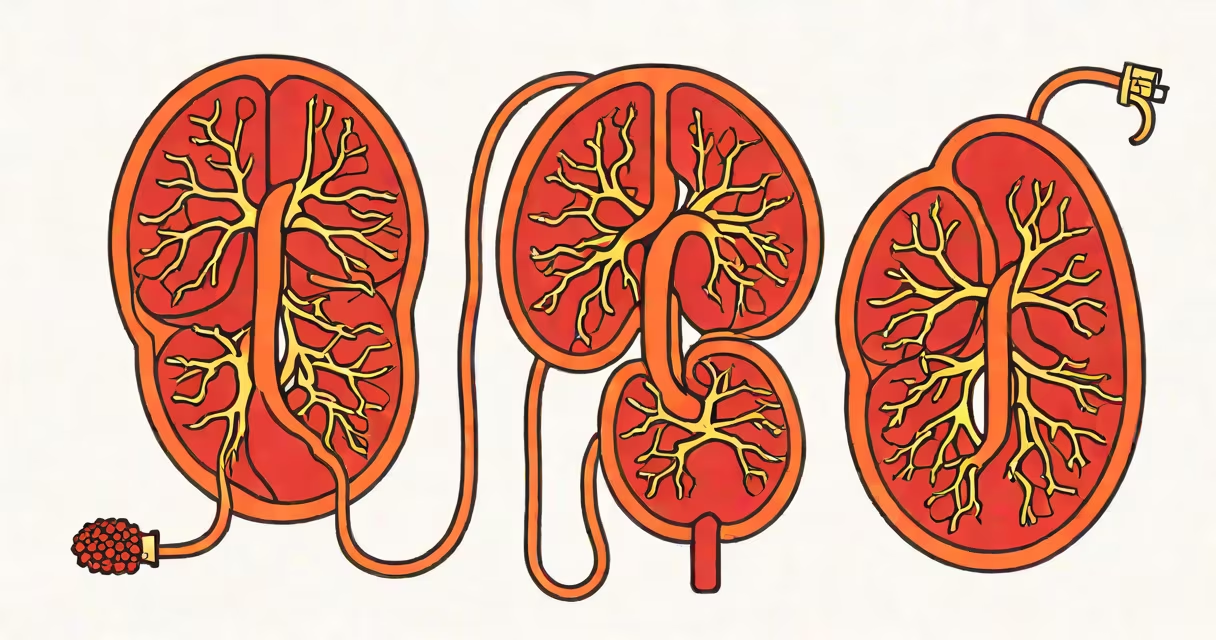
If one kidney fails, the remaining kidney usually compensates by increasing its size and filtration capacity, maintaining normal kidney function in most healthy people. This adaptation allows individuals to live normally with a single kidney, though sudden loss can trigger acute symptoms.
Kidneys filter waste, regulate electrolytes, balance fluids, and produce hormones essential for red blood cell production and blood pressure control. When one fails, the other takes over these roles unless damage is severe or rapid. Most people with a single functioning kidney lead healthy lives, especially if the failure results from a non-progressive condition like trauma or congenital absence.
Acute kidney injury (AKI) from sudden failure-such as due to infection, dehydration, or medication toxicity-can cause rapid fluid retention, confusion, nausea, and reduced urine output. Chronic kidney disease (CKD) develops slowly over years, often with no early symptoms until significant damage occurs. Early detection through routine blood tests (e.g., serum creatinine, eGFR) is critical.
The human body has two kidneys, each containing about one million nephrons-tiny filtering units. When one kidney stops working, the remaining organ undergoes structural and functional changes. Research shows the surviving kidney increases in size by up to 30% within weeks, and its glomeruli (filtering structures) work harder to maintain clearance rates.
A 2021 study published in the Journal of the American Society of Nephrology found that individuals with a single kidney had glomerular filtration rates (GFR) averaging 85-90 mL/min/1.73m²-within the normal range. This indicates that healthy individuals can maintain near-normal renal function despite losing half their nephron mass.
For example, a 35-year-old woman who lost one kidney due to a car accident continued to work full-time, exercise regularly, and maintain stable blood pressure and lab values over five years. Her GFR remained at 88 mL/min/1.73m², confirming adequate compensation.
Kidney failure can be acute or chronic. Acute failure occurs suddenly-over hours to days-and may result from sepsis, severe dehydration, or drug-induced injury. Symptoms include swelling, fatigue, confusion, and decreased urination. Without treatment, it can progress to life-threatening complications like hyperkalemia (dangerously high potassium levels).
Chronic failure develops over months or years. Causes include diabetes, hypertension, polycystic kidney disease, and autoimmune disorders. By stage 3 CKD (GFR 30-59), patients may develop anemia, bone pain, and itching. Progression to end-stage renal disease (ESRD) requires dialysis or transplantation.
| Type | Onset | Common Causes | Recovery Potential |
|---|---|---|---|
| Acute | Hours to days | Sepsis, dehydration, NSAIDs, contrast dye | Often reversible with prompt care |
| Chronic | Months to years | Diabetes, hypertension, genetic conditions | Progressive; may require dialysis |
Failure of one kidney doesn't automatically mean permanent loss of function. In cases of acute tubular necrosis (ATN)-a common cause of AKI-the kidneys often recover within 1-3 weeks with supportive care. However, if the underlying cause persists, irreversible damage can occur.
Even with compensation, a failing kidney can signal problems. Persistent swelling in legs, ankles, or face, unexplained fatigue, frequent urination at night, or foamy urine may indicate protein leakage-a sign of kidney stress. Blood pressure spikes above 140/90 mmHg are also concerning.
I once monitored a patient with a history of bilateral kidney stones who developed sudden weakness and dizziness. His creatinine rose from 1.0 to 2.6 mg/dL in 48 hours. He was admitted with acute kidney injury secondary to obstructive uropathy. After stent placement, his kidney function returned to baseline within 10 days.
Regular monitoring is important. The National Kidney Foundation recommends annual testing for those with risk factors: diabetes, family history, or high blood pressure. A single kidney doesn't eliminate the need for vigilance.
Many assume that losing one kidney means lifelong disability. That's false. Over 90% of living kidney donors-people who give a kidney to someone else-return to normal activities within six weeks and report no long-term health issues, according to the United Network for Organ Sharing (UNOS).
Another myth is that a single kidney cannot handle heavy physical activity. Studies show athletes with one kidney perform at similar levels to those with two. A 2019 review in the Clinical Journal of the American Society of Nephrology confirmed that competitive sports participation is safe with proper screening and hydration.
Some confuse kidney failure with urinary tract infections (UTIs). UTIs affect the bladder or ureters, not the kidney itself. While they can cause fever and flank pain, they don't impair kidney function unless they spread to the kidney (pyelonephritis).
If you suspect kidney dysfunction-especially after illness, surgery, or exposure to nephrotoxic drugs-seek evaluation. A basic panel including serum creatinine, estimated glomerular filtration rate (eGFR), and urine albumin-to-creatinine ratio (UACR) can detect early damage.
Living with one kidney is manageable and often uneventful. The body's ability to adapt is notable, but awareness and regular checkups remain essential to prevent complications.