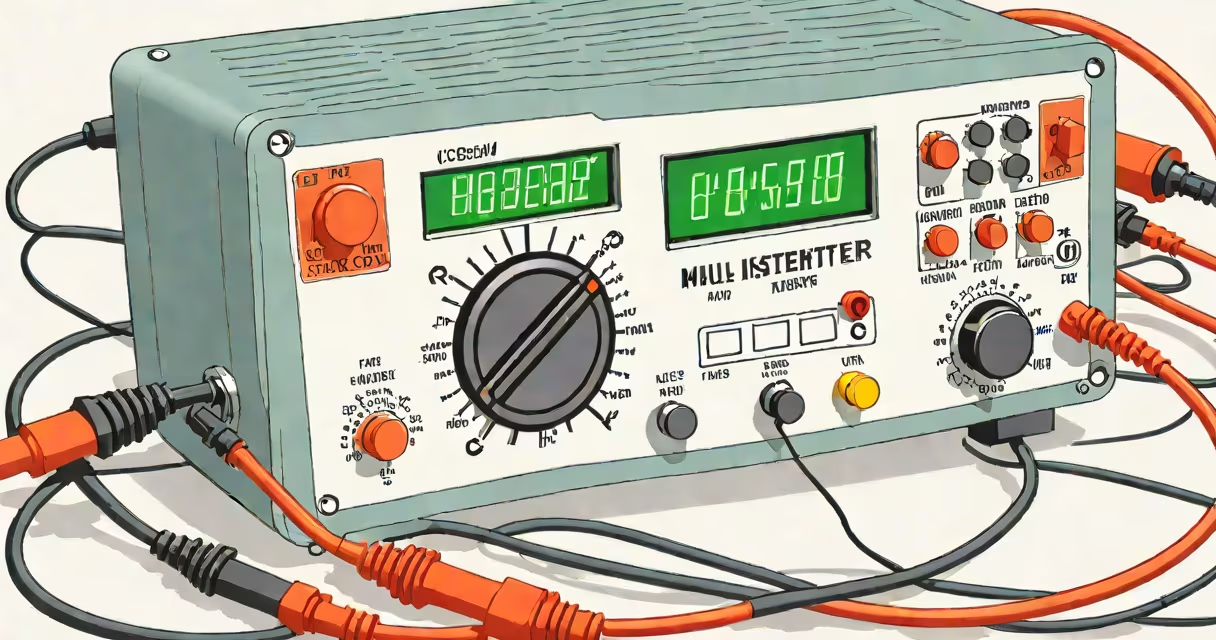
IEC 61326-1 is an international standard that specifies safety and electromagnetic compatibility (EMC) requirements for electrical measuring and test equipment used in laboratories and industrial environments. It ensures devices operate safely under normal conditions and do not emit excessive electromagnetic interference.
The standard applies to instruments such as multimeters, oscilloscopes, signal generators, and power analyzers. It covers electrical insulation, mechanical strength, protection against electric shock, and immunity to electromagnetic disturbances. Devices compliant with IEC 61326-1 must pass tests for dielectric strength, leakage current, and environmental resilience.
Manufacturers must validate compliance through independent testing by accredited labs. Certification is required for equipment sold in Europe, Canada, Australia, and many other markets. Non-compliance can result in product recalls or legal penalties under national regulations.
IEC 61326-1 divides equipment into categories based on usage environment and risk level. Category I applies to low-voltage circuits connected to mains via isolation transformers. Category II covers equipment connected directly to the mains supply. Category III is for fixed installations in industrial settings, such as distribution boards. Category IV is reserved for equipment installed at the service entrance, where high-energy transients may occur.
Each category has specific voltage withstand and surge immunity thresholds. For example, Category III equipment must survive a 2.5 kV impulse test. Insulation resistance must exceed 1 MΩ between live parts and accessible surfaces. Leakage current limits are set at 0.5 mA for Class I devices and 0.25 mA for Class II devices.
EMC performance is evaluated using standardized test methods. Radiated emissions must stay below 30 dBµV/m at 30 MHz to 108 MHz. Conducted emissions on power lines must not exceed 100 µA at 150 kHz to 500 kHz. Immunity testing includes exposure to electrostatic discharge (ESD), fast transients, and magnetic fields.
Equipment must meet requirements in four core areas: electrical safety, mechanical design, EMC emissions, and EMC immunity. Safety tests include dielectric strength (hi-pot), earth continuity, and temperature rise under load. Mechanical tests assess enclosure integrity, cable strain relief, and resistance to vibration.
EMC testing involves both emissions and immunity. Emissions testing measures conducted and radiated interference generated by the device. Immunity testing evaluates how well the device functions during exposure to external electromagnetic disturbances. A typical test set includes:
Testing is performed in controlled environments with calibrated equipment. Results are documented in a test report signed by an accredited lab. This report is required for CE marking and other conformity assessments.
Many assume IEC 61326-1 applies only to high-end lab gear. In reality, it covers all measuring and test equipment, including handheld multimeters and basic signal generators. Even consumer-grade tools used in technical work must comply if they are intended for professional measurement tasks.
In 2022, a European manufacturer recalled 12,000 digital multimeters due to non-compliance with IEC 61326-1. The devices failed the 1.5 kV AC dielectric test at 50 Hz, indicating insufficient insulation between live terminals and the housing. The fault was traced to a design flaw in the printed circuit board layout, where traces were too close to the metal case.
After redesigning the PCB and adding a grounded shield layer, the updated model passed all IEC 61326-1 tests. The revised unit underwent testing at a UKAS-accredited lab, where it demonstrated 2.5 kV withstand capability, 0.15 mA leakage current, and immunity to 8 kV ESD. The corrected product was re-certified and relaunched with updated labeling.
This case illustrates that compliance is not a one-time check. Manufacturers must maintain design control and perform periodic retesting, especially when changing components or production processes.
| Category | Typical Use | Surge Withstand | Leakage Current Limit | EMC Immunity Level |
|---|---|---|---|---|
| I | Low-voltage circuits, isolated systems | 1 kV | 0.25 mA | Basic |
| II | Mains-connected instruments, benchtop tools | 2.5 kV | 0.5 mA | Medium |
| III | Industrial panels, fixed installations | 4 kV | 0.5 mA | High |
| IV | Service entrance, utility metering | 6 kV | 0.5 mA | Very High |
When selecting test equipment, verify the IEC 61326-1 certification mark and review the test report. Always match the equipment category to the installation environment. Using Category I gear in a factory setting risks failure during transient events.
IEC 61326-1 remains a living standard. The latest revision, published in 2023, introduced updated requirements for wireless communication modules and enhanced immunity thresholds for industrial noise. Staying current with updates ensures long-term compliance and operational reliability.
For users in regulated industries-pharmaceuticals, aerospace, automotive-compliance with IEC 61326-1 is mandatory. It forms the foundation for audit readiness and traceability in quality management systems like ISO 9001 and ISO 13485.