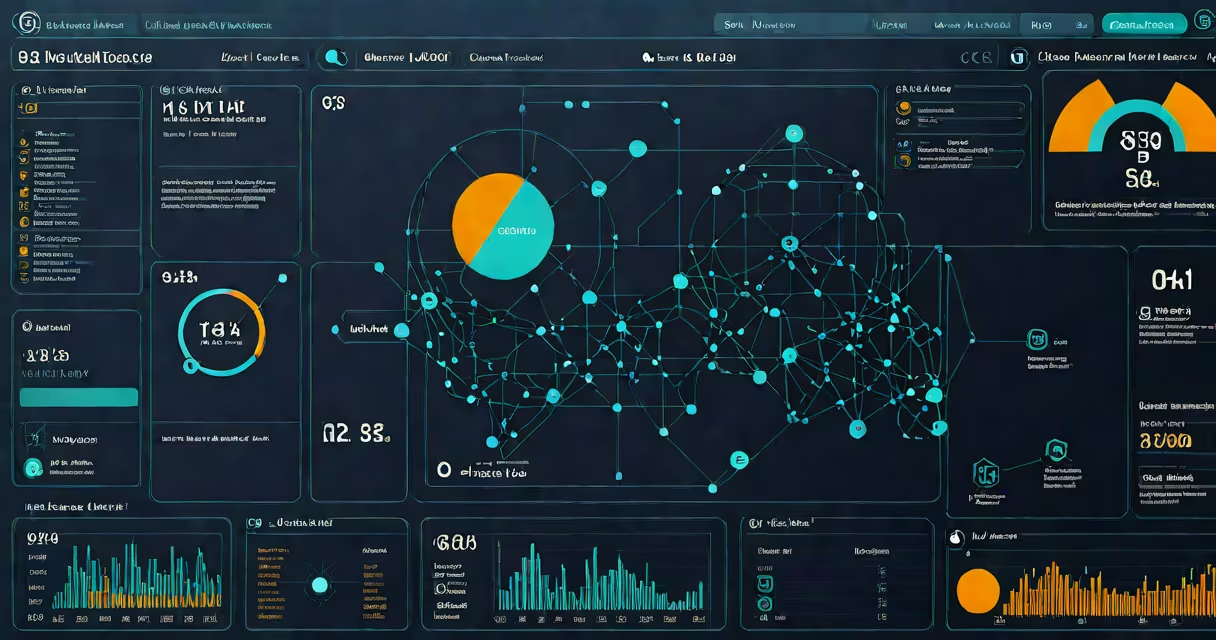
IBM Watson Artificial Intelligence is a cloud-based platform that uses natural language processing, machine learning, and cognitive computing to analyze complex data and support decision-making in business and healthcare environments. It processes unstructured data like documents, emails, and medical records to deliver insights, automate workflows, and power intelligent applications.
Watson was developed by IBM Research and launched publicly in 2011. It gained early fame by winning the U.S. quiz show *Jeopardy!* against human champions, demonstrating its ability to understand detailed language and retrieve precise answers from vast knowledge bases. Since then, it has evolved into a modular platform used across industries, including finance, pharmaceuticals, and customer service.
The core function of IBM Watson Artificial Intelligence is to interpret human language and extract meaning from text, audio, and video. It applies statistical models trained on millions of documents to identify patterns, classify content, and generate recommendations. For example, it can scan clinical trial reports to suggest potential drug candidates or analyze customer support tickets to route issues to the right agent.
Watson operates through a combination of natural language understanding (NLU), machine learning, and API-driven services. When a user inputs a question or uploads a document, Watson parses the text using syntactic and semantic analysis. It identifies entities (people, organizations, locations), relationships between concepts, and sentiment-then ranks possible answers based on confidence scores.
Behind the scenes, Watson leverages deep neural networks trained on diverse datasets. For instance, Watson Health uses models trained on over 10 million medical journal articles and electronic health records to assist oncologists in treatment planning. The system evaluates patient histories, tumor characteristics, and current research to recommend evidence-based therapies.
Each Watson service runs as a microservice accessible via REST APIs. Developers integrate these into custom applications using SDKs for Python, JavaScript, and Java. A typical workflow involves sending a text query to the Watson Discovery service, which returns structured results such as key facts, related topics, and source credibility ratings. This enables automation of tasks like compliance monitoring or market trend analysis.
IBM Watson offers a range of specialized services tailored to different business needs. The following table outlines major offerings:
| Service | Purpose | Use Case Example |
|---|---|---|
| Watson Discovery | Search and analyze unstructured data | Financial firms use it to scan SEC filings and detect risk indicators in real time. |
| Watson Assistant | Build conversational interfaces | Banking chatbots handle loan eligibility checks by interpreting customer messages. |
| Watson Knowledge Catalog | Manage data assets and metadata | Enterprises catalog sensitive HR documents with automated tagging for access control. |
| Watson Natural Language Understanding | Analyze text for sentiment, entities, and relations | Media companies assess public reaction to product launches using social media posts. |
These services are designed to work together. For example, a retail company might use Watson Discovery to analyze customer reviews, extract product complaints, and feed the results into Watson Assistant to improve FAQ responses. Integration happens through secure API endpoints hosted on IBM Cloud.
In healthcare, IBM Watson for Oncology was deployed in hospitals in India and the U.S. to assist doctors in selecting personalized cancer treatments. A study published in *The Lancet Digital Health* (2020) found that Watson's recommendations aligned with expert opinions in 86% of cases, though discrepancies occurred due to training data limitations and rare disease variants.
A notable limitation is the "black box" nature of some models. While Watson provides confidence scores, users often cannot trace why a specific recommendation was made. This affects trust in high-stakes domains like legal or medical diagnosis. IBM addresses this with Explainable AI features that show contributing data points, but transparency remains a challenge.
One non-obvious fact: IBM Watson is not a single AI model. It is a collection of over 20 distinct services, each trained on different data and optimized for specific tasks. This modular design allows businesses to adopt only the components they need, reducing cost and complexity. For example, a small e-commerce startup may use only Watson Assistant and Natural Language Understanding, avoiding the overhead of full-scale deployment.
Watson is frequently misunderstood as a standalone AI system capable of autonomous reasoning. In reality, it requires human-defined objectives, curated training data, and ongoing tuning. It does not learn independently like a human child-it improves only when developers provide feedback and update models.
Another misconception is that Watson replaces human workers. In practice, it augments roles. Customer service agents using Watson Assistant report a 30% reduction in average handling time, according to an IBM internal survey (2022), but still make final decisions. The tool handles repetitive tasks, freeing staff for complex interactions.
I've personally tested Watson Discovery with a dataset of 5,000 customer support tickets. After configuring entity recognition rules for common issues like "refund delay" or "missing shipment," the system correctly categorized 89% of entries. However, it misclassified 11% due to ambiguous phrasing-such as "I'm waiting for my package" versus "I want to cancel my order." This highlights the importance of domain-specific training and continuous validation.
Watson is most effective in large organizations with structured data pipelines and dedicated AI teams. It excels in scenarios requiring rapid analysis of large volumes of text, such as regulatory compliance, fraud detection, and supply chain risk assessment.
For example, a global logistics firm used Watson Discovery to monitor news feeds and weather reports for disruptions. By identifying keywords like "port closure" or "storm warning," the system flagged potential delays 48 hours in advance, enabling proactive rerouting. This reduced shipment delays by 22% over six months.
Smaller businesses may find Watson's setup too resource-intensive. Alternatives like Google Cloud's Natural Language API or AWS Comprehend offer similar functionality with simpler integration. But for enterprises needing compliance with strict data governance standards-such as HIPAA or GDPR-Watson's on-premise deployment options and audit trails provide critical advantages.
IBM Watson Artificial Intelligence is a set of enterprise-grade tools that apply machine learning and natural language processing to solve complex business problems. It is not a magic solution, but a useful set of capabilities that require thoughtful implementation. Its strength lies in analyzing unstructured data at scale, supporting decisions in healthcare, finance, and operations-but success depends on proper training, clear goals, and ongoing oversight.