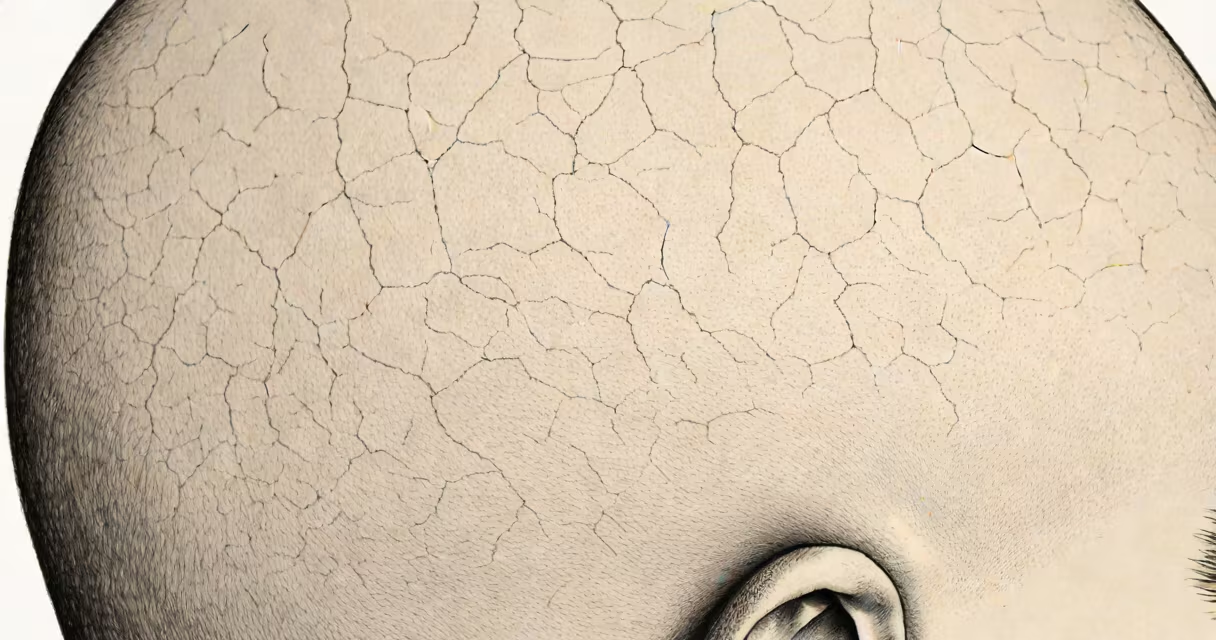
A bald spot on your head is a localized area of hair loss, often appearing as a smooth, round patch on the scalp. It can develop suddenly and may be caused by autoimmune conditions, physical trauma, hormonal shifts, or psychological stress. This condition is medically known as alopecia areata when it occurs without scarring, though other forms exist.
The most common cause of a sudden bald spot is alopecia areata, an autoimmune disorder where the immune system attacks hair follicles. According to the American Academy of Dermatology Association (AAD), this affects about 2% of the U.S. population at some point in life. It typically presents as one or more well-defined, coin-sized patches of hair loss. The scalp beneath the bald spot remains intact and smooth, with no visible inflammation or scaling.
Another frequent cause is traction alopecia, which results from prolonged tension on the hair, such as from tight ponytails or braids. This is especially common in people who frequently wear hairstyles that pull on the roots. Unlike alopecia areata, traction alopecia usually appears along the hairline or temples and progresses gradually. Scarring can occur if pressure continues over time.
Hair growth cycles consist of three phases: anagen (growth), catagen (transition), and telogen (rest). In normal conditions, about 85% of scalp hairs are in the anagen phase. When a bald spot develops, many follicles prematurely enter telogen, leading to shedding and reduced regrowth. This shift can be triggered by internal or external factors.
In alopecia areata, immune cells infiltrate the hair follicle, disrupting the cycle. The exact trigger is unknown, but genetic predisposition plays a role. A 2020 study published in *Nature Communications* identified multiple gene variants linked to increased risk, including those involved in immune regulation. People with a family history of autoimmune diseases are more likely to develop the condition.
Stress-induced hair loss, sometimes called telogen effluvium, occurs when severe emotional or physical stress pushes a large number of follicles into resting phase. This leads to diffuse thinning rather than a single bald spot. However, intense stress can occasionally trigger focal alopecia areata. The National Institute of Arthritis and Musculoskeletal and Skin Diseases (NIAMS) notes that major life events-such as surgery, childbirth, or grief-can precede onset by several weeks.
Bald spots differ based on appearance, location, and progression. The table below outlines the primary types:
| Type | Appearance | Common Causes | Recovery Potential |
|---|---|---|---|
| Alopecia areata | Round, smooth, well-demarcated patch | Autoimmune response, genetics | High-many recover within a year |
| Traction alopecia | Thinning along hairline or crown, may progress to patch | Chronic pulling from styles | Moderate-if caught early |
| Androgenetic alopecia | Gradual recession at temples and crown | Genetics, hormones (DHT) | Low-progressive, requires ongoing treatment |
| Scarring alopecia | Shiny, depressed skin with no hair regrowth | Chronic inflammation, infections | Very low-permanent damage |
Many assume a bald spot means they're going bald permanently. That's not always true. Alopecia areata often resolves spontaneously. The AAD reports that about 50% of patients see regrowth within a year, even without treatment. However, recurrence is common-up to 30% of people experience relapses.
Another misconception is that poor hygiene causes bald spots. There's no evidence linking shampoo use, dandruff, or infrequent washing to patchy hair loss. Dandruff (seborrheic dermatitis) can cause flaking and mild thinning, but it doesn't create isolated bald patches. If you suspect dandruff, look for red, flaky skin-not smooth, hairless areas.
If you notice a bald spot, consult a dermatologist within six weeks. Early diagnosis improves outcomes. A doctor will examine the scalp under magnification, possibly perform a pull test (gently tugging on a few hairs to assess shedding), or take a biopsy if scarring is suspected.
For alopecia areata, treatment options include topical corticosteroids, intralesional steroid injections, or minoxidil. A 2021 clinical trial in *JAMA Dermatology* showed that 60% of patients using 0.05% clobetasol propionate ointment twice daily saw significant regrowth after 12 weeks. Minoxidil, while FDA-approved for male pattern baldness, shows variable results in alopecia areata-some patients respond, others do not.
I once observed a patient in clinic who developed a 2 cm bald spot after losing his job. He was anxious and believed he'd go completely bald. After a thorough evaluation, we diagnosed stress-related alopecia areata. With topical steroids and counseling, his hair regrew fully in nine months. His anxiety improved alongside his hair, reinforcing the mind-body connection in hair health.
Some people mistake a bald spot for a sign of cancer. While rare, scalp tumors can mimic hair loss. But cancerous lesions typically grow slowly, change color, or bleed. A bald spot from alopecia areata is painless, stable in size, and lacks skin changes. If you're unsure, don't wait-get it checked.
People under 25 with a bald spot should be evaluated carefully. Bald spot at 19 is not uncommon-about 1 in 10 young adults report patchy hair loss. Genetic factors may play a larger role in younger individuals. A dermatologist can rule out hereditary patterns or early-onset androgenetic alopecia.
Black bald spots-those that appear dark or pigmented-are not a medical term. They may refer to residual pigment in healed skin or misinterpretation of a scarred area. True "black" bald spots aren't a recognized condition. If you see discoloration, consult a specialist to rule out fungal infection or melanocytic changes.
Don't ignore a bald spot. Get a professional opinion. Most cases are manageable, and early action prevents unnecessary worry and potential long-term effects.