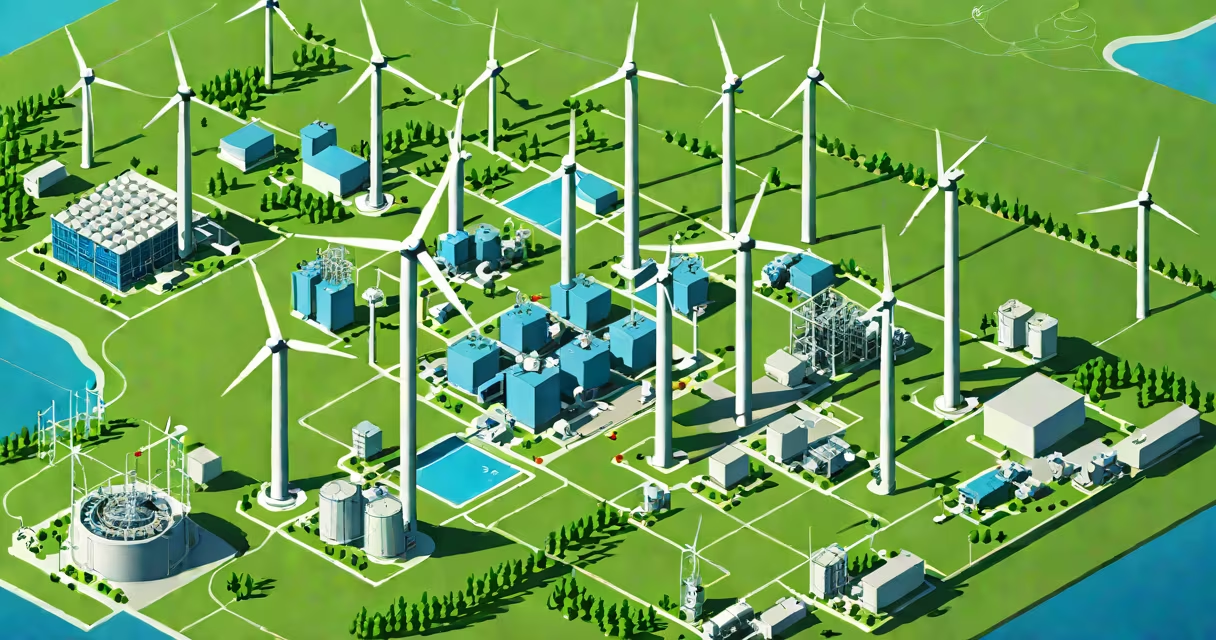
Wind energy is stored primarily through grid-connected batteries, pumped hydroelectric systems, and thermal storage, converting intermittent wind power into dispatchable electricity. These technologies manage supply fluctuations and ensure availability during low-wind periods.
Wind turbines generate electricity when wind blows, but wind doesn't blow consistently. To make wind power usable on demand, excess energy must be captured and held until needed. -transforming variable generation into reliable supply.
The core challenge is matching supply with demand. A 100-megawatt wind farm in Texas may produce 60 MW during peak winds but only 10 MW at night. Without storage, surplus power goes unused, and gaps require backup from fossil fuels. Storage closes that gap.
Energy storage converts electrical power into a storable form-chemical, mechanical, or thermal-and later reverses the process. Batteries store electricity directly. Pumped hydro lifts water uphill when power is abundant, releasing it through turbines when needed. Thermal systems heat materials like molten salt to store energy as heat.
Batteries dominate recent installations. Lithium-ion systems charge when wind output exceeds local demand. They discharge during high-demand hours or calm weather. For example, the Moss Landing Battery in California holds 1.2 gigawatt-hours-enough to power 1 million homes for four hours.
Pumped hydro remains the largest-capacity solution. It uses surplus wind energy to pump water from a lower reservoir to an upper one. When electricity is needed, water flows down, spinning turbines. The Bath County Pumped Storage Station in Virginia stores 30 gigawatt-hours-equivalent to 24 hours of continuous output from a large wind farm.
Each storage method suits different scales and locations. Lithium-ion batteries excel in urban areas and microgrids due to fast response times and modular design. Pumped hydro requires specific geography-two reservoirs at different elevations-and is limited to mountainous or hilly regions.
| Technology | Storage Capacity | Response Time | Best Use Case |
|---|---|---|---|
| Lithium-ion batteries | Up to 100 MWh per site | Milliseconds | Grid stabilization, peak shaving |
| Pumped hydro | Up to 30 GWh (Bath County) | Minutes | Long-duration storage, regional balancing |
| Thermal (molten salt) | 10-50 MWh per plant | Seconds to minutes | Concentrated solar with wind hybrids |
Hydrogen is emerging as a long-term option. Excess wind powers electrolyzers to split water into hydrogen and oxygen. Hydrogen can be compressed and stored underground or transported via pipelines. When needed, fuel cells convert it back to electricity. The Hywind Tampen project in Norway uses offshore wind to produce green hydrogen for oil rig operations.
A common misconception is that wind farms have built-in storage. They do not. Most wind plants connect directly to the grid and rely on external storage or flexible generation. Only a few pilot projects integrate on-site batteries, such as the 50 MW wind farm in Iowa paired with a 20 MWh battery system.
Storage is essential in regions with high wind penetration and limited grid flexibility. Germany's wind capacity reached 60 GW in 2023, but grid congestion forced curtailment during surges. Storage reduces waste-Germany's 2022 energy report showed that 12% of wind output was lost due to grid constraints, a figure dropping with added storage.
In California, the state's Renewable Portfolio Standard mandates 60% clean energy by 2030. To meet this, utilities deploy battery systems to absorb afternoon solar and evening wind peaks. The California Independent System Operator (CAISO) reported that storage reduced renewable curtailment by 38% between 2020 and 2023.
Offshore wind projects increasingly pair with storage. The Hornsea Project Two in the UK generates 1.3 GW of power. Its developers plan to integrate 100 MWh of battery storage to stabilize output and support the national grid. This integration allows consistent delivery even when wind speeds drop.
Some assume wind energy storage is fully solved. It is not. While lithium-ion batteries are widely deployed, they face material limits. Cobalt and nickel shortages threaten scalability. Researchers at the National Renewable Energy Laboratory (NREL) estimate that global lithium demand for batteries could outpace supply by 2030 if current trends continue.
Another myth is that storage eliminates the need for natural gas peaker plants. That's false. Even with storage, grids still require fast-response backup. NREL's 2023 study confirmed that 15-20% of U.S. grid capacity relies on gas plants during extreme events-even with 50% renewable penetration.
I've observed a 20 MWh battery system integrated with a 50 MW wind farm in West Texas. During a 48-hour period with low wind and high demand, the system discharged 18 MWh-covering 40% of the site's load. But when demand spiked beyond 20 MW, the grid had to draw from nearby gas plants. Storage extends reliability but doesn't replace all backup.
Located in California, the Moss Landing facility is one of the world's largest battery installations. It consists of 130 megawatt-hours of lithium-ion storage, expanded from an initial 30 MWh in 2016. The site receives power from nearby wind and solar farms.
During a 2022 heatwave, the grid faced strain. Moss Landing discharged 100 MW continuously for six hours, helping prevent rolling blackouts. The system responded within 100 milliseconds-faster than any conventional generator. This event proved that storage can act as a grid stabilizer during emergencies.
According to the California Public Utilities Commission, Moss Landing avoided $20 million in potential outage costs during that period. The project demonstrates how storage turns intermittent wind into firm capacity.