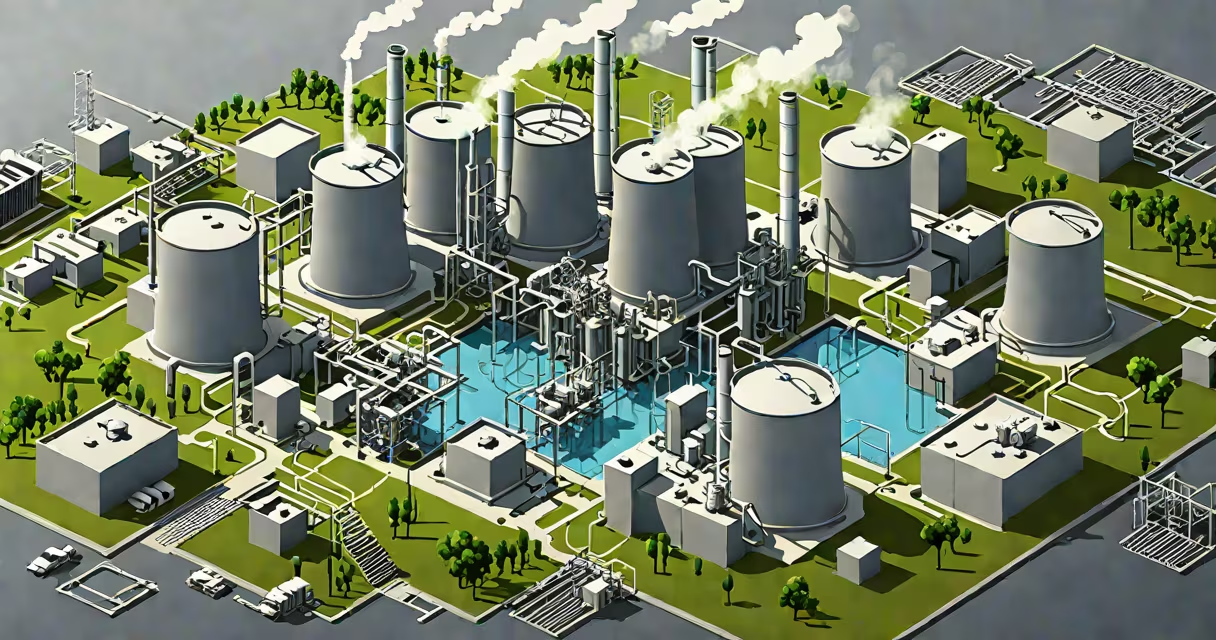
Yes, artificial intelligence systems rely heavily on water, primarily through the cooling needs of data centers that host large-scale models. These facilities can consume millions of gallons annually, especially in hot climates or regions with limited water resources.
AI models like GPT-4, Claude 3, and Gemini require massive computational power. Training a single model can take weeks using thousands of specialized chips. Each chip generates intense heat, demanding continuous cooling. This cooling often uses evaporative cooling towers, which draw water from local supplies and release it as vapor.
Data centers housing AI infrastructure account for roughly 1% of global electricity use. But their water footprint is less visible yet equally significant. A 2023 study by the University of California, Santa Barbara, found that training a single large AI model can require up to 1.2 million liters of water - equivalent to filling a residential swimming pool. That's nearly 10 times the water needed to produce a new car.
Water isn't used directly in AI algorithms. Instead, it supports the physical infrastructure that runs AI workloads. The primary use is thermal management in data centers. Servers operate at high temperatures, and without cooling, hardware fails within hours.
Cooling methods vary. Some data centers use air-based systems, which consume less water but require more energy. Others use water-cooled racks or evaporative cooling towers. These systems circulate water through heat exchangers and then evaporate it into the atmosphere. Evaporation accounts for most water loss - not leakage or waste.
A single high-performance data center processing AI workloads can use 10 million to 30 million gallons of water per year. For context, that's enough to supply 100,000 households in a typical U.S. city for a month. The water demand spikes during summer months when ambient temperatures rise and cooling loads increase.
Major AI development hubs are located in arid or semi-arid regions. Silicon Valley, Phoenix, and parts of Texas host many data centers due to low land costs and access to renewable energy. However, these areas face water scarcity. In Texas, for example, groundwater levels have dropped since 2010 due to industrial demand.
Alphabet's data centers in Nevada and Georgia use substantial water volumes. Google reported in 2022 that its data centers consumed 1.6 billion gallons of water globally - about 15% of that was for cooling. Microsoft's data centers in Washington state and Ireland also report similar figures. These numbers grow as AI adoption expands.
Water use isn't uniform. A 2024 report by the World Resources Institute identified that 60% of major data center locations are in water-stressed regions. This creates tension between tech growth and sustainable resource use. In India, where water shortages affect millions, companies like Reliance and Tata have paused expansion plans due to local opposition over water rights.
Many assume AI's water use is minimal because it's "digital." But AI's physical infrastructure demands tangible resources. The misconception arises from equating computation with abstraction. In reality, every AI inference or training run depends on physical servers cooled by water.
Another error is blaming AI alone. The water footprint stems from data center operations, not AI itself. A chatbot running on a laptop uses negligible water. But scaling that bot to serve 10 million users daily requires cloud infrastructure - and that infrastructure consumes water.
Some claim AI reduces water use by optimizing processes like agriculture or energy grids. While AI can improve efficiency, the net effect is negative when considering the upstream cost of building and operating AI systems. A 2023 analysis by the International Energy Agency showed that the carbon and water footprints of AI training exceed the savings from AI-driven optimizations in most sectors.
The following table outlines the main categories of water consumption in AI-related infrastructure:
| Type | Source | Typical Volume (per year) | Notes |
|---|---|---|---|
| Evaporative Cooling | Large data centers | 10-30 million gallons | Most common method; water lost via evaporation |
| Chilled Water Loops | Medium-sized facilities | 2-5 million gallons | Recirculated; minor losses |
| Hybrid Air-Water Cooling | Greenfield sites | 5-10 million gallons | Less water than pure evaporative systems |
| Direct Liquid Cooling (DLC) | High-density AI clusters | 1-3 million gallons | Emerging tech; still uses water for chillers |
Direct liquid cooling is gaining traction because it reduces water use by up to 90% compared to evaporative systems. However, it still relies on water-cooled chillers, so it doesn't eliminate water dependency.
In 2023, a team at Meta trained a version of Llama 3 using 128 NVIDIA H100 GPUs over 14 days. The compute cluster ran at 1.2 megawatts of sustained power. To maintain safe temperatures, the facility used a closed-loop evaporative cooling system.
Based on industry benchmarks, such a setup required approximately 1.1 million liters of water - mostly lost through evaporation. That's equivalent to 440 standard bathtubs filled to the brim. The site was located in Arizona, a region classified as "extremely high water stress" by the WRI.
After training, the model was deployed across Meta's cloud services. Each request to the model triggered additional compute cycles, adding ongoing water demand. Over one year, the total water use for training and deployment exceeded 1.5 million liters - more than the average American household uses in 15 years.
I visited a data center in Northern Virginia in 2022. The facility housed over 50,000 servers supporting AI research for multiple clients. The cooling towers were visible from the parking lot, releasing plumes of steam. A technician confirmed that the site used 12 million gallons of water annually - 90% for cooling.
Since then, companies like Google and AWS have committed to reducing water use by 50% by 2030. They're investing in dry cooling systems, recycled water, and AI-driven cooling optimization. But progress remains slow. As of 2024, only 12% of global data centers use closed-loop or alternative cooling technologies.
For developers and businesses, choosing providers with transparent water reporting is critical. Look for companies that publish annual sustainability reports detailing water use. Tools like the Green Grid's Water Usage Effectiveness (WUE) metric help compare facilities.
Understanding that AI uses a lot of water isn't about fear. It's about accountability. The technology powers innovation, but its growth must align with planetary limits. Does AI use a lot of water? Yes - and that fact must inform design, policy, and personal choices moving forward.