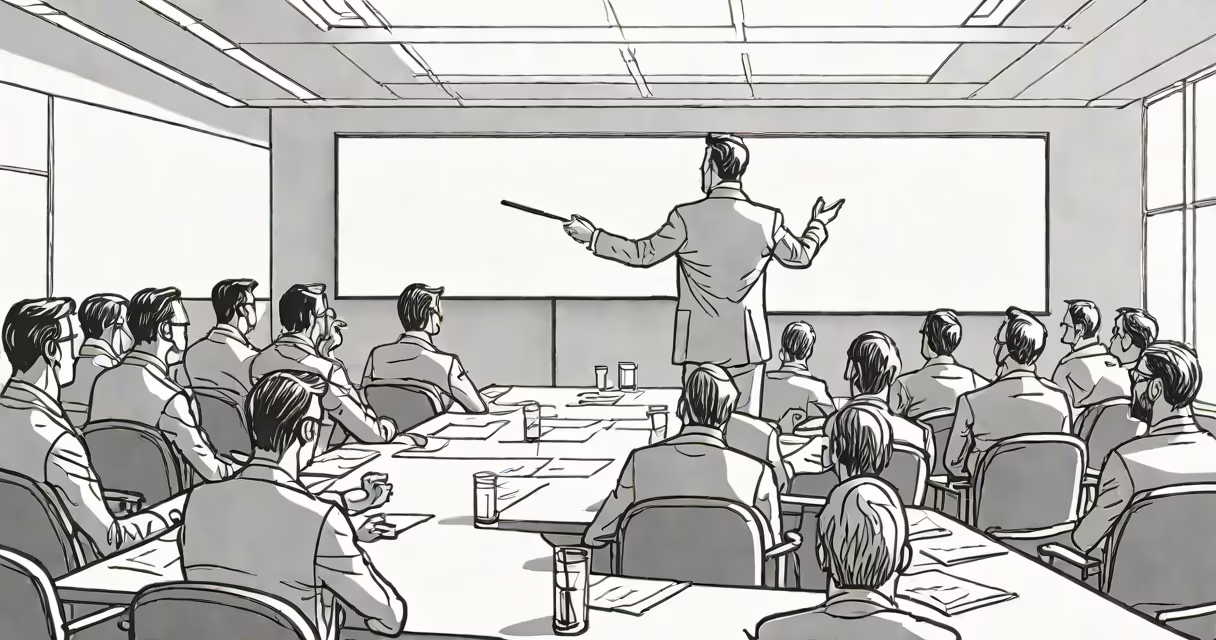
A business pitch is a structured verbal or visual presentation designed to communicate a company's core idea, market opportunity, and growth potential to investors, partners, or customers. It typically lasts between 3 and 10 minutes and aims to generate interest, secure funding, or initiate collaboration.
Effective pitches focus on clarity, credibility, and compelling storytelling. They avoid jargon and instead use specific metrics, real-world problems, and tangible solutions. A well-crafted pitch doesn't just explain what a product does-it shows why it matters now, who needs it, and how it will succeed.
The term "pitch" originated in sales and entertainment industries but became central to startup culture in the late 1990s. Today, it's a standard tool for entrepreneurs raising capital, launching products, or entering new markets. According to the Harvard Business Review, 76% of venture capitalists say a clear, concise pitch increases their likelihood of investing.
A business pitch functions as a narrative engine. It begins with a problem that resonates with the audience-typically a pain point affecting customers, users, or industry players. From there, it introduces a solution that the presenting company offers, backed by evidence of demand, traction, or innovation.
The structure follows a logical arc: problem → solution → market size → business model → team → ask. This format mirrors the decision-making process of investors and executives. For example, a SaaS startup targeting small retailers might open with: "Over 60% of small retailers lose revenue due to inefficient inventory tracking." Then it presents a mobile app that uses AI to predict stockouts in real time.
Pitches are often delivered with a slide deck, but they rely on delivery. Tone, pacing, eye contact, and confidence matter as much as content. A 2021 study by Stanford Graduate School of Business found that presenters who maintained steady eye contact and varied vocal pitch were rated 32% more credible than those who did not.
While lengths vary, most business pitches include six essential elements:
| Component | Description | Example |
|---|---|---|
| Problem | Identifies a real, measurable issue affecting a target group. | "Small businesses lose $12 billion annually to late payments." |
| Solution | Describes the product or service that solves the problem. | "Our AI-powered invoicing tool reduces payment delays by 65%." |
| Market Size | Quantifies the addressable audience using verified data. | "There are 30 million small businesses in the U.S., 40% of which struggle with cash flow." |
| Business Model | Explains how the company makes money. | "$29/month per user, with a 15% annual churn rate." |
| Team | Highlights relevant experience and domain expertise. | "Co-founder previously led operations at a $50M fintech firm." |
| Ask | States the funding or partnership goal. | "We're seeking $1.5M to scale customer acquisition and launch in Europe." |
Common formats include the 1-minute pitch (used in pitch competitions), the 5-minute investor pitch (standard for seed rounds), and the 15-minute executive summary (for board meetings or strategic partnerships).
One non-obvious distinction: a pitch is not a business plan. While both cover similar topics, a pitch distills complex information into a high-impact story. A business plan may run 20-50 pages; a pitch deck is usually 10-15 slides. The pitch focuses on emotion and urgency; the plan emphasizes detail and risk analysis.
Business pitches are most frequently used during fundraising rounds. Startups seeking seed or Series A funding typically deliver a pitch to venture capital firms. Angel investors also rely on pitches to assess early-stage opportunities. According to Crunchbase, companies that deliver a clear pitch raise 2.3 times more capital on average than those that don't.
They're also used in corporate settings. Internal innovation teams pitch new product ideas to leadership. Sales teams use them to win enterprise contracts. Even nonprofit organizations use pitches to attract grants or donor support.
A real-world example: When Airbnb launched in 2008, founders Brian Chesky and Joe Gebbia presented a pitch titled "Airbed & Breakfast" to Sequoia Capital. Their deck included photos of their own air mattress setup, a map of San Francisco listings, and a simple chart showing rising demand. They asked for $150K. Sequoia invested $600K. The pitch wasn't flashy-it was grounded in real data and a relatable problem.
Many people assume a pitch must be flashy or dramatic. In reality, clarity wins. Over 60% of failed pitches, according to a 2022 survey by PitchBook, fail because they lack a clear problem statement or fail to define the target customer.
Another mistake is overloading slides with text. A pitch should be visual, not textual. One slide with 10 bullet points loses impact. One with a single image and a bold headline retains attention. The rule of thumb: no more than six words per line, no more than six lines per slide.
Some confuse a pitch with a demo. A demo shows how something works. A pitch explains why it matters. A founder who spends 8 minutes demonstrating software features instead of stating the problem and market opportunity will lose investor interest quickly.
I once observed a pitch at a tech conference where the presenter spent 4 minutes describing API endpoints and JSON structures. The audience checked phones. The founder didn't realize the room wasn't technical-it was filled with investors looking for market fit, not code syntax.
Business pitch is often mistaken for business proposal, business model canvas, or investor deck-but each serves a different purpose.
For example, a company selling cybersecurity tools to hospitals might use a business pitch to attract early investors. The same company would later submit a formal business proposal to a hospital system outlining contract terms, implementation timelines, and pricing. The pitch gets attention; the proposal closes the deal.
Understanding this difference prevents wasted effort. A pitch should not include legal disclaimers or detailed SLAs. Those belong in a proposal.
A business pitch is not a performance-it's a transaction of value. It communicates what a company does, why it matters, and who benefits. Done well, it opens doors. Done poorly, it closes them.
When crafting a pitch, prioritize specificity over ambition. Use numbers, real examples, and direct language. Avoid vague promises like "disrupting the industry." Instead, say: "Our platform reduced delivery times by 40% for 120 restaurants in Chicago."