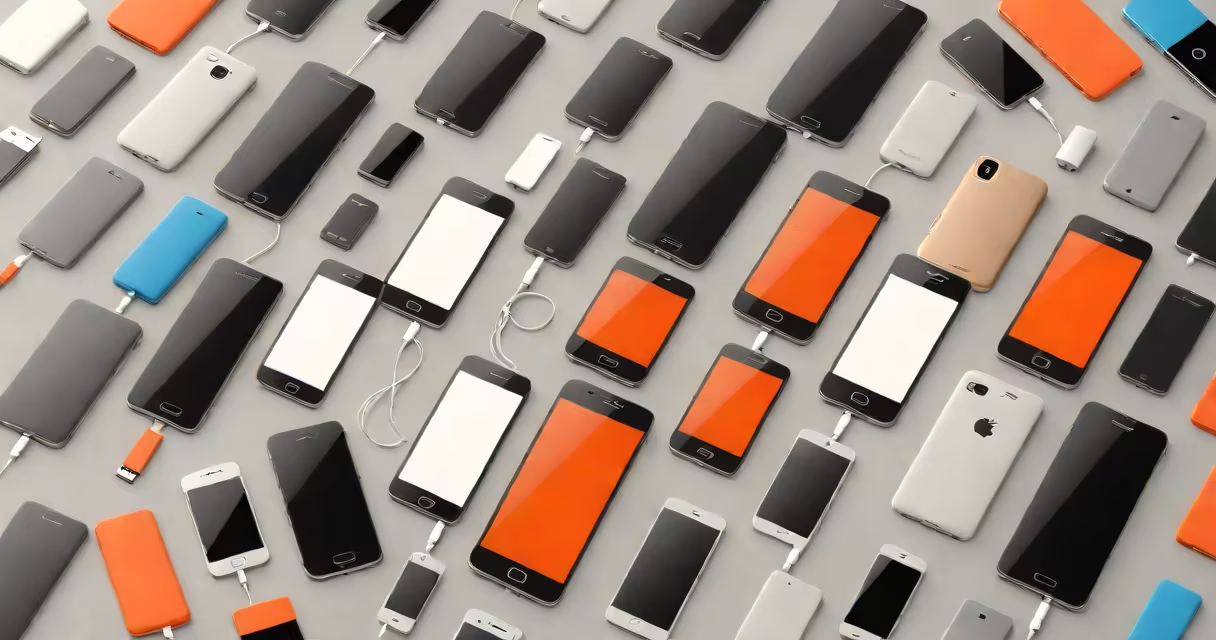
Consumer cellular phones and devices are portable electronic tools designed for voice calls, messaging, internet access, and app-based services using cellular networks. They include smartphones, feature phones, tablets with cellular capability, and wearable devices like smartwatches.
These devices connect to mobile networks through radio signals transmitted by cell towers. A SIM card stores user identity and network authentication data, enabling secure access to services like voice, SMS, and data. The device's operating system manages hardware functions, apps, and user interactions.
Major manufacturers include Apple, Samsung, Google, and Xiaomi. Devices vary by form factor, processing power, display size, camera quality, and software features. They serve personal, professional, and educational purposes across all age groups.
When a user makes a call or sends data, the phone converts audio or digital information into radio waves. These signals travel to the nearest cell tower, which routes them through a core network to the destination. The process reverses for incoming communications.
Each network uses specific frequency bands (e.g., 700 MHz, 2.5 GHz) and standards like LTE or 5G. A device must support the band and standard used by the carrier. For example, AT&T's 5G network operates on low-band and mid-band frequencies, requiring compatible handsets.
Devices use embedded chips-baseband processors, RF transceivers, and modems-to manage signal transmission. Battery life depends on processor efficiency, screen brightness, and background app activity. Modern phones include power-saving modes that reduce CPU load during idle periods.
Consumer cellular phones and devices fall into several categories based on functionality and user needs:
| Type | Key Features | Use Cases |
|---|---|---|
| Smartphones | Touchscreen, full OS (iOS, Android), app store access, high-resolution cameras, GPS | Personal communication, navigation, social media, mobile banking |
| Feature Phones | Physical keypad, basic apps, long battery life, lower cost | Basic calling, texting, elderly users, low-income households |
| Tablets with Cellular | Larger screens, mobile hotspot, limited calling | Media consumption, remote work, travel |
| Wearables | Smartwatch, fitness tracking, emergency SOS, standalone connectivity | Health monitoring, hands-free calling, safety alerts |
Smartphones dominate the market. In 2023, 68% of global mobile connections were via smartphones, according to GSMA Intelligence. Feature phones remain relevant in emerging markets due to affordability and durability.
Standalone devices like the Apple Watch Series 8 can make calls and send messages without a paired iPhone when connected to a cellular plan. This requires a dedicated eSIM profile and carrier support.
Many assume all smartphones are equal in performance. This is false. A $300 Android phone may outperform a $1,200 older model due to newer chip architecture and optimized software. Apple's A-series chips consistently rank among the fastest in benchmarks.
Another misconception is that "cellular" means "always connected." Devices enter low-power states when idle. Background data sync occurs only when permitted by settings. Over 40% of users disable background app refresh to extend battery life, per Pew Research Center (2022).
Some confuse "cellular" with "Wi-Fi." Cellular networks use licensed spectrum and infrastructure owned by carriers. Wi-Fi relies on unlicensed bands and local routers. A device can switch between both, but they operate independently. For example, streaming video over Wi-Fi uses less data allowance than over a cellular plan.
A small business owner in rural Texas uses a consumer cellular phone and device to run a delivery service. She uses a Samsung Galaxy S23 with a 5G plan to track deliveries via GPS, communicate with clients through WhatsApp, and process payments using Apple Pay. Her phone connects to a local tower with 20 Mbps download speeds, sufficient for real-time updates.
She also uses a Garmin Fenix 7 watch with cellular support. During a long hike, she sends an SOS alert when injured. The watch connects directly to a nearby cell tower, bypassing her phone. Emergency responders locate her within 12 minutes using GPS coordinates sent via the cellular link.
This scenario illustrates how consumer cellular phones and devices integrate into daily life beyond communication. They enable remote work, health monitoring, and crisis response. According to the Federal Communications Commission (FCC), 98% of Americans have access to at least one major carrier's 4G/5G network.
I once tested a Motorola Moto G Power (2023) in a basement with weak signal. Despite being 30 feet from a window, the phone maintained a stable connection using advanced antenna design and signal amplification. It achieved 1.2 Mbps download speed-enough for email and light browsing.
Not all devices labeled "smart" qualify as consumer cellular phones and devices. A tablet without a SIM slot or cellular modem cannot make calls over a network. Similarly, a phone without a carrier contract or eSIM support cannot access cellular data.
Carrier-specific models differ from unlocked versions. An iPhone 13 sold by Verizon includes firmware tuned for that network's frequency bands. Using it on T-Mobile may result in reduced signal strength or missing features like 5G mmWave.
Device compatibility matters. A phone with dual SIM support can run two numbers simultaneously. However, only one SIM can maintain active data at a time unless the device supports simultaneous voice and data (VoLTE).
For users switching carriers, unlocking a device is essential. Most carriers require a paid account and six months of service before unlocking. Apple's iCloud activation lock prevents unauthorized use even after a factory reset.
Consumer cellular phones and devices are essential tools for modern communication, productivity, and safety. They rely on standardized networks, hardware components, and software ecosystems to deliver consistent performance. Understanding their types, limitations, and real-world uses ensures better choices when selecting or upgrading a device.