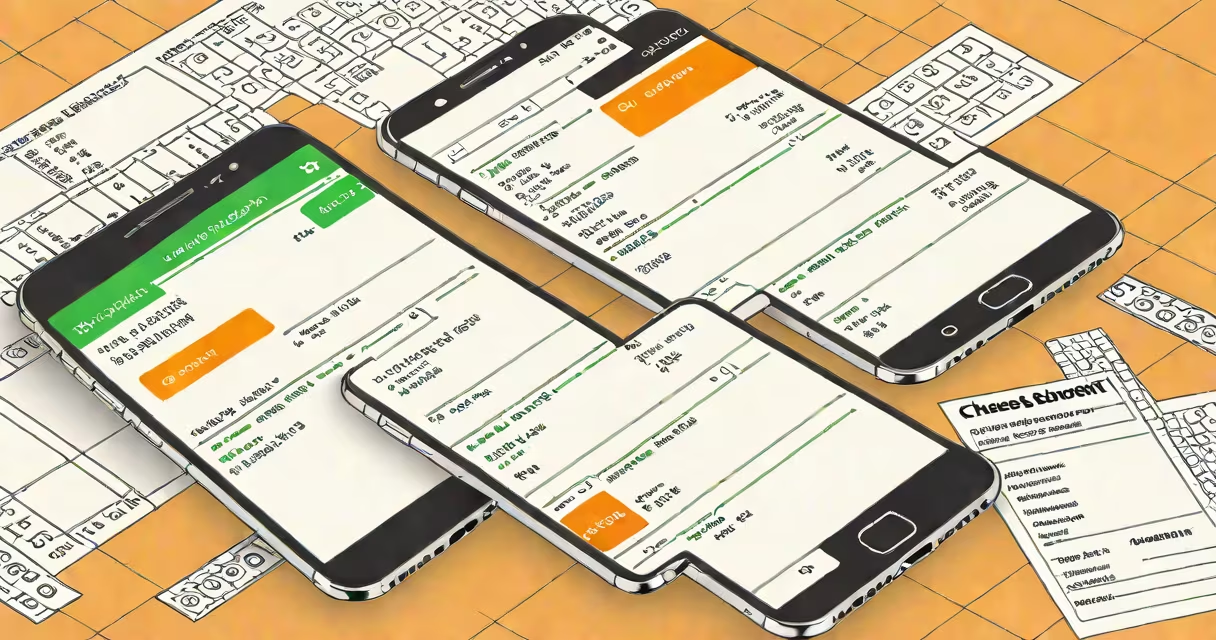
A checking and savings account is a pair of bank accounts designed for different financial purposes: checking for everyday transactions like payments and withdrawals, and savings for storing money safely with interest. Most banks offer both together, allowing users to manage spending and saving in one institution.
These accounts operate under federal regulations. The Federal Deposit Insurance Corporation (FDIC) insures checking and savings accounts up to $250,000 per depositor, per insured bank. This protection applies to both account types, ensuring funds remain secure even if the bank fails.
Checking accounts typically come with a debit card, online banking access, and check-writing privileges. They're meant for frequent use-paying rent, buying groceries, or transferring money. Savings accounts earn interest, though rates are generally lower than those on high-yield investment options. They're intended for building emergency funds or saving toward goals like vacations or home down payments.
When you open a checking account, you receive a unique account number and routing number. These numbers are required for direct deposits, bill payments, and transfers. Transactions appear in real time through online banking apps or ATMs. Most checking accounts allow unlimited withdrawals, but overdrafts may incur fees if you spend more than your balance.
Savings accounts function differently. While you can withdraw funds, most banks limit transactions to six per month under Regulation D. Exceeding this cap may result in fees or account conversion to a checking account. Interest is compounded monthly and credited directly to the account. For example, a $10,000 balance at 0.5% annual interest earns $4.17 in interest each month.
Many banks integrate both accounts into a single digital platform. You can transfer money between them instantly using mobile apps. A common feature is automatic savings tools-like round-up programs-that move spare change from purchases into your savings account. If you spend $4.87 on coffee, the app rounds it to $5 and transfers $0.13 to savings.
There are two primary types of checking accounts: standard and interest-bearing. Standard accounts offer low or no interest, while interest-bearing versions pay modest returns. Some credit unions and online banks offer higher yields on checking balances, especially for customers who maintain minimum balances.
Savings accounts fall into several categories:
| Type | Interest Rate (2024 avg) | Monthly Transaction Limit | Minimum Balance |
|---|---|---|---|
| Standard checking | 0.01% | Unlimited | $0-$25 |
| High-yield savings | 4.25% | 6 | $1,000 |
| Money market account | 3.80% | 6 | $2,500 |
The difference in interest rates matters. Over five years, $10,000 in a high-yield savings account at 4.25% grows to $12,325. The same amount in a standard savings account at 0.01% reaches only $10,005. That's a $2,320 difference due to compounding.
People often assume that savings accounts are better for paying bills. They aren't. Savings accounts lack the features needed for regular transactions-no debit cards, no checkbooks, and slow withdrawal processing. Using a savings account for daily spending risks incurring fees or losing interest.
Another mistake is thinking that all banks offer the same interest rates. Rates vary widely. As of early 2024, the national average for savings accounts was 0.43%, but top-tier online banks offered 4.25% or more. A $10,000 deposit in a 4.25% account earns $425 annually. In a 0.43% account, it earns $43-a difference of $382 per year.
Some believe that interest on savings accounts is taxed immediately. That's false. Interest is reported on Form 1099-INT at year-end, but taxes are due only when you file your return. If you hold the account in a tax-advantaged space like an IRA, interest may be tax-deferred or tax-free.
Consider Maya, a freelance graphic designer earning $4,500 monthly. She splits her income into two accounts:
After 12 months, Maya's savings account holds $18,675. The $1,500 monthly deposits earned $675 in interest. Her checking account covers all living expenses without overdrafts. She avoids debt because she tracks spending through budgeting tools tied to her bank's app.
I've personally used this system for over seven years. When I lost my job during the pandemic, my savings covered four months of rent and food. My checking account stayed balanced because I hadn't overspent. The separation kept me from dipping into long-term funds during a crisis.
Having both checking and savings accounts creates financial discipline. Checking handles immediate needs. Savings builds resilience. Together, they form the foundation of personal financial health.
According to the FDIC, 70% of U.S. adults have a checking account, and 62% have a savings account. Those with both are more likely to save regularly and avoid high-interest debt. The Federal Reserve reports that households with a savings buffer are 3.4 times less likely to face financial hardship during emergencies.
Understanding how checking and savings acc work is essential for maintaining control over your money. They're not interchangeable. Each serves a distinct role in personal finance. Knowing their limits and benefits prevents costly mistakes and supports long-term stability.