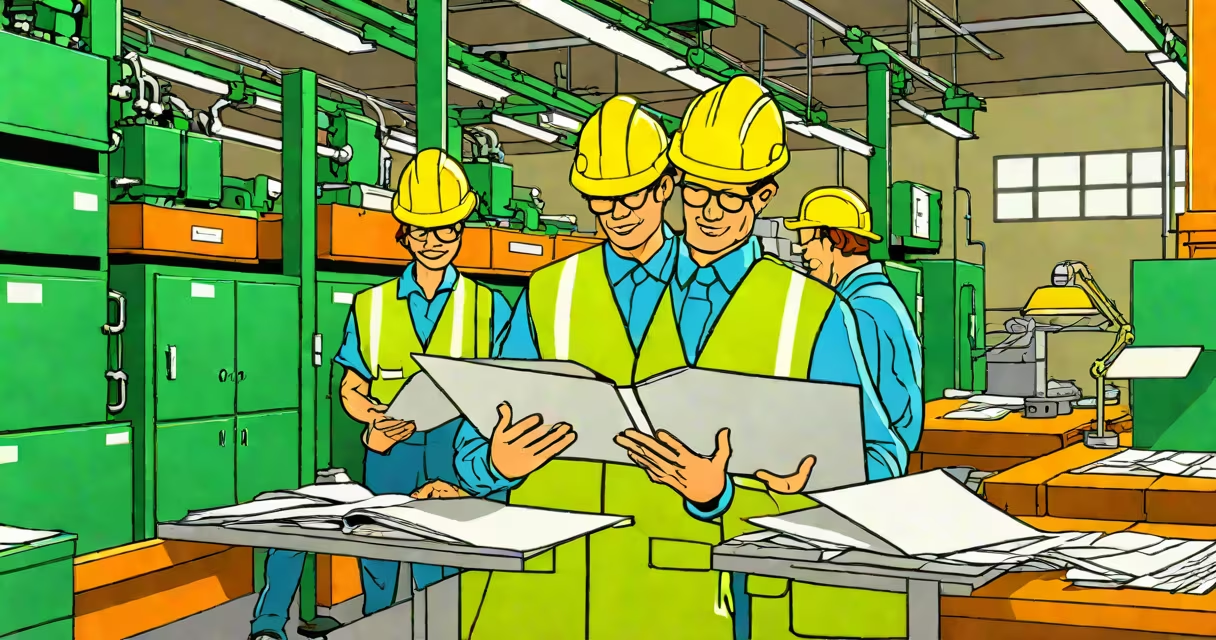
A certified environmental management system (CEMS) is a documented structure aligned with ISO 14001 standards that enables organizations to monitor, control, and improve their environmental performance through systematic planning, implementation, and review. Certification confirms compliance with international environmental standards and demonstrates commitment to sustainability.
CEMS operates by identifying environmental aspects-such as emissions, waste generation, and resource consumption-within business processes. It then establishes measurable objectives, assigns responsibilities, sets monitoring protocols, and implements corrective actions when targets are missed. This cycle repeats continuously under the Plan-Do-Check-Act (PDCA) model, ensuring ongoing improvement.
For example, a manufacturing plant using CEMS tracks daily water usage, identifies leaks through automated sensors, and reports deviations to maintenance teams within 24 hours. Over six months, this reduced water waste by 18%, exceeding internal goals and contributing to ISO 14001 audit readiness.
CEMS begins with leadership commitment and a formal environmental policy. The organization conducts an environmental impact assessment to map all significant activities affecting air, water, soil, and biodiversity. These are categorized into direct and indirect impacts-for instance, diesel fuel use in delivery trucks (direct) versus increased traffic congestion in surrounding neighborhoods (indirect).
Next, the organization defines measurable objectives. A food processing facility might set a goal to reduce plastic packaging by 30% over three years. To achieve this, they switch to compostable materials, train staff on proper sorting, and track usage monthly via a digital dashboard integrated with their computer management system.
Monitoring includes regular audits, employee reporting, and data collection from IoT devices. If a spill occurs during transport, the system triggers an incident report, activates emergency response protocols, and logs root cause analysis. Results feed into annual reviews that inform updates to policies and training programs.
While all CEMS follow ISO 14001's core structure, implementations vary based on industry, scale, and regulatory context. The most common types include:
| Type | Best For | Example Application |
|---|---|---|
| Full ISO 14001 Certification | Global operations, supply chain compliance | Automaker with plants in Germany, Mexico, and China |
| Partial Implementation | Small businesses with limited resources | Local printing shop reducing ink waste by 25% |
| Integrated Systems | Organizations managing multiple standards | Pharmaceutical company combining ISO 14001 with ISO 9001 (quality) and ISO 45001 (safety) |
Certification requires third-party verification by an accredited body. The process includes document review, site inspection, interviews with staff, and assessment against ISO 14001:2015 criteria. Failure to meet requirements results in non-conformity findings that must be corrected before certification is issued.
One often-overlooked requirement is the need for continual stakeholder engagement. A mining company in Canada was denied certification initially because community feedback on dust levels had not been formally recorded or addressed. After establishing a public consultation log and updating mitigation plans, they passed on the second attempt.
Regulatory pressure drives adoption. In the European Union, the Industrial Emissions Directive mandates CEMS-like systems for large industrial facilities. Non-compliance can result in fines up to €1 million per violation, according to the European Environment Agency (EEA).
Market access also depends on certification. Major retailers like Walmart and Tesco require suppliers to maintain ISO 14001-compliant systems. A textile manufacturer in Bangladesh lost a $2.3 million contract after failing a supplier audit due to unrecorded solvent disposal practices.
Financial benefits emerge through operational efficiency. A 2022 study by the International Organization for Standardization (ISO) found that certified companies reported average energy cost reductions of 14% and waste disposal savings of 22% within two years of implementation.
CEMS is not a one-time project. It is a living system requiring continuous review. Many organizations assume certification is a milestone-once achieved, the work ends. In reality, recertification audits occur every three years, and interim surveillance visits happen annually.
Another misconception is that CEMS applies only to heavy industry. A small software development firm in Portland, Oregon, implemented a CEMS focused on e-waste recycling and remote work energy use. They reduced carbon emissions by 41% over 18 months and earned recognition from the U.S. Environmental Protection Agency (EPA) as a Green IT Leader.
Finally, certification does not guarantee environmental perfection. A paper mill in Finland held ISO 14001 certification but still exceeded discharge limits for chlorine compounds in a single quarter. The system caught the issue early, triggered corrective action, and prevented a larger ecological incident. The failure was logged and addressed-proof that CEMS manages risk, not eliminates it entirely.
During a site visit to a chemical plant in Texas, I observed a CEMS team using a mobile app to log real-time emissions data. The app auto-flagged a spike in volatile organic compound readings and sent alerts to the environmental officer and shift supervisor. Within 15 minutes, the team isolated the source-a faulty valve-and initiated repairs. This moment confirmed that CEMS is not just paperwork-it's operational resilience.
Organizations that implement a certified environmental management system gain regulatory credibility, operational efficiency, and long-term sustainability. The system ensures accountability, reduces environmental harm, and supports global climate goals. For any business aiming to operate responsibly, adopting a CEMS is not optional-it's foundational.