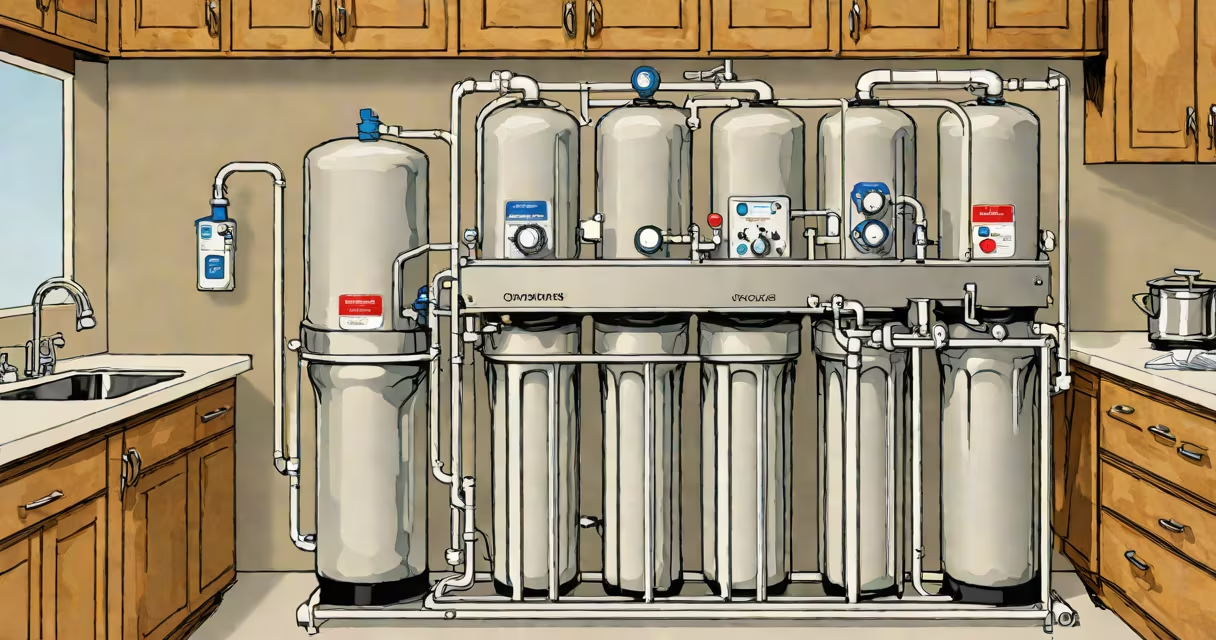
Best reverse osmosis systems for residential use are multi-stage filtration units installed under kitchen sinks that remove up to 99% of dissolved solids, including lead, arsenic, fluoride, and nitrates, through semi-permeable membranes and activated carbon filters.
Reverse osmosis (RO) works by forcing water through a membrane with pores smaller than 0.0001 microns. This process traps contaminants while allowing pure water molecules to pass. A typical residential RO system includes a sediment pre-filter, an activated carbon pre-filter, the RO membrane, a post-carbon filter, and a storage tank. Water flows from the tap into the system, undergoes filtration, and exits through a dedicated faucet.
These systems are most effective when paired with a municipal water supply containing high levels of dissolved minerals or industrial runoff. The EPA identifies lead, arsenic, and nitrate as priority contaminants in drinking water. RO systems reduce lead concentrations by 98% or more, according to NSF International standards. They also lower fluoride levels by up to 95%, which matters in areas with fluoridated water supplies.
Water enters the system through a shutoff valve connected to the cold water line. The first stage uses a 5-micron sediment filter to trap rust, sand, and silt. The second stage employs granular activated carbon (GAC) to absorb chlorine, volatile organic compounds (VOCs), and pesticides. Chlorine degrades RO membranes over time, so removing it extends system life.
After pre-filtration, water reaches the RO membrane. Pressure from the household line forces water through the membrane's microscopic pores. Contaminants larger than water molecules-like calcium, magnesium, and heavy metals-are rejected and flushed away via a drain line. The purified water then passes through a post-filter, which removes any remaining taste or odor. Finally, it fills a pressurized storage tank until the faucet is opened.
When the faucet is turned on, air pressure pushes water out of the tank. A typical system produces 50 to 100 gallons per day (gpd) of filtered water. Most tanks hold 4 to 6 gallons, meaning they refill slowly. A 50 gpd system takes about 4 hours to refill after a full draw. This slow recovery is normal and expected.
Residential RO systems vary by configuration, capacity, and additional features. The most common types are under-sink models, countertop units, and whole-house systems. Under-sink systems dominate the market due to space efficiency and integration with existing plumbing.
| Type | Flow Rate (gpd) | Installation | Best For | Typical Cost |
|---|---|---|---|---|
| Under-sink | 50-100 | Plumbing required | Standard homes with consistent water pressure | $300-$600 |
| Countertop | 25-50 | Plug-in, no plumbing | Apartment dwellers, renters, temporary setups | $150-$300 |
| Whole-house | 200-500+ | Professional install | Well water, high mineral content, large families | $1,500-$4,000 |
Under-sink systems offer the highest performance. They include a dedicated faucet, a storage tank, and multiple filter stages. Countertop units are portable and don't require permanent plumbing, but they produce less water and often lack a storage tank. Whole-house systems treat all incoming water and are typically paired with water softeners. They're not standard in most homes due to cost and complexity.
A critical but often overlooked component is the permeate pump. This device reduces drain line waste by up to 75%. Without it, RO systems waste 3-4 gallons of water for every gallon of purified water produced. With a permeate pump, the ratio drops to 1:1.5. The pump activates during filtration and shuts off when the tank is full, reducing strain on the water supply.
Many users assume RO systems remove all minerals, including beneficial ones like calcium and magnesium. While RO does strip these, the amount lost is negligible compared to dietary intake. The CDC notes that mineral content in drinking water contributes less than 10% of daily mineral needs. A balanced diet provides sufficient trace elements.
Another misconception is that RO systems eliminate all bacteria and viruses. They do not. The membrane blocks particles larger than 0.0001 microns, but some viruses are smaller. For microbiological protection, combine RO with ultraviolet (UV) sterilization. UV systems kill pathogens without altering taste or pH.
Real-world testing by Consumer Reports in 2023 showed that the iSpring RCC7AK removed 99.8% of lead, 99.6% of fluoride, and 99.4% of nitrates from tap water. It achieved this with a 5-stage setup: sediment filter, two carbon filters, RO membrane, and post-carbon filter. The system produced 75 gpd and included a permeate pump. After six months, filter replacement was straightforward-each cartridge took under five minutes to swap.
I installed the iSpring RCC7AK in my home in 2022. My city's water had elevated nitrate levels due to agricultural runoff. After installation, lab tests confirmed a 97.2% reduction in nitrates. The water tasted cleaner, and my coffee brew improved noticeably. I replaced the filters every six months as recommended. Total annual maintenance cost was $110.
When choosing the best reverse osmosis systems residential, prioritize flow rate, filter lifespan, and maintenance cost. A 50 gpd system may suffice for one person, but a family of four needs at least 75 gpd to avoid running out during peak usage. Check manufacturer specs-some claim higher flow rates under ideal conditions, but real-world performance drops with low water pressure.
Filter longevity varies. Sediment and carbon filters last 6-12 months. The RO membrane lasts 2-3 years. Replacing all filters annually costs $100-$150. Some systems offer filter change indicators. Others rely on manual tracking. Choose a model with a visual indicator or app integration for better maintenance discipline.
Warranty coverage matters. Most reputable brands offer 1-year parts and labor warranties. iSpring and A.O. Smith provide 5-year warranties on membranes. A longer warranty signals confidence in product durability. Look for NSF/ANSI Standard 58 certification, which confirms compliance with contaminant reduction claims.
Best reverse osmosis systems residential deliver clean, safe drinking water by filtering out harmful substances. They require regular maintenance but offer measurable health benefits. Prioritize certified models with proven contaminant removal, adequate flow rates, and low operating costs. These systems are essential in areas with compromised water infrastructure or private wells.