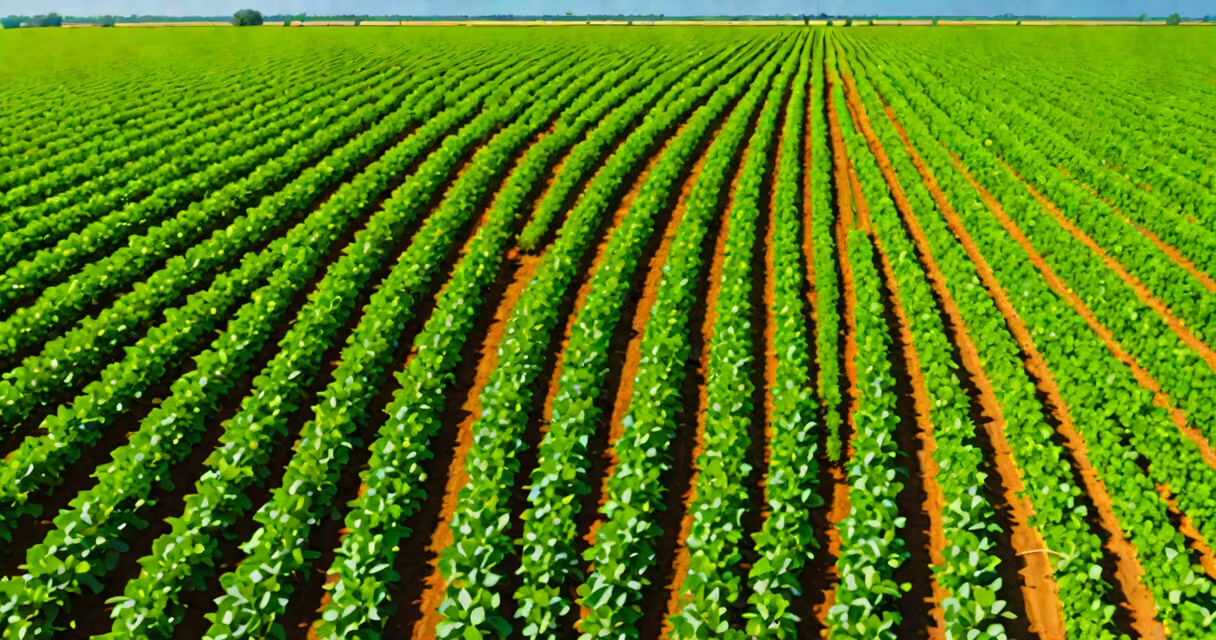
Agronomy and sustainable development is the integration of crop science, soil management, and ecological principles to produce food while preserving natural resources and supporting rural communities. This approach ensures agricultural productivity over decades, not just seasons, by balancing yield, environmental protection, and social equity.
Agronomy focuses on optimizing plant growth through soil fertility, water use efficiency, pest control, and crop selection. Sustainable development extends beyond production to include long-term environmental stewardship, economic viability, and social well-being. Together, they form a structure where farming supports both people and planet.
The United Nations defines sustainable development as meeting present needs without compromising future generations' ability to meet theirs. Agronomy provides the technical foundation-such as nutrient cycling and conservation tillage-to make that vision operational in agriculture. For example, using legumes in rotation improves nitrogen levels naturally, reducing synthetic fertilizer dependence and lowering greenhouse gas emissions.
Agronomy and sustainable development rely on measurable biological and physical processes. Soil organic matter, for instance, acts as a carbon sink and enhances water retention. Research from the Food and Agriculture Organization (FAO) shows that increasing soil organic carbon by just 0.4% annually could offset global fossil fuel emissions.
Crop rotation is a core practice. Rotating corn with soybeans reduces pest buildup and improves soil structure. A 2021 study in *Nature Sustainability* found farms using diversified rotations had 20% higher yields over 15 years compared to monoculture systems, even during droughts.
Integrated pest management (IPM) combines monitoring, biological controls, and minimal chemical use. In Kenya, farmers using IPM in maize fields reduced pesticide use by 60% while maintaining yields, according to a World Bank report.
Not all approaches are equal. The most effective models integrate multiple strategies. The table below outlines common methods and their outcomes:
| Practice | Primary Benefit | Measured Outcome (Source) |
|---|---|---|
| Cover cropping | Soil erosion reduction | 60% less runoff in U.S. Midwest trials (USDA, 2020) |
| Conservation tillage | Carbon sequestration | 1.2 tons CO₂e/ha/year captured (FAO, 2022) |
| Agroforestry | Biodiversity enhancement | 3x more bird species in mixed systems (IUCN, 2023) |
| Water harvesting | Drought resilience | 40% higher dry-season yields in Niger (UNEP, 2021) |
These results show that agronomic decisions directly influence sustainability metrics. For example, planting trees between crop rows in sub-Saharan Africa increases shade, reduces evaporation, and provides fruit and fodder-improving household nutrition and income.
One non-obvious insight: sustainable systems often require fewer inputs over time. A 10-year study in Iowa found that farms transitioning to regenerative practices saw input costs drop by 28% due to improved soil health and reduced need for fertilizers and pesticides.
Agronomy and sustainable development is not synonymous with organic farming. While organic systems often align with sustainability goals, not all organic operations prioritize long-term soil health or social equity. Some certified organic farms still rely on imported inputs or monocultures.
Another misconception is that sustainable agriculture means lower yields. Data from the Rodale Institute's Farming Systems Trial shows that over 30 years, organic systems matched conventional yields in normal years and outperformed them by 40% during droughts.
Some assume sustainability is only about environmental protection. But the FAO emphasizes that food systems must also ensure fair incomes, safe working conditions, and access to land-especially for smallholder farmers. Without this, sustainability fails.
In northern India, farmers faced declining groundwater levels and falling wheat yields. A local NGO introduced a system combining winter pulses (like chickpeas), reduced irrigation, and precision seeding. Over five years, average yields rose from 2.1 to 3.4 tons per hectare, water use dropped by 35%, and farmer net income increased by 22%.
This model succeeded because it addressed root causes: poor water management, lack of crop diversity, and reliance on subsidies. The project linked agronomic science with community training and policy advocacy, demonstrating that sustainable development requires both technical and institutional change.
I visited a similar program in Rajasthan in 2022. Farmers who adopted zai pits-small dugouts filled with compost-saw 60% survival rates for saplings in arid zones. The technique, though ancient, was revived using modern soil testing to determine optimal compost ratios.
Agronomy and sustainable development is essential in regions facing climate stress. Sub-Saharan Africa, South Asia, and Central America face rising temperatures, erratic rainfall, and soil degradation. In these areas, traditional farming methods often fail under changing conditions.
For example, in Malawi, a national program promoting conservation agriculture led to a 50% increase in maize yields across 120,000 smallholder farms between 2015 and 2020. The program combined minimum tillage, crop rotation, and mulching-all rooted in agronomic science-and was supported by extension services and local cooperatives.
Agronomy and sustainable development is a practical, science-based response to food insecurity, climate change, and resource depletion. It moves beyond short-term gains to build resilient food systems that protect ecosystems and support livelihoods. By combining proven agronomic techniques with inclusive governance, it delivers lasting results where they're needed most.