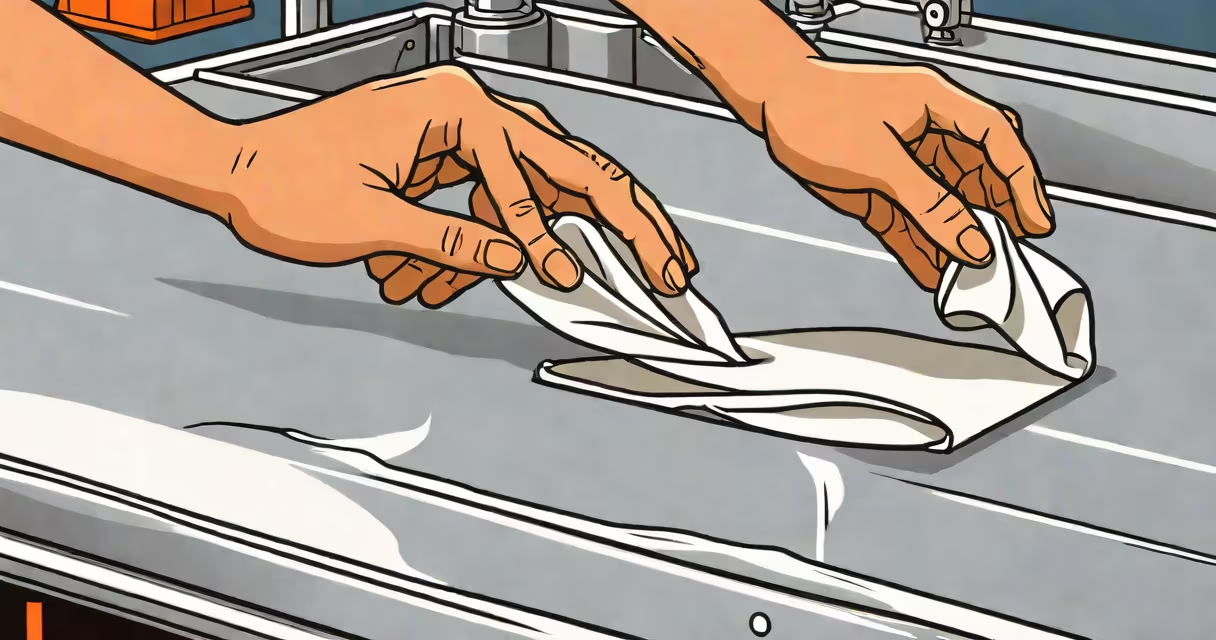
Acetone for cleaning metal is a high-purity solvent used to dissolve oils, greases, and organic residues from metal surfaces before painting, welding, or coating. It evaporates quickly, leaves no residue, and is effective on most common metals including steel, aluminum, and brass.
Acetone is a ketone with the chemical formula C₃H₆O. It's colorless, highly flammable, and volatile-boiling at 56°C (133°F). Its low viscosity allows it to penetrate tight spaces and remove contaminants without damaging the base metal. It's widely used in manufacturing, automotive repair, and electronics assembly for precision cleaning.
Industrial-grade acetone typically contains less than 0.1% water and impurities. For cleaning metal, concentrations above 99% are preferred. Lower grades may leave behind residues or degrade over time, reducing effectiveness. Always verify purity when selecting acetone for critical applications.
Acetone dissolves non-polar substances such as oils, waxes, and adhesives through dipole-dipole interactions. Its molecular structure allows it to disrupt intermolecular forces between contaminants and metal surfaces. Once dissolved, the contaminants are lifted off and evaporate rapidly, leaving behind a clean, dry surface.
The process requires minimal mechanical action. A cotton swab, lint-free wipe, or ultrasonic bath can deliver acetone to the surface. For large parts, vapor degreasing systems use heated acetone vapor to clean complex geometries without disassembly.
After application, acetone evaporates completely within seconds. This makes it ideal for pre-treatment steps where residual solvents could interfere with adhesion. Unlike water-based cleaners, acetone doesn't promote rust or oxidation during drying.
Acetone is available in several forms depending on intended use:
| Type | Purity Level | Best For | Risk of Residue |
|---|---|---|---|
| Reagent grade | ≥99.5% | Laboratory, precision electronics | Very low |
| Industrial grade | 99% | Automotive, machining, fabrication | Low |
| Consumer grade | ~90% | Home repairs, small projects | Medium |
Reagent-grade acetone is recommended for sensitive applications like cleaning circuit boards or preparing surfaces for adhesive bonding. Industrial-grade acetone is cost-effective for routine shop use. Consumer-grade acetone often contains additives like stabilizers or dyes that can leave film deposits.
Acetone is sold in bottles ranging from 100 mL to 5-gallon containers. Smaller bottles are suitable for spot cleaning. Larger volumes require proper storage in sealed, flame-resistant containers away from heat sources.
Manufacturers use acetone to prepare metal parts before powder coating, electroplating, or adhesive bonding. A study by the American Society for Testing and Materials (ASTM) found that surfaces cleaned with acetone had 30% higher bond strength compared to those cleaned with water-based detergents.
In automotive repair, acetone removes grime from engine components before inspection. Machinists use it to clean molds and dies between runs. In electronics, it's used to clean printed circuit boards after soldering to prevent shorts caused by flux residue.
A real-world example: A machinist at a Midwest aerospace supplier reported that switching from isopropyl alcohol to acetone reduced cleaning time by 40% while improving paint adhesion on aluminum brackets. The team verified this using ASTM D3359 cross-hatch adhesion testing, which showed no delamination after 100 hours of salt spray exposure.
Acetone is not safe for all metals. It can damage anodized aluminum, painted surfaces, and certain plastics. Using acetone on anodized aluminum may strip the oxide layer, leading to corrosion. Always test on a small area first.
Another misconception: acetone removes rust. It does not. Rust (iron oxide) is inorganic and insoluble in acetone. To remove rust, use abrasives, phosphoric acid treatments, or mechanical polishing. Acetone only cleans organic films.
Acetone is flammable. The flash point is 1.7°C (35°F)-below room temperature. Open containers in well-ventilated areas away from sparks, flames, or hot surfaces. The National Fire Protection Association (NFPA) classifies acetone as Class 2 flammable liquid, requiring storage in approved flammables cabinets.
Personal experience: During a workshop at a metal fabrication shop, I observed a worker pour acetone into a plastic bucket near a running welder. The resulting flash fire ignited the solvent vapors. The incident was prevented only because the shop had installed automatic fire suppression. This underscores the need for strict handling protocols.
Always wear nitrile gloves and safety goggles when using acetone. Use in a ventilated area or under a fume hood. Avoid prolonged skin contact-acetone strips natural oils from the skin, causing dryness and cracking.
Store acetone in tightly sealed containers, away from oxidizers and reactive chemicals. Do not mix with bleach or other chlorinated cleaners-this produces toxic chloroform gas. The Environmental Protection Agency (EPA) warns against improper disposal due to air pollution risks.
For waste, collect used acetone in labeled, non-reactive containers. Dispose through licensed hazardous waste handlers. Never pour down drains or into storm sewers.
Acetone for cleaning metal remains a standard in industrial and DIY settings due to its efficiency and rapid evaporation. Used correctly, it delivers clean, dry surfaces essential for high-quality finishes and durable bonds.